© Teddy Verneuil — Corsica
France’s coastline holds a scattering of islands, each shaped by its own geography, cuisine, and history.
Brittany’s granite outposts weather the Atlantic’s swells, the marshy islands near La Rochelle trade in oysters and salt, and the Mediterranean chain off the Riviera offers pine forests and turquoise coves within sight of the mainland.
Access defines the experience as much as the scenery does. Some islands connect to the mainland by bridge and fill with day-trippers by mid-morning; others require a proper ferry crossing and empty out again once the last boat leaves, leaving only the guests who stayed the night. Cars are banned or heavily restricted on several of them, which slows the pace down to bicycles, footpaths, and the occasional cart used to move luggage between the port and a hotel.
Car-free streets, private beaches, and centuries-old fortresses set an island summer apart from a stay on the coast. These five are worth considering for a summer vacation detour in France.
1. Belle-Île-en-Mer
The largest of Brittany’s islands lives up to its name (literally “Beautiful Island on the Sea”). Belle-Île’s western shore, known as the Côte Sauvage, drops into the Atlantic in sheer cliffs, while the eastern side settles into sheltered beaches and fishing villages. The famous theater actress Sarah Bernhardt fell for the island in the 1890s and bought a small fort at Pointe des Poulains, where she spent her summers for the rest of her life, and the ruins are still open to visitors.
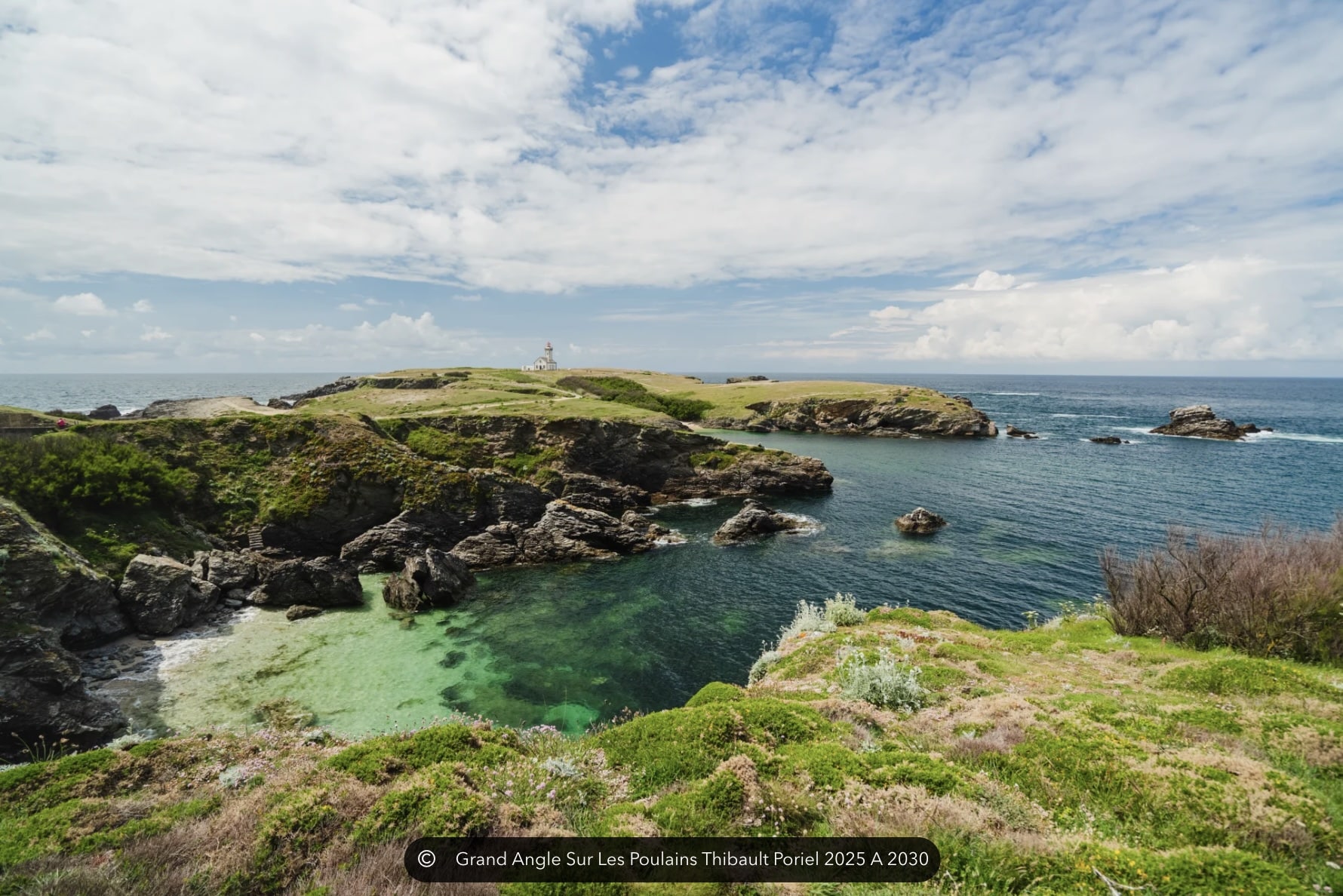
Ferries leave from Quiberon and take about 45 minutes to reach Le Palais, the island’s main port. A rented bike covers the terrain well. The island is small enough to circle in a day but varied enough to reward a longer stay, with lighthouses, hidden coves, and the fortified town.
2. Île de Ré
Connected to La Rochelle by a long bridge, Île de Ré draws a steady stream of French vacationers every summer, and the appeal is easy to see once the whitewashed villages and hollyhock-lined streets come into view. Saint-Martin-de-Ré, the island’s old fortified port, anchors the north coast with cafés and a working harbor. La Flotte holds a smaller version of the same charm.
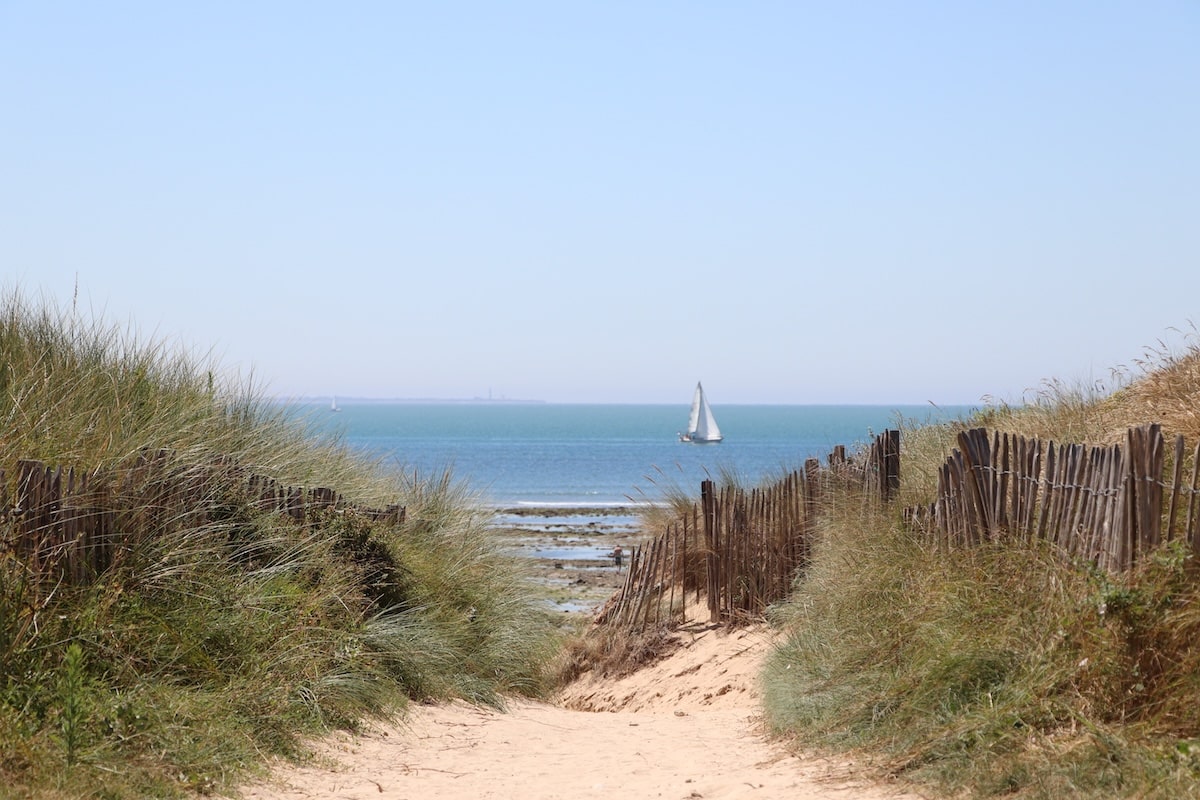
Salt has shaped the island’s economy for centuries, and the marshes around Ars-en-Ré and Loix still produce fleur de sel by hand. Oyster farms line much of the interior coast, and most restaurants serve the day’s catch within a few hours of it leaving the water. Cycling is the preferred way to see the island with flat terrain and a long network of dedicated paths connecting nearly every village.
3. Porquerolles
Part of the Îles d’Hyères, Porquerolles sits within the Port-Cros National Park and bans cars almost entirely, which keeps its pine forests and eucalyptus groves calm even in August. Plage Notre-Dame, on the island’s north side, is often ranked among France’s best beaches for its clear, shallow water and pale sand.
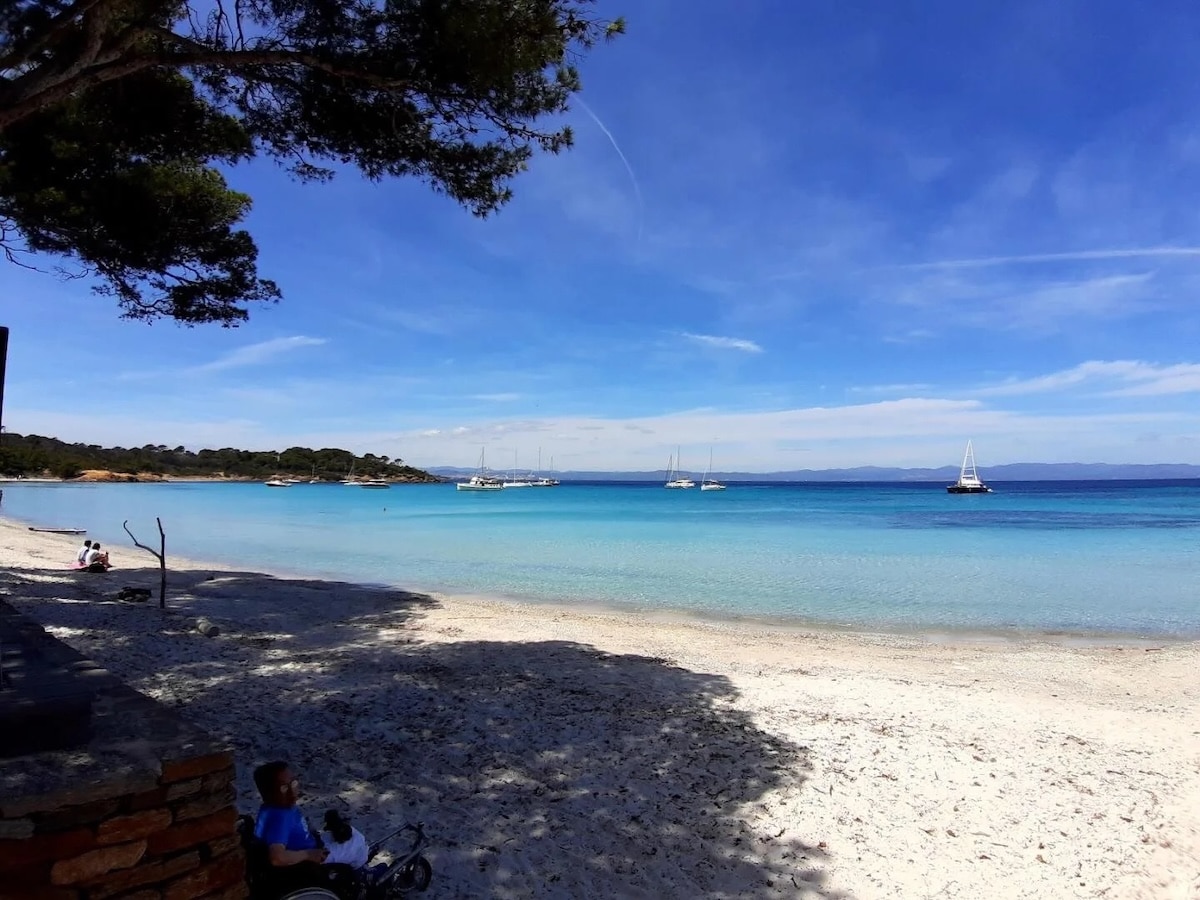
© Christelle Gandolph — Le Lavandou Tourisme
A short ferry from La Tour Fondue, near Hyères, reaches the island in about twenty minutes, making it an easy day trip from the Var coast. Those who stay overnight get the better version of Porquerolles: once the last boats leave, the village square empties out and the island reverts to something close to its 19th-century self, when it operated mainly as a military outpost and farming settlement.
4. Îles de Lérins
Just off Cannes, the two Lérins islands offer a contrast to the city life within a few hundred meters of open water. Île Sainte-Marguerite holds Fort Royal, the state prison where the Man in the Iron Mask was reportedly held in the 17th century, along with eucalyptus-shaded trails and the lively beach club restaurant La Guérite. Île Saint-Honorat, smaller and quieter, belongs to a Cistercian monastery whose monks have made wine and the herbal liqueur on the island since the Middle Ages.
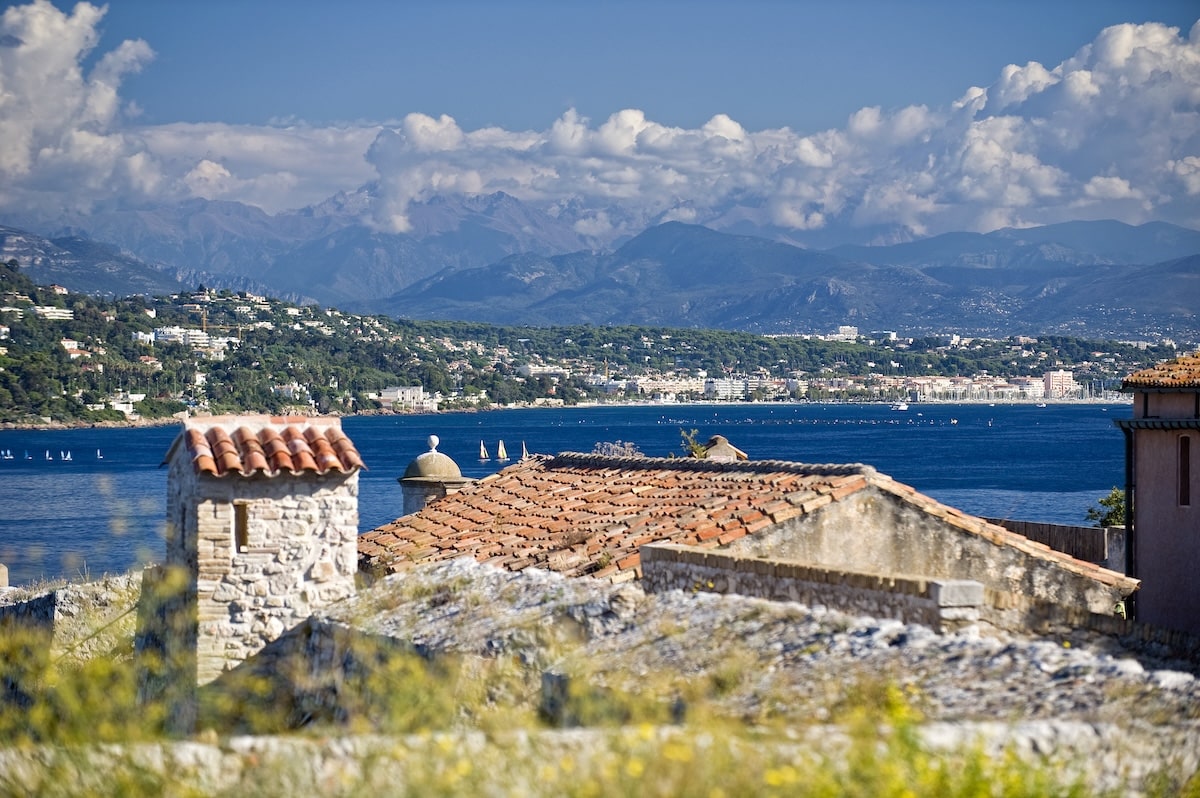
© Anthony Lanneretonne — featured in the July/August 2023 issue
Boats run frequently from the old port in Cannes, and the crossing takes under half an hour to either island. Neither has permanent lodging for tourists, which keeps visitor numbers manageable and makes a day trip the standard way to see both.
5. Corsica
For a dedicated French island vacation, Corsica is the ultimate trip. Mountains run through the interior and drop into the Mediterranean along both coasts, producing landscapes where alpine forest gives way to white-sand beach within an hour’s drive. Bonifacio, perched on limestone cliffs at the southern tip, and Calvi, with its citadel overlooking the bay, count among the most gorgeous towns on the island, while Palombaggia’s pine-backed beaches in the far south draw comparisons to the Caribbean.
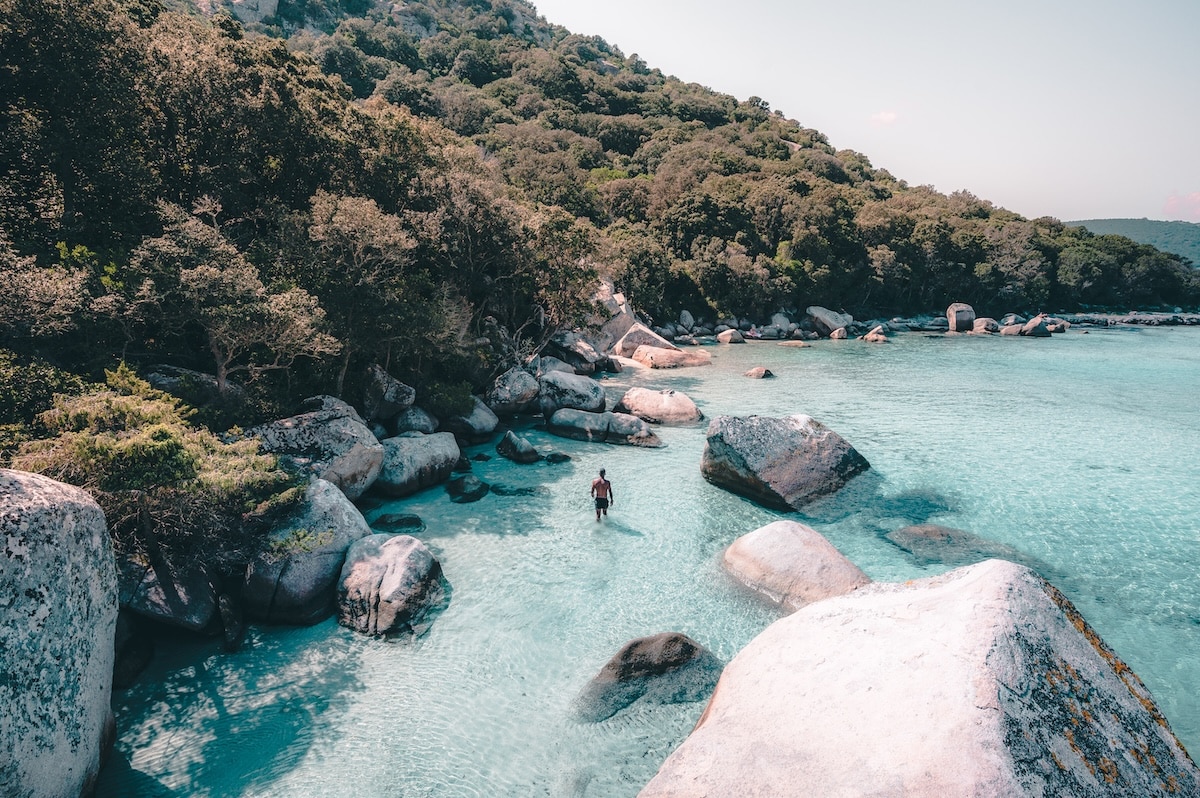
© Teddy Verneuil — featured in the July/August 2022 issue
Ferries run to Corsica from Nice, Toulon, and Marseille, and direct flights connect most major French cities to Ajaccio, Bastia, and Calvi. A rental car makes the most sense here: one of the best parts of this destination is the slow drives along the coast and taking detours into hillside villages.
If you’re looking for chic French travel essentials, you’ll want to check out our Bon Voyage August Box — get yours here.
Bon voyage!
Continue Reading
Wander Through Our Stories
Photo by Stephan Julliard
The French secret to cooking, dining, and hosting, is rooted in simplicity.
Reliability is favored before flash and glamour in the kitchen, but simple aesthetic flair pops in at every corner. In that vein, the French ensure each item is chosen and appreciated for the duration of its abilities.
SUBSCRIBE TO THE MAGAZINE
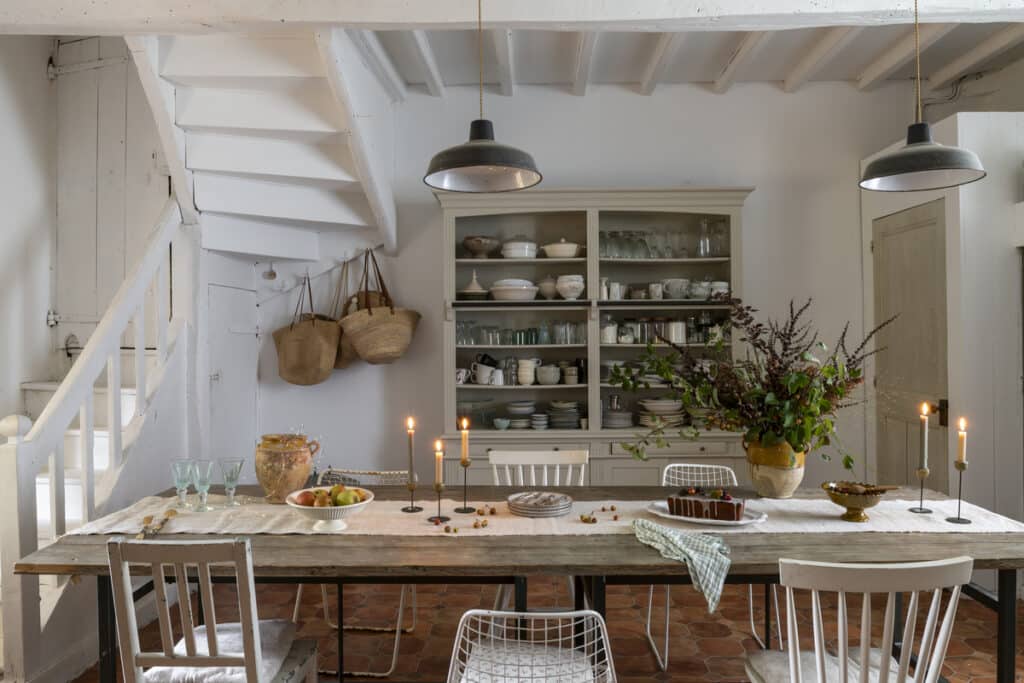
Akin to a wardrobe, the French kitchen is constructed over time. Vintage cake stands, silver, and china won at auction or spotted at a brocante in Paris, make the delicate array of objects which color the French countertops and tables.
Upon entering, guests will notice drawers laden with well-loved objects. Knives fitted with aged and wooden handles, and homestyle cutlery with iconic acetate finishing are stored throughout. Salad bowls and a patchwork collection from Le Creuset double as serving dishes.
When curating la cuisine (the kitchen), the French are guided by the following sensibilities:
Is the Item Made in France? — French Glassware
When an item carries a Made in France label, whether etched at the bottom of a glass or along the blade of a knife, it brings a sense of pride to the buyer. The nation’s culinary manufactures have been lauded for their gastronomic tools and expertise for generations, as they lean into quality and the tradition of savoir-faire.

Since many French regions specialize in certain areas of production, cooks of all backgrounds and expertise have a soft spot for supporting small local industries. The French opt for knives mades in Thiers, Duralex bistro glasses from Lorient, and china dishes crafted in Limoges.
In many French homes, especially in urban apartments, space is coveted and optimized for ease. Kitchenware is designed with this in mind.
The southeast borders the sparkling Mediterranean Sea, the body of water framed by the southern coast of Europe and the northern coast of Africa. Often characterized by its crystal-clear, aquamarine waters, the sea is typically calmer and more temperate — especially in the summer, making it a prime destination for boating.
By contrast, the southwest sits along the vast North Atlantic coastline, which runs down the western coast of Spain, Portugal, and west Africa. The ocean welcomes impressive wildlife like dolphins and whales, while the intense waves rolling into the Bay of Biscay tempt surfers from around the world. Facing west, the sun sets directly over the water, painting mesmerizing skies along the horizon each night.
Does it Serve a Dual Purpose? — Smart Storage
In many French homes, especially in urban apartments, space is coveted and optimized for ease. Kitchenware is designed with this in mind.


Pots and pans are reimagined with removable handles, knives may be stored on strong wall magnets rather than in drawers or counters, and saladiers (salad bowls) may double as serving dishes for guests.
Will it Endure Wear & Tear? — Classic Dutch Ovens
Cooking or baking demands trial and error, and recipes may go wrong before they can be fully appreciated. A pan will burn and scratches materialize, but these imperfections are signs of life which add color to the memories made in the kitchen.

While French home cooks oscillate between delicate kitchenware and more reliable pieces, a cuisine armed with qualitative materials gives permission to make mistakes – which is vital when building a repertoire of French recipes.
The French reach for Le Creuset time and time again. The enameled iron pots bring a soft elegance to the atmosphere which can be passed through the hands of many generations.
Can it be Recycled? — Elegant Jam Jars
The French aren’t afraid to reuse jars or keep plastic storage.


Bonne Maman in particular, is a popular choice for storing an assortment of items. With a pretty vichy patterned twist top and removable labels, these jars are quickly repurposed to mix the salad dressing or store the rests (left overs).
Countertop Essentials — Quality Copper & Ceramics
Since storage is often limited, counter tops cover the essentials. It’s not uncommon for collection of wooden spoons, spatulas, and array of copper utensils to be easily arranged and accessible in ceramic vase.


Any vase will do, but the French enjoy objects with a story. Those made by hand in the studio or gifted by a friend bring a special touch to the French kitchen.
Everyday French Cooking — Pots & Pans
The French gravitate to several types of cookware. If one has a limited storage, some opt for pots and pans with one detachable handle.


De Buyer cookware is, otherwise, an indisputable favorite among home cooks. The iron pans are heavy and perfect for fool-proof cooking. At the same time, the pots feel luxurious and industrial, tapping into the medium of beauty and utility.
Quality Couteaux- Keeping Kitchen Knives
Rather than purchasing a set of knives, the French outfit their kitchens with a plethora of styles. Among the kitchen staples are objects with sentimental value.


An iron couteau (knife) which is purchased on holiday in Japan or at a market in the South of France, is as equally cherished by home cooks as classic Laguiole and Opinel cutlery. With an array of styles, knives are often stored side by side on wall magnets or in drawers.
Setting the Table – Flatware & Dinner China
As an extension of the kitchen, the dining table frames the efforts made in a kitchen. A French kitchen table is set for each type of occasion. When a home meal served with family and close friends, place settings are lined with forks and knives, well loved china, and cloth napkins.


French kitchens are rich with reminders of travels, tradition, and confidence in utility. The French return to their favorite tools and methods repeatedly. This gives makes them confident in the space and willing to perfect their home recipes and flavors.
The goal is never really perfection, but an air of ease followed by a sense of simple beauty.
Written by Jessy Brewer
This post contains affiliate links. If you click through and make a purchase, we may receive a commission (at no additional cost to you). Thank you for supporting My French Country Home in this way as we provide recommendations to our favorite brands and products.