The French Pumpkin Patch — Squash Varieties to Know in France
While you may not find them carved or painted, each October, French market stalls fill with pumpkins and squash of every shape and size.
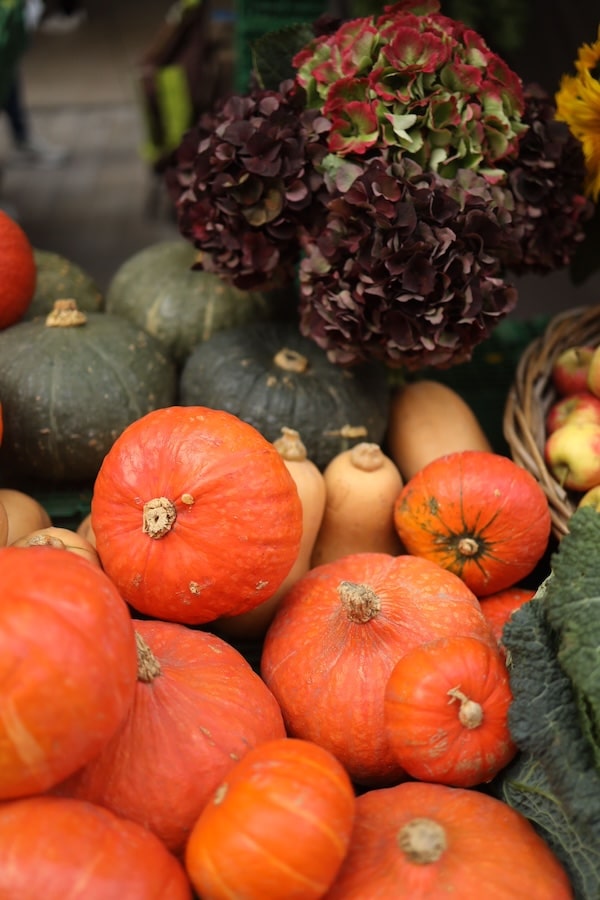
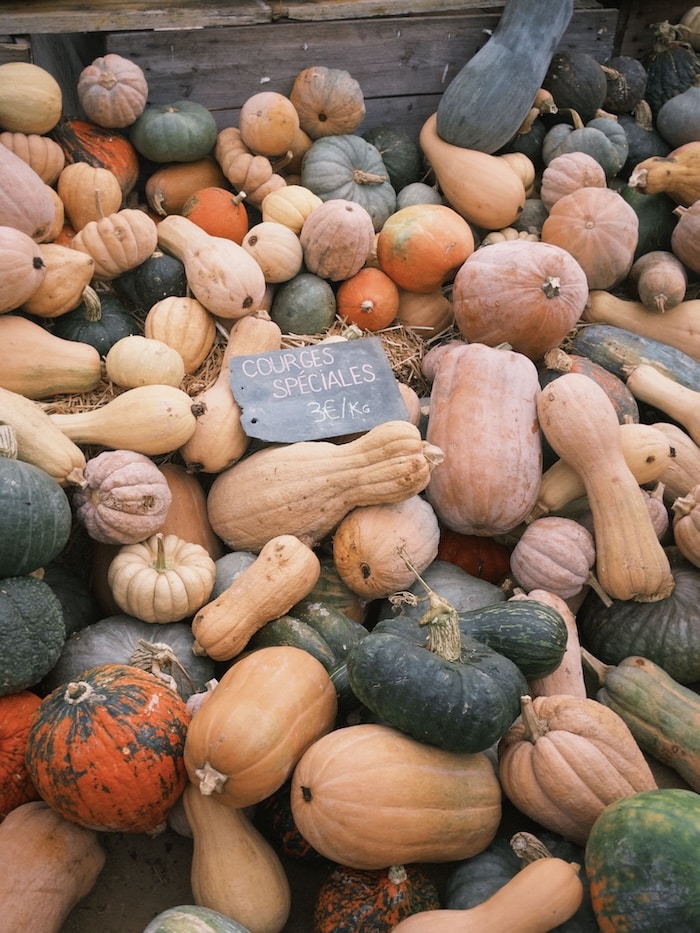
The main varieties you can expect to see are wedges of ribbed Musquée de Provence sold by the kilo, small orange potimarrons, round potirons, smooth butternuts, and the flat red pumpkin said to have inspired Cinderella’s magical coach! Most of them are bought for the soup pot and the gratin dish rather than the front porch, but that’s what makes them even more special.
Here are five pumpkin varieties you’ll find in France, and how French cooks use each one.
Rouge Vif d’Étampes (the Cinderella Pumpkin)
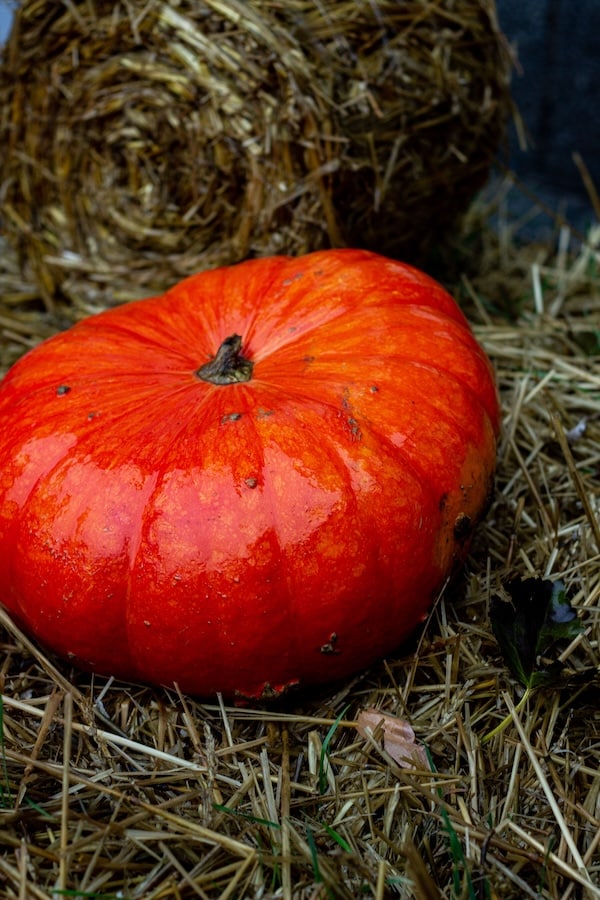
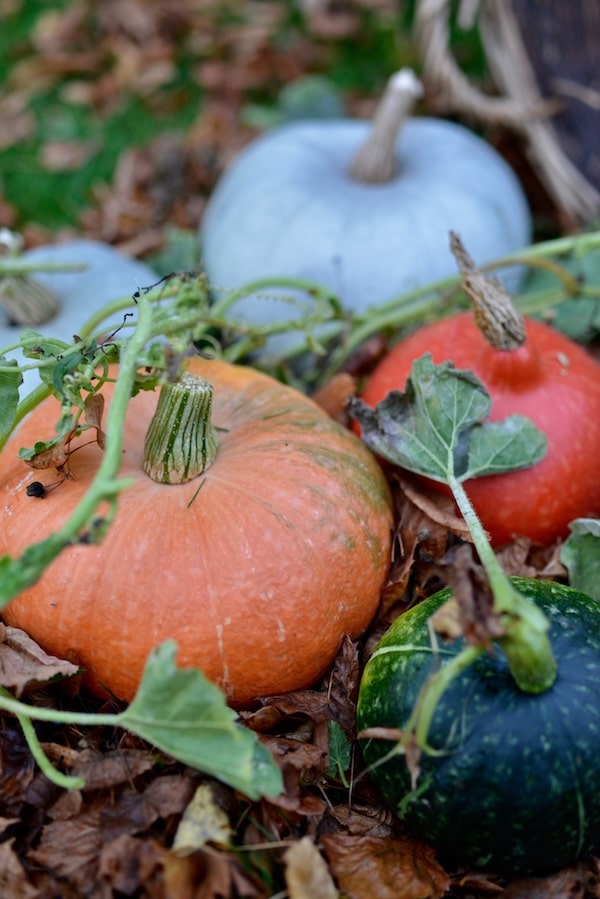
Rouge vif means “vivid red,” a nod to this pumpkin’s glossy red-orange rind. It grows wide and flat with deep ribs, shaped a bit like a wheel of cheese. In 1880s Paris it was a market staple, and cooks prized its mild, sweet flesh as a base for soup.
In 1883, the American seed merchant W. Atlee Burpee began selling it in the United States. He reportedly sourced his first seeds from the town of Étampes, south of Paris, which gave the variety its name.
The fairytale behind its nickname is French too. Charles Perrault published Cendrillon in 1697, and his version gave us the fairy godmother, the glass slipper, and the pumpkin that turns into a magical royal coach. When Walt Disney adapted Perrault’s story in 1950, the carriage is said to have been modeled on this French variety. After the film’s release, Americans began calling it the Cinderella pumpkin, the name it still goes by today.
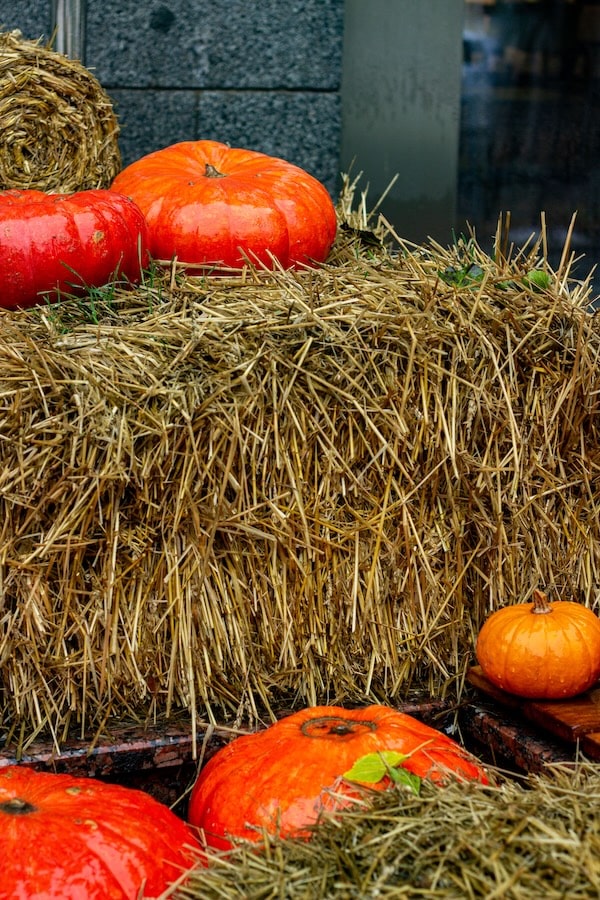
In France, the Rouge Vif d’Étampes returns to market stalls every autumn, sold whole for display or cut into wedges for the kitchen. Its moist, mild flesh blends into silky soups and takes well to the warm spices of a pie or tart.
Musquée de Provence
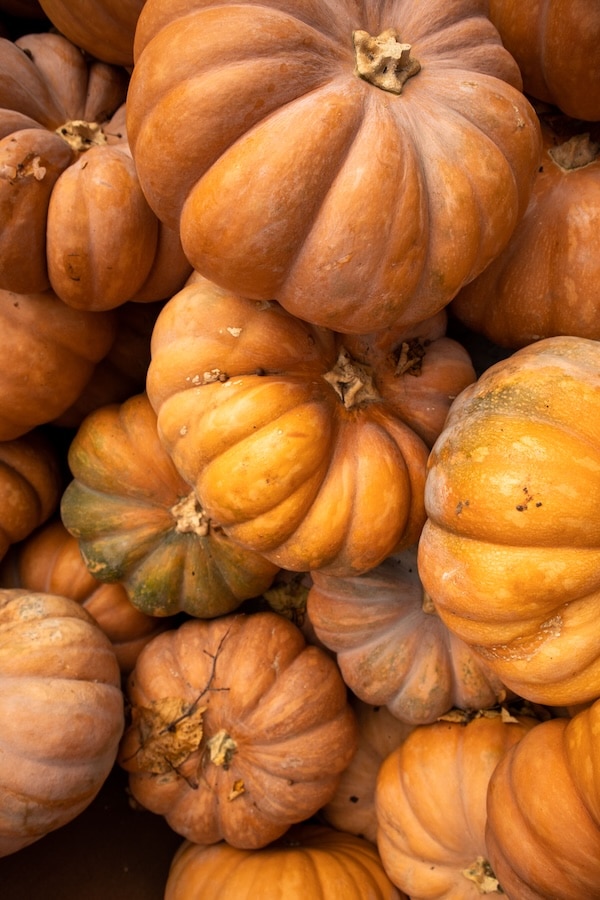
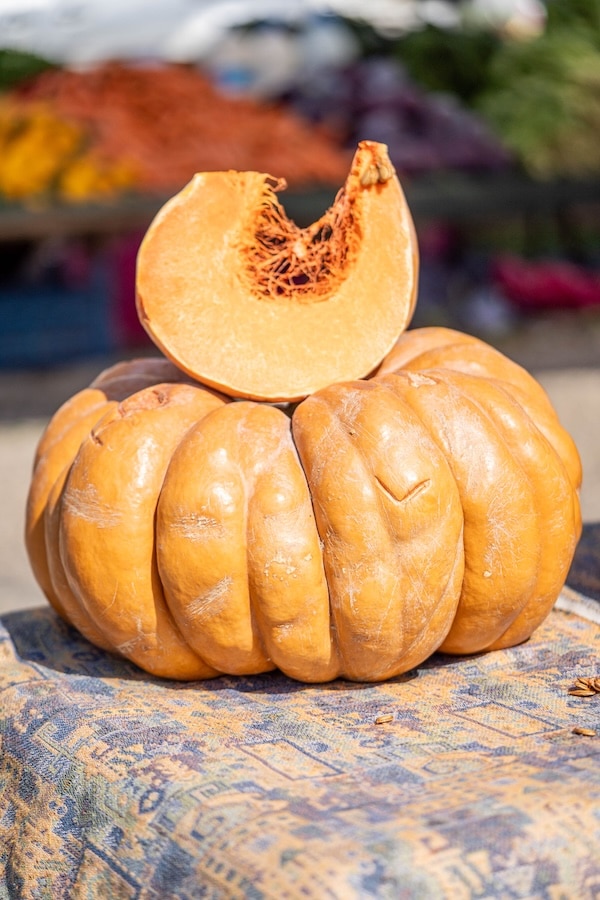
Musquée de Provence is the giant of the French market stall, and a single squash can weigh 10 kilos or more. Its deeply ribbed skin starts dark green and ripens to a coppery tan. Since few cooks need a whole one, vendors cut it into wedges and sell it by weight, showing off the deep orange flesh inside.
That flesh is dense and sweet, with the musky scent that gives the squash its name. In Provence, cooks layer it into tians and gratins with olive oil, garlic, and herbs, and simmer it into confiture de courge, a squash jam often brightened with orange or lemon. It also makes a rich soup.
Potimarron
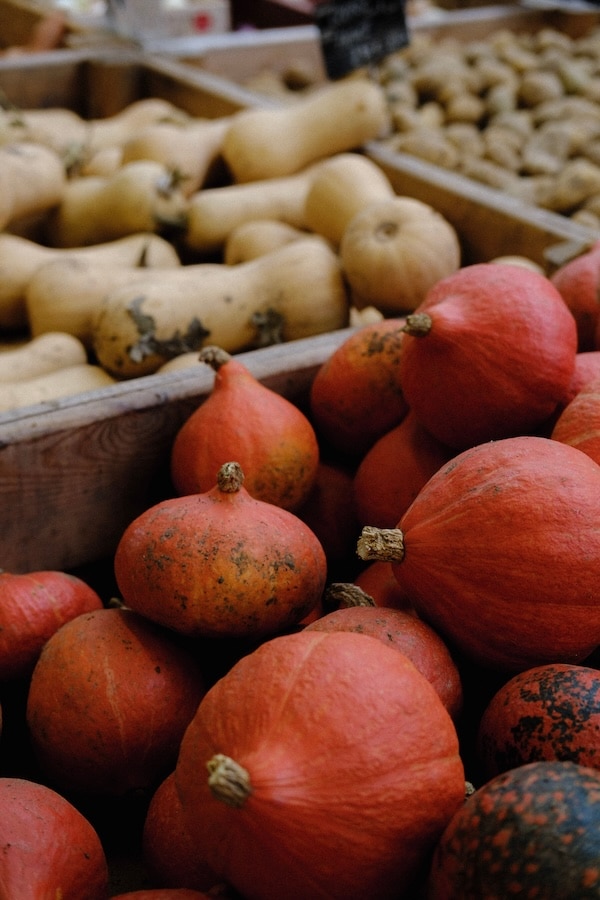
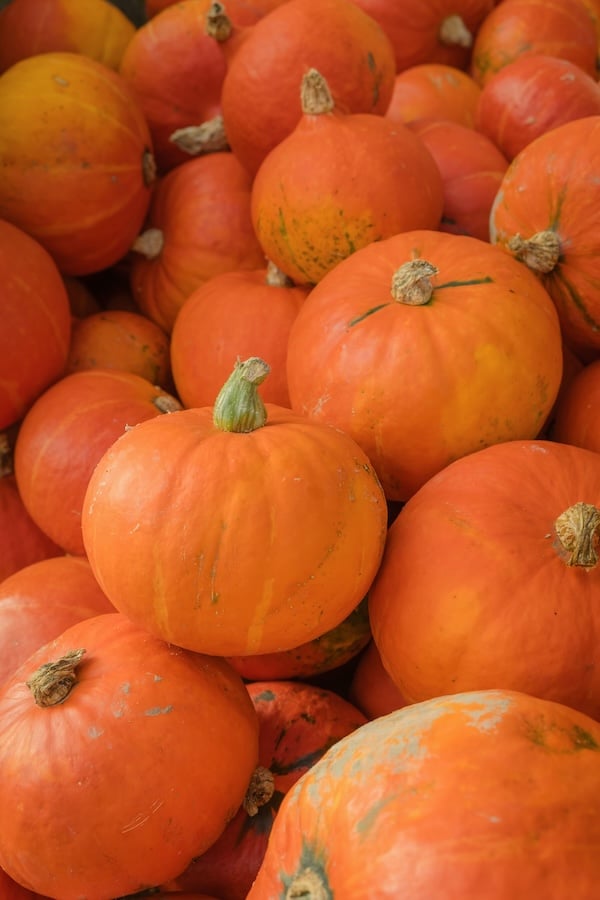
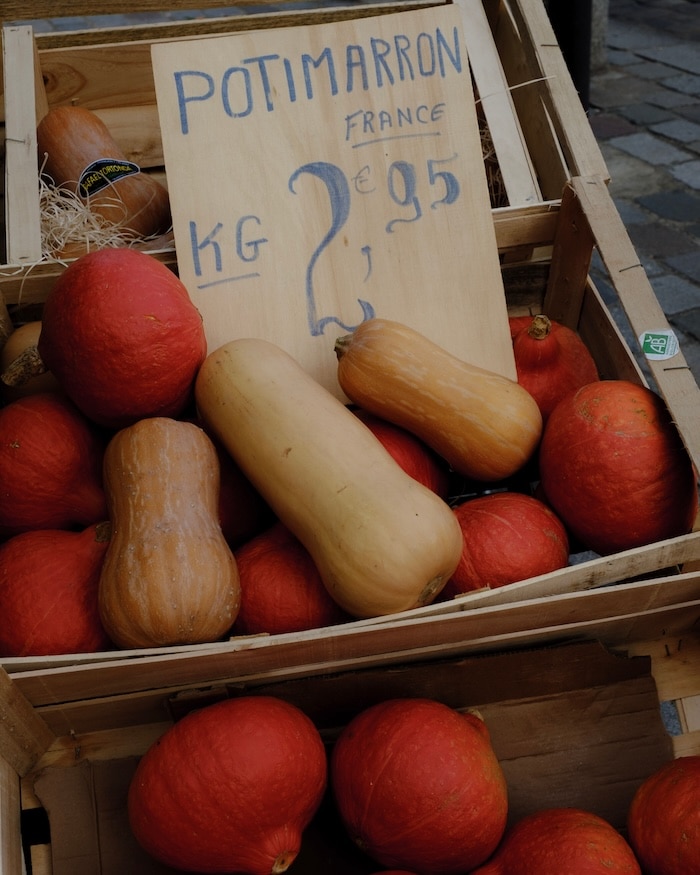
The potimarron is the squash also known as red kuri or Hokkaido. It’s small and teardrop-shaped, with a bright orange skin. Its name combines potiron (pumpkin) and marron (chestnut), after its nutty, chestnut-like flavor. The skin softens as it cooks, so there’s no need to peel it before roasting or simmering it into a velouté (soup).
One potimarron is about the right size for a family meal. The Benedictine sisters of Mont-Saint-Michel turn it into a savory autumn pumpkin quiche from their cookbook The Nuns’ Table, made with fewer than ten ingredients and finished with arugula and toasted pine nuts.
Potiron
Potiron is France’s everyday pumpkin: large, round, and orange, with mild, tender flesh. It’s the squash behind soupe au potiron, a simple blend of pumpkin, onion, and stock finished with a spoonful of crème fraîche, served on French tables all autumn and winter. Its soft texture also makes it a natural choice for purées.
That mild flavor works in desserts too. In this pumpkin tart with candied pear and chocolate, our recipe contributor Franck Schmitt pairs buttery potiron with candied pear, dark chocolate, and hazelnuts in a homemade shortcrust shell.
Butternut
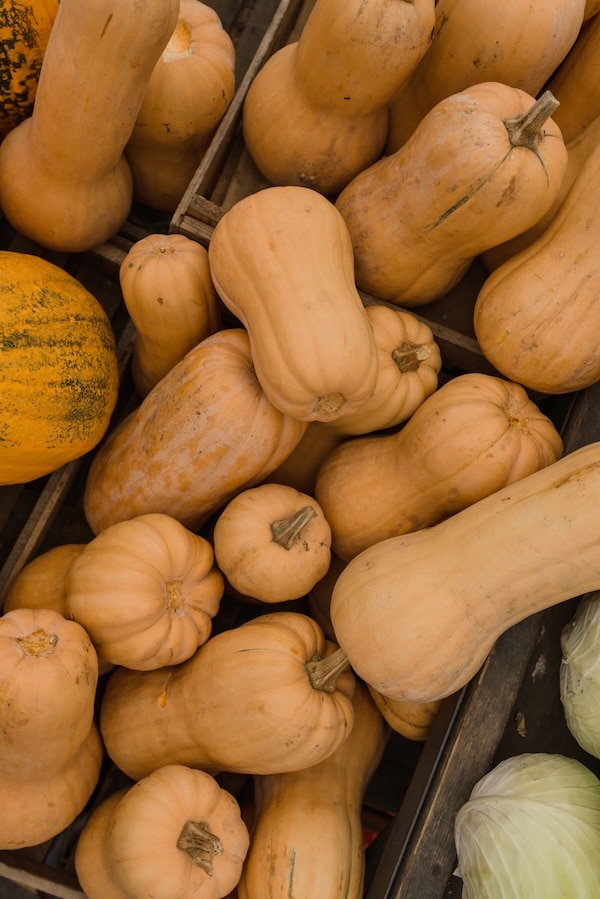
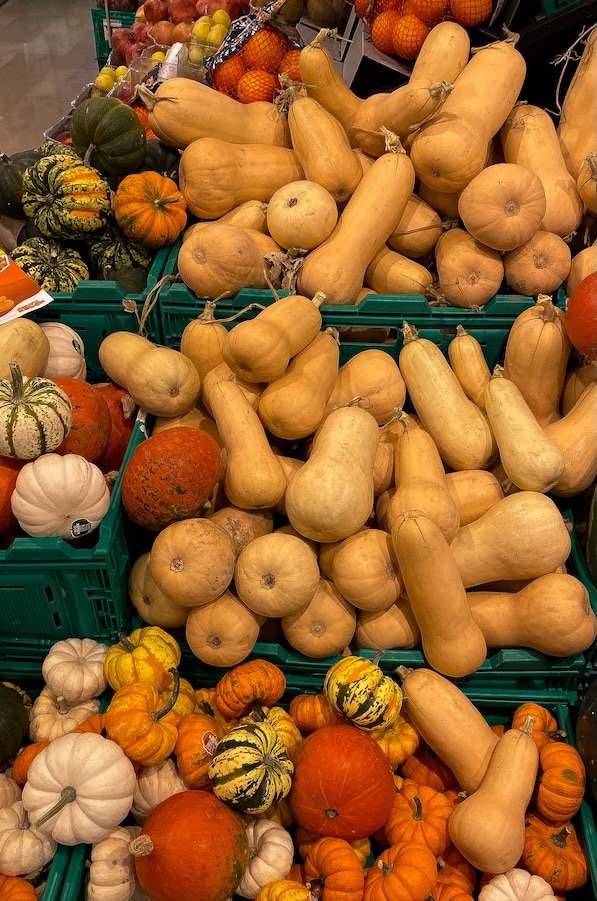
Butternut is the variety American readers will know best, and it’s now a staple at French markets as well, sometimes sold as doubeurre or simply pronounced with a French accent (“booter-not”). French cooks roast it, purée it with butter, and bake it into gratins.
Choose a squash that feels heavy for its size, with a firm, unblemished rind and a dry, corky stem. For the larger varieties like Musquée de Provence and potiron, ask the vendor for une tranche (a slice) or un morceau (a piece), and they’ll cut a wedge to the size you need. Whole squash keep for several months in a cool, dry spot away from direct sun, while cut pieces should be wrapped, refrigerated, and used within a few days.
Don’t be alarmed, we do not use or store your information. We are a French site and this is simply a regulation for the European Union to let you know that this website uses cookies to improve your user experience. By using our website you consent to all cookies in accordance with our Cookie Policy. Read More