Its markets range from a hidden courtyard in the Marais to a Provençal canal town lined with 300 permanent stalls. Some operate every weekend of the year, others open only for specific weekends and annual events, drawing collectors from across the continent.
Here are 7 of the best antique destinations in France, along with a bit of insight on what each specializes in and when to go.
For more detailed information about antique markets in Paris, check out our Antiquing in Paris Itinerary. For a fully planned schedule to antique in the south of France, get our Antiquing in Provence Itinerary. For expert tips on antiquing in France, get a copy of Sharon Santoni’s book, The Art of Antiquing in France.
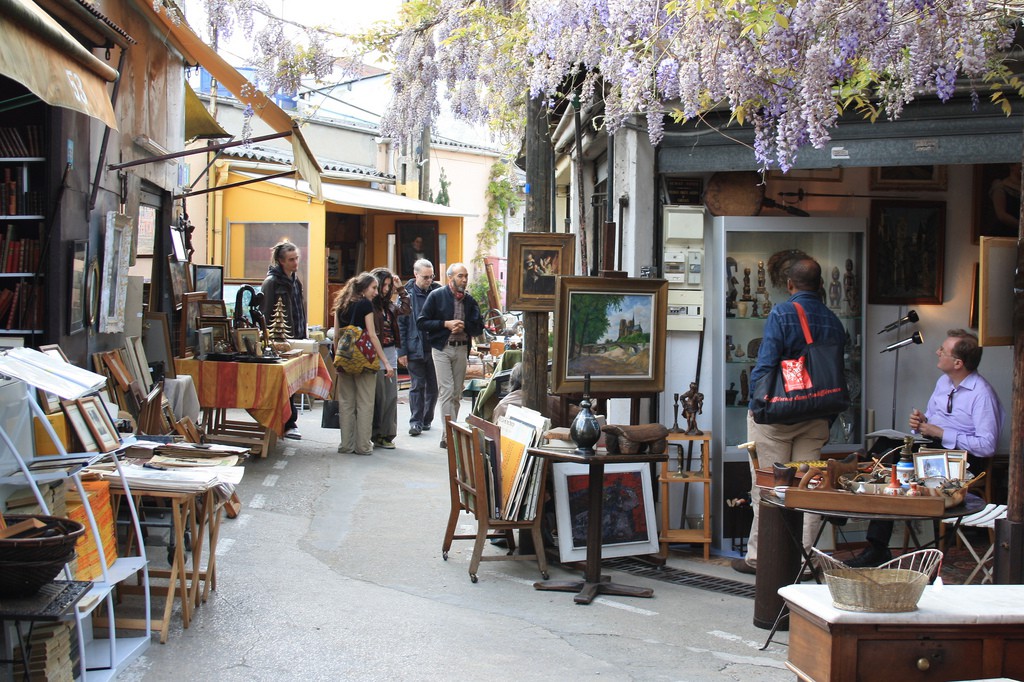
1. Marché aux Puces de Saint-Ouen, Paris
Location: Just north of the 18th arrondissement, in the commune of Saint-Ouen. Take Metro Line 4 to Porte de Clignancourt.
Specializes in: Everything from 17th-century furniture to Art Deco lighting and vintage fashion, spread across fourteen distinct sub-markets.
What makes it unique: It’s the largest antique market in the world, with more than 2,000 dealers. Marché Paul Bert Serpette handles high-end 20th-century design. Marché Vernaison is the place for smaller, eclectic finds. Marché Dauphine covers books, records, and clothing.
Hours: Saturday and Sunday, 10am–6pm. Monday, 11am–5pm. Open year-round, though fewer dealers show up on Mondays.
Join us next October for a fully guided tour through Saint-Ouen with Sharon Santoni
2. Porte de Vanves, Paris
Location: Avenue Marc Sangnier and Avenue Georges Lafenestre, in the 14th arrondissement.
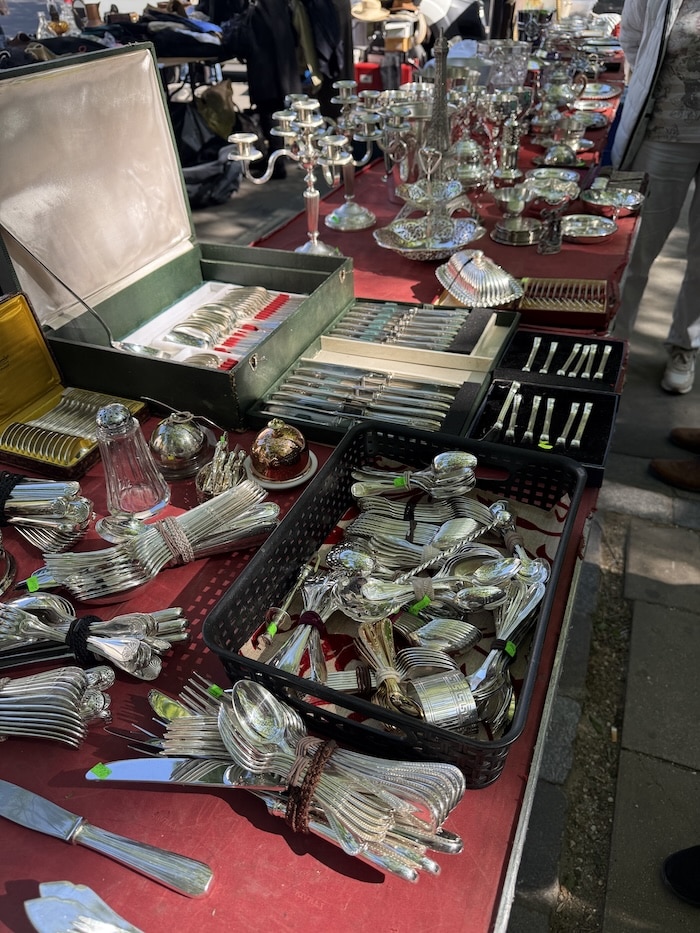
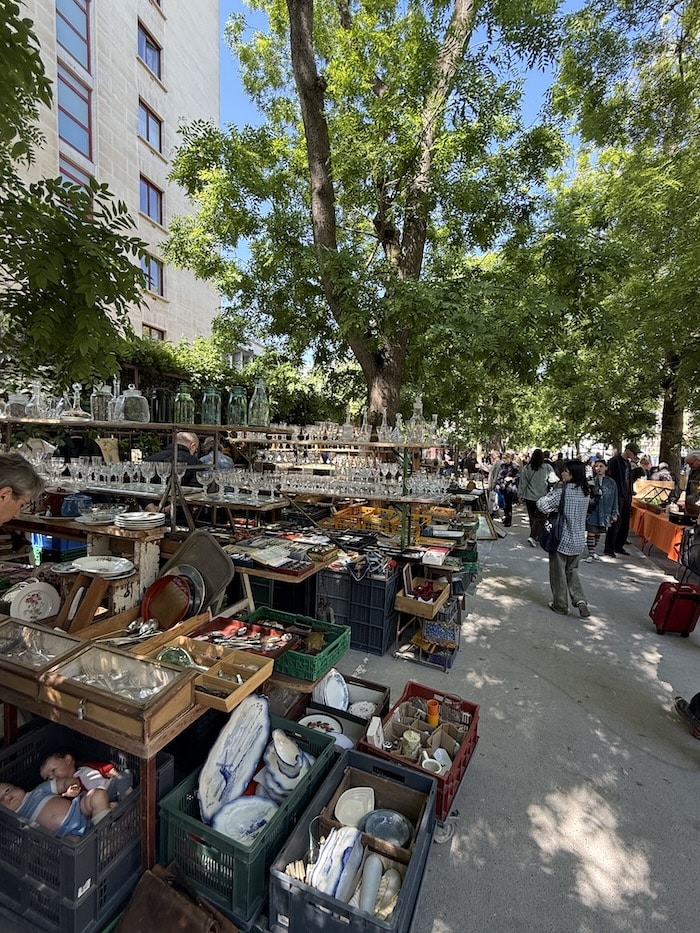
Specializes in: Linens, antique books, toys, perfume bottles, paintings, ceramics, silverware, and vinyl records.
What makes it unique: Far smaller than Saint-Ouen and easy to cover in a morning. Over 400 vendors set up along two avenues, and it draws professional dealers looking for stock rather than tourists looking for souvenirs. Arrive early for the best pieces.
Hours: Saturday and Sunday, 7am–2pm.
For more information, check out our Antiquing in Paris Itinerary.
3. Foire de Chatou
Location: Île des Impressionnistes, a small island on the Seine just outside Paris, reachable by the RER A.
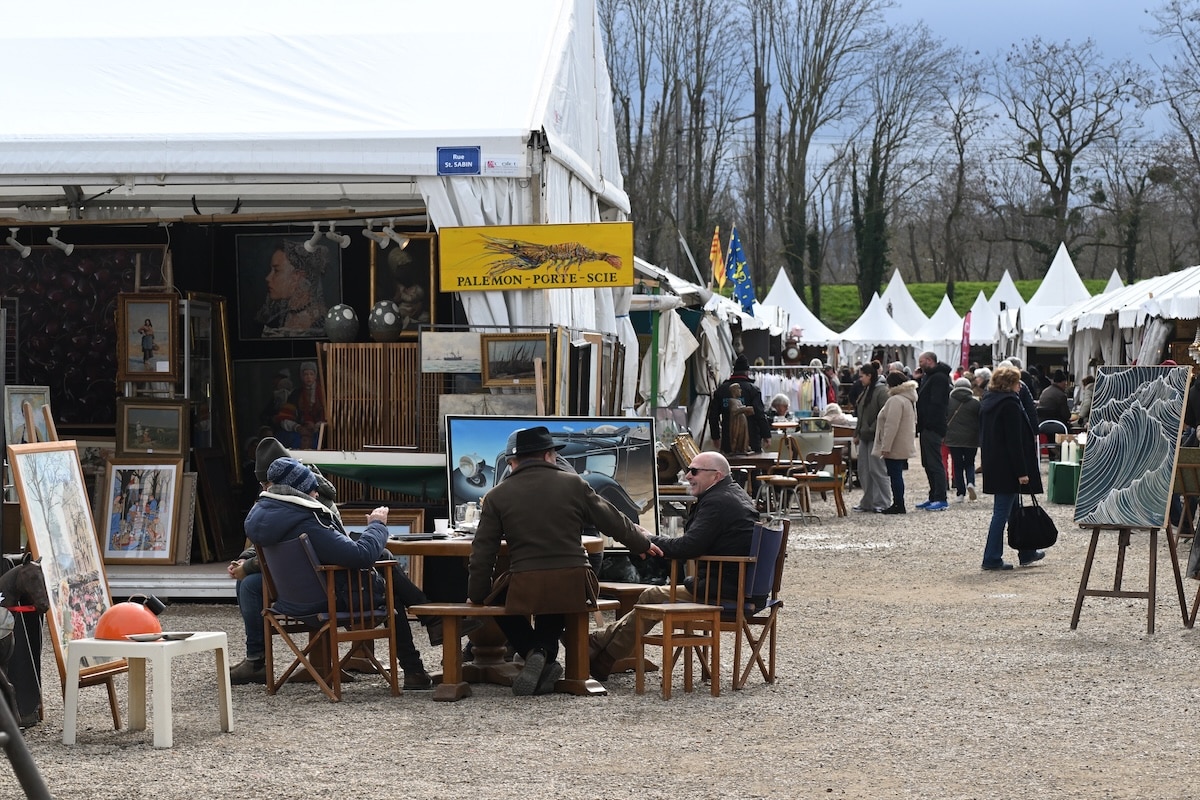
Specializes in: Furniture, silverware, tableware, paintings, jewelry, sculpture, and clocks — largely 18th- and 19th-century pieces from vetted professional dealers.
What makes it unique: The oldest and largest antiques fair in France. Every exhibitor belongs to the SNCAO-GA union and signs a charter guaranteeing authenticity, with free appraisal services on-site. It only runs twice a year, so the dates take planning around, but it is definitely worth a dedicated trip.
Hours: Two 10-day editions annually — in 2026, March 13–22 and September 25–October 4. Open daily, 10am–7pm.
Take a virtual tour of the Foire de Chatou with Sharon Santoni. If you want to see this fair for yourself, join her on a tour to Foire de Chatou in 2027!
4. L’Isle-sur-la-Sorgue, Provence
Location: A canal town in the Vaucluse, about 20 minutes from Avignon.
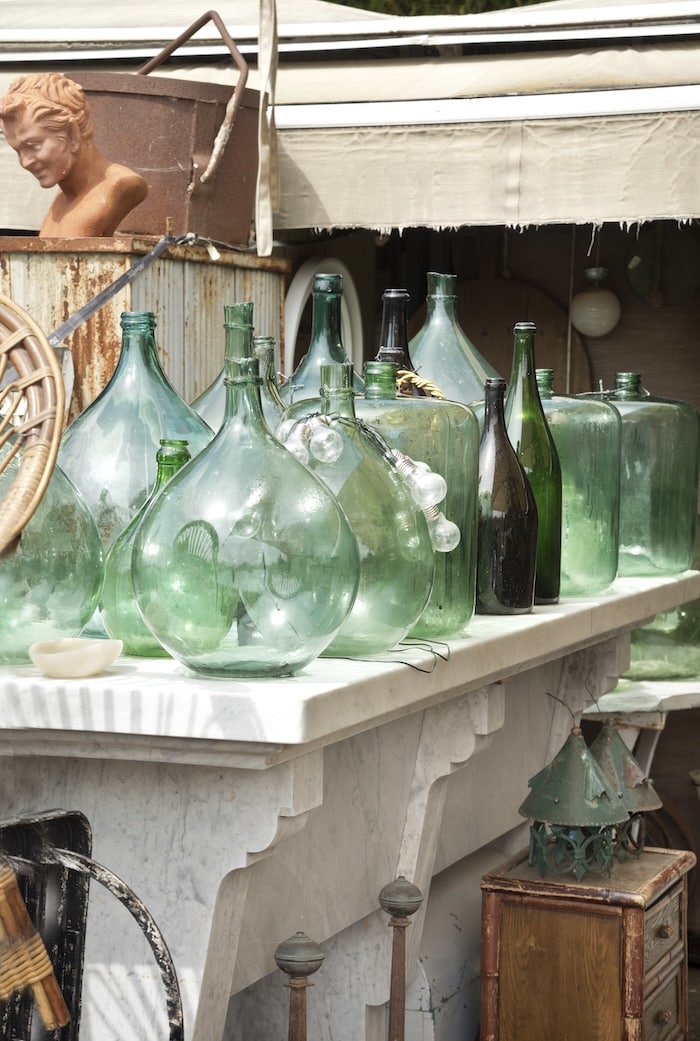
Specializes in: Furniture, jewelry, textiles, and decorative objects, sold by roughly 300 permanent dealers split among several antique “villages” scattered through town.
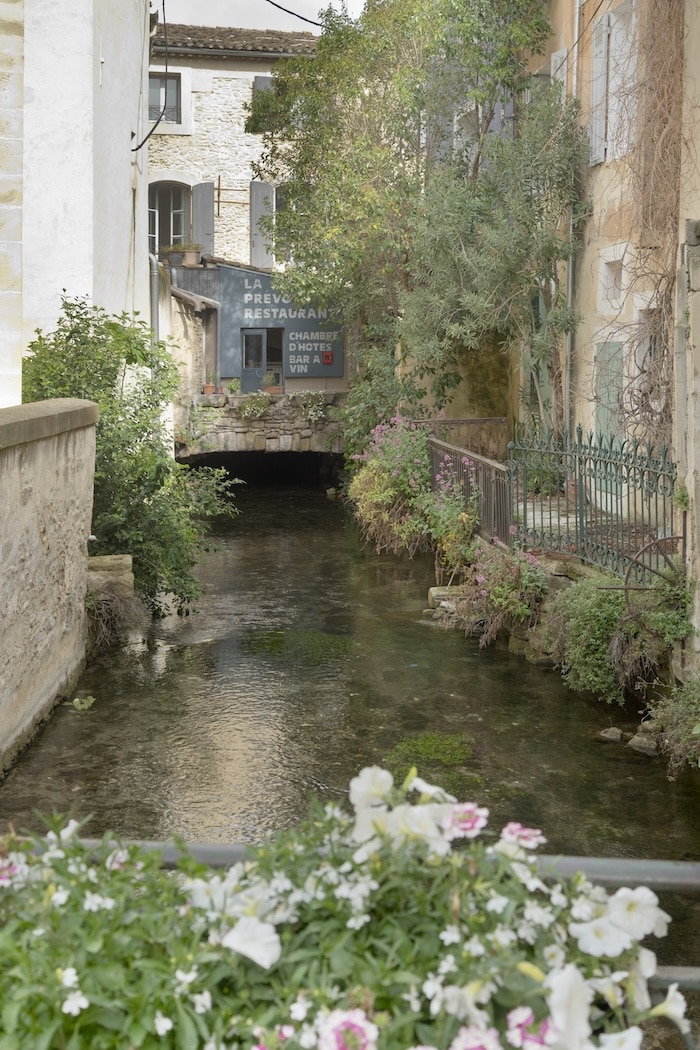
What makes it unique: Known as the Venice of Provence for the branches of the Sorgue river running through its center. The Sunday market spills across the canals and old town streets. Twice a year, around Easter and mid-August, an international fair triples the number of dealers on-site. This is a must-visit in Provence for antique lovers.
Hours: Sunday market, 8am–6pm, year-round. Permanent antique villages generally open on weekends. Major fairs run for several days around Easter and August 15.
Join us at Isle-sur-la-Sorgue next September for our MFCH Antiquing Tour in Provence
5. Village Saint-Paul & Carré Rive Gauche, Paris
Location: Village Saint-Paul sits in the Marais, between Rue Saint-Antoine and the Seine. Carré Rive Gauche spans the 6th and 7th arrondissements, between Rue du Bac and the Musée d’Orsay.
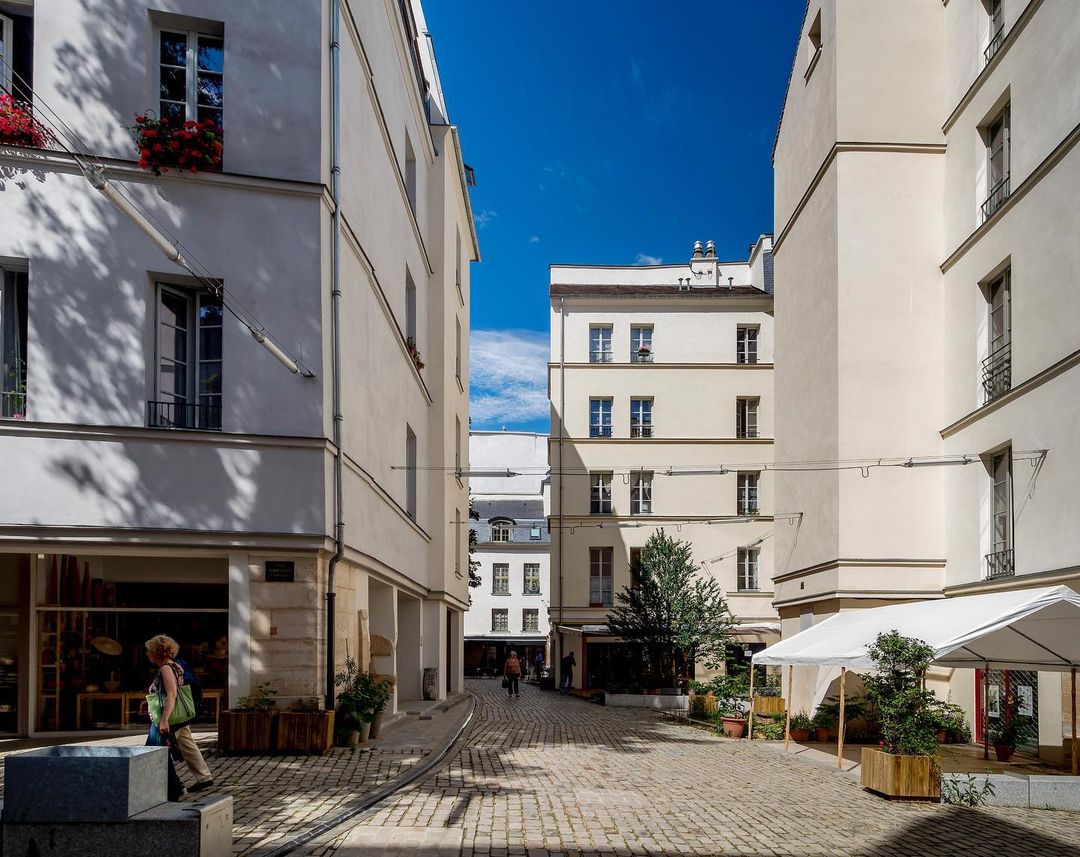
Specializes in: Village Saint-Paul covers a wide range, from medieval pieces to 1960s and ’70s design, spread through a maze of cobbled courtyards. Carré Rive Gauche leans upscale with 111 galleries covering 7,000 years of art history, with a focus on fine furniture, paintings, and sculpture.
What makes it unique: These are permanent shopping districts, not weekend markets, so most dealers keep regular hours and welcome browsers on weekdays. Better for considered pieces than bargain hunting.
Hours: Village Saint-Paul, Wednesday–Monday, 11am–7pm (closed Tuesdays). Carré Rive Gauche, Tuesday–Saturday, 11am–7pm. Many galleries close for August.
For more information, check out our Antiquing in Paris Itinerary.
6. Grande Braderie de Lille
Location: Lille city center, in northern France near the Belgian border.
Specializes in: Vintage furniture, clothing, records, and books on the smaller streets. Professional antique dealers — including British specialists who cross the Channel just for the event — concentrate on Boulevard Louis XIV and Boulevard de la Liberté.
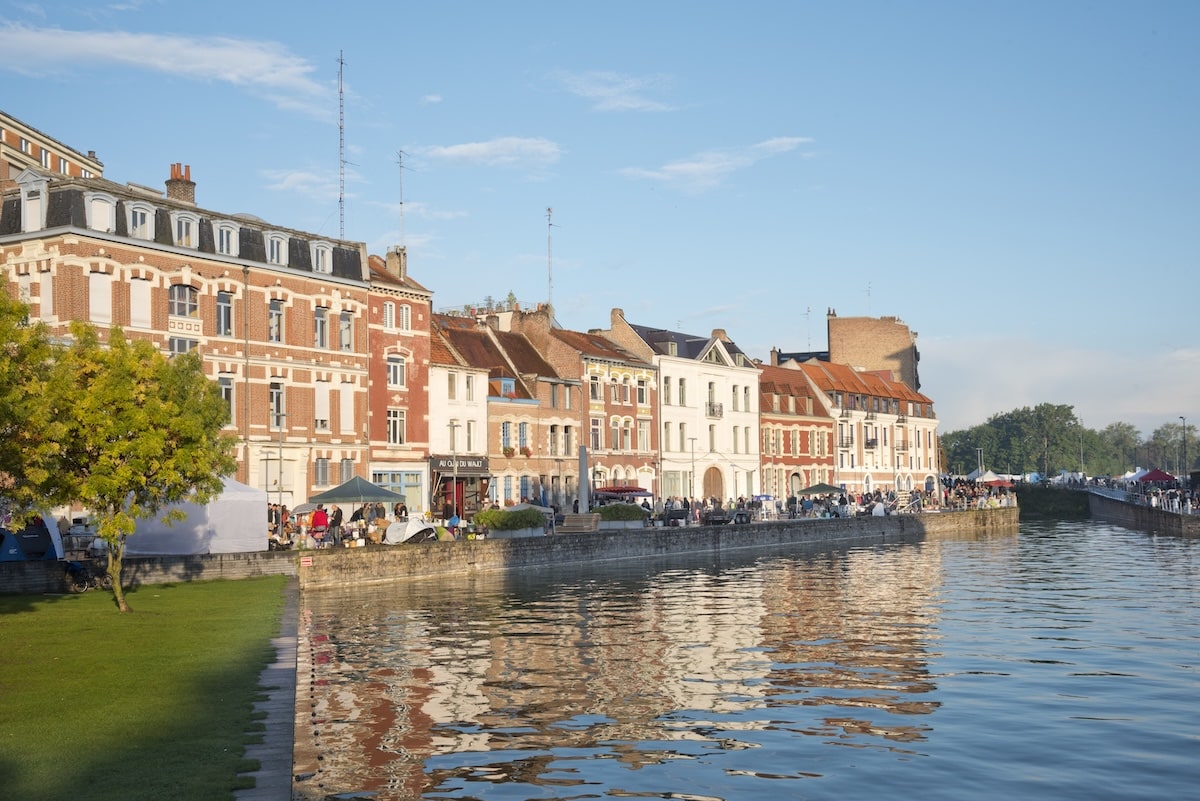
What makes it unique: One of Europe’s largest flea markets, dating back to 1127. It runs for 34 hours straight, and the moules-frites tradition along the route draws nearly as much attention as the antiques, with restaurants competing to build the tallest pile of empty shells.
Hours: First weekend of September — Saturday at 8am to Sunday at 6pm.
7. Puces du Canal, Lyon
Location: 5 Rue Eugène Pottier, in Villeurbanne on the outskirts of Lyon, along the Canal de Jonage.
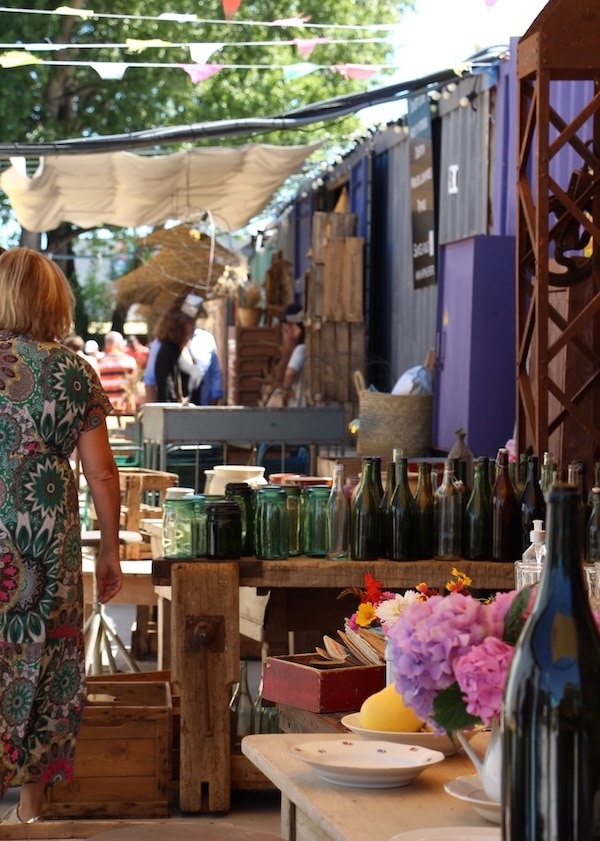
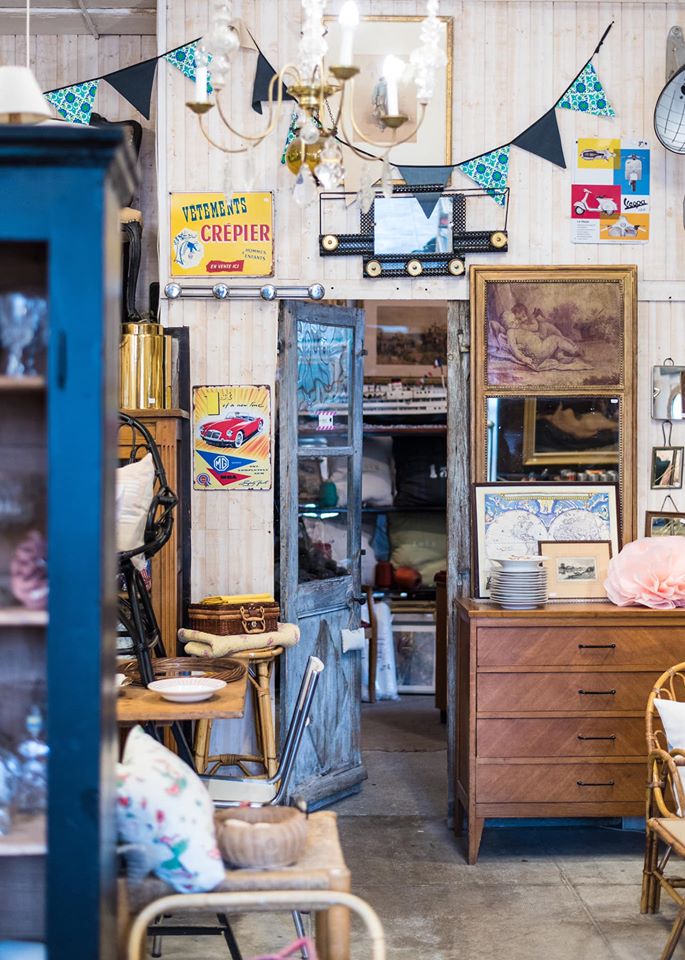
Specializes in: Antiques from the 16th to 20th century — furniture, Art Deco pieces, painted commodes, and metalwork in the covered Hangar. La Halle Louis-la-Brocante organizes dealers by specialty. The Village des Containers covers upcycled and vintage design.
What makes it unique: France’s second-largest flea market after Saint-Ouen, with around 400 vendors and half a million visitors every year. Thursday and Saturday mornings run at a trade-focused pace, geared toward dealers buying from dealers. Sunday is the main event, when the public can browse, buy, and even set up their own stalls alongside the regulars.
Hours: Thursday and Saturday, 7am–1pm. Sunday, 7am–3pm. Open year-round.
For special antique buying trips, check out our lineup of fully guided antiquing tours around France on our MFCH travel website. If you prefer to antique on your own, use our detailed itineraries to help get you started.
Continue Reading