The Equestrian Look: A History of French Autumnal Style

by Jessy Brewer

© Unsplash

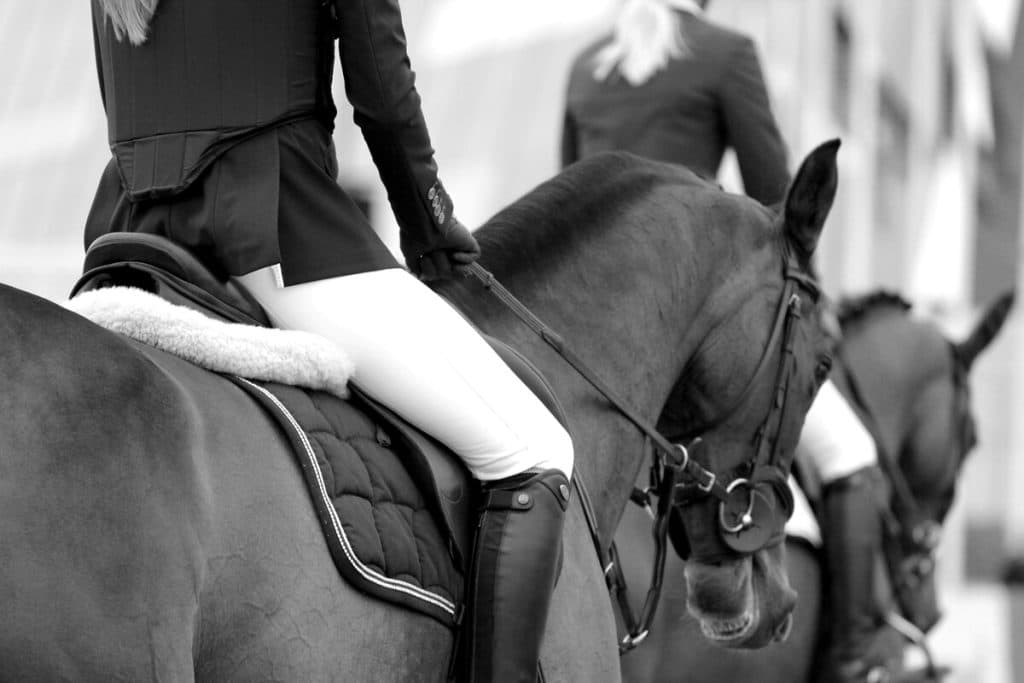
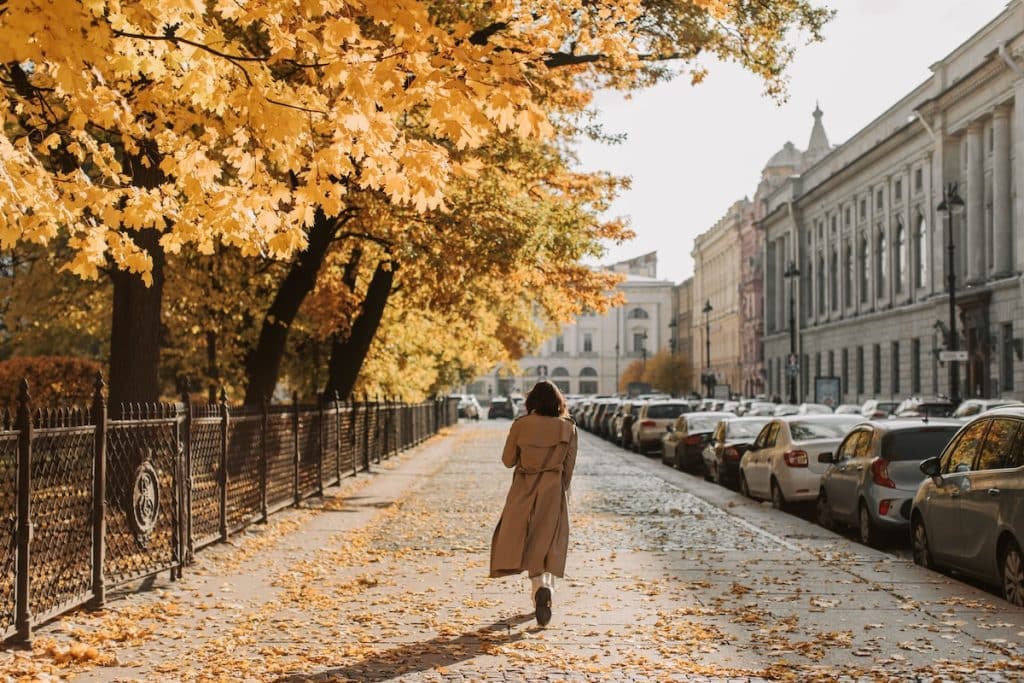
In autumn, we don our cozy tweeds and riding boots as a nod to equestrian style.

Dress evolves with cultural dialogue — habits, tradition, and experiences. So, in the fall, what defines French style language? And how do savored pastimes define the wardrobe?

Equestrian style is a woven thread in French sartorial history, especially in autumn when layers make an appearance again after balmy summers. This notion dates back to pre-revolution France, when Marie Antoinette reigned in the palace of Versailles, trickling down into early designs drawn up by Coco Chanel and the Hermès family. 


A Brief History of Equestrianism in France

Equestrianism has endured for centuries in France but style — women’s style, in particular — can arguably be traced back to Marie Antoinette. 

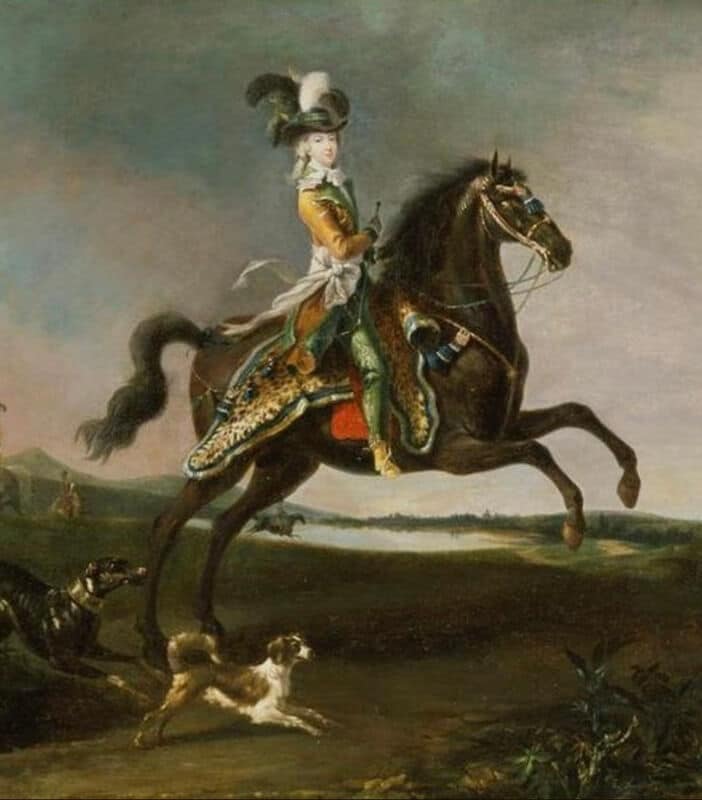
 In 1783, a unique portrait was commissioned in the controversial queen’s likeness. Louis-Auguste Brun depicted Marie Antoinette sitting “astride,” rather than side saddle, styled in slim breeches and a coat — far from lace and silk gowns dawned at court.

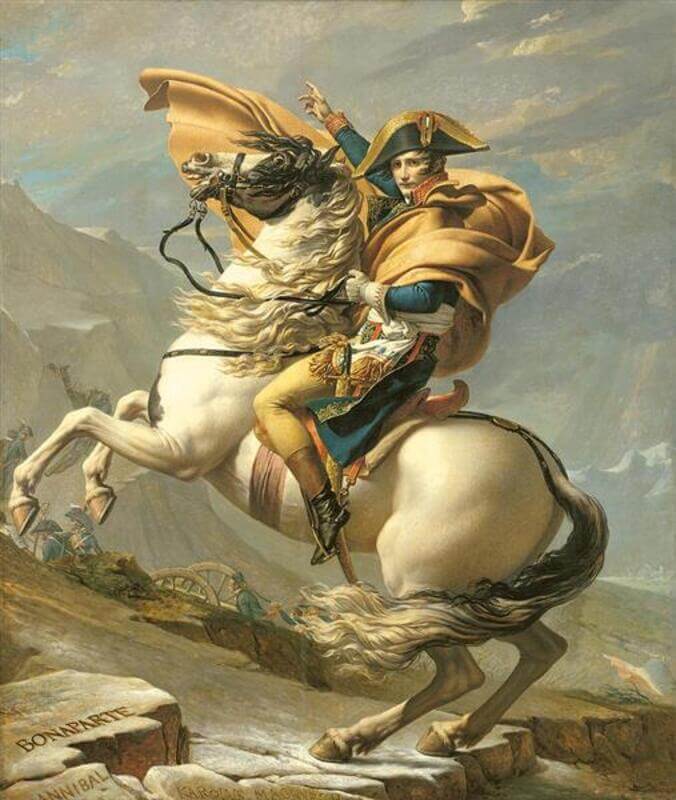
Her figure exudes an authoritative calm, akin to future French leaders such as Napoleon Bonaparte. 

At this time, horse riding was coveted almost exclusively by royal and noble men. Horses, a luxurious investment, were vehicles for hunting and in battle and used equally as symbols for status and strength. 


                © Château de Versailles, Dist. RMN / © Christophe Fouin, 59 x 64,5 cm
© Château de Malmaison, Rueil-Malmaison, France, 261 cm × 221 cm

By the early 20th century, the sport was democratized. No longer exclusive to the royal court, military leadership, or hunting activities, making a début at the 1900 summer Olympics in Paris.

By the 1960’s, the sport became common place for many French families.

Today, back to school is often coupled with “pony club,” which is enjoyed across rural and urban communities alike. Parisian children can be seen riding dappled ponies through the Luxembourg Gardens and in the Bois de Vincennes, while children in the Norman countryside take to wooded trails.

Equestrian Inspiration in Haute Couture

Just more than half a century after Marie Antoinette’s portrait was captured on horseback, Thierry Hermès opened his first maroquinerie et sellier (leather goods and saddlery workshop), outfitting riders and carriages with high quality gear.

In the early 20th century, the house expanded under new leadership, developing luxury accessories and ready-to-wear men’s collections inspired by their equestrian roots.

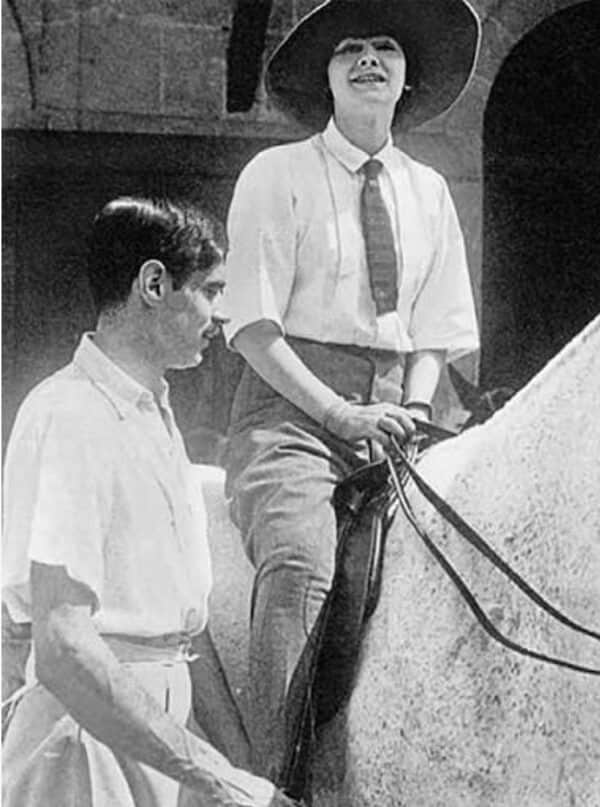
Around the same time, Coco Chanel commenced her early designs in kind. Encouraged to ride horses “astride,” by friends and early investors of the brand, she altered and adapted her clothes for functional living and movement — creating and wearing riding breeches and jackets, as Marie Antoinette is storied to have done. 


              Arthur “Boy” Capel with Chanel on horseback, 1908, at Chateau de Royallieu. Source: Vaughan, Sleeping with the Enemy, 7
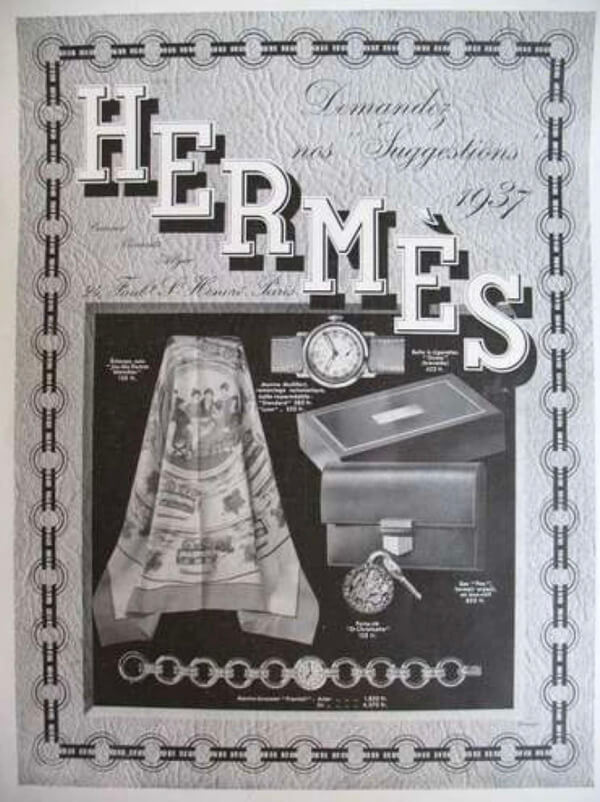
Hermès advertisement from 1937, featuring the newly introduced silk scarf.

During this period, Chanel lingered around race tracks and polo matches, later meeting and falling in love with polo player Arthur “Boy” Capel. Her time spent around athletes and engaging in equestrian sports arguably gave way to the classic Chanel tweed, jersey tops, and quilted details which appear inspired by horse blankets even before Hermès introduced a women’s line. 

Her objective was to define luxury through comfort, which was an unwavering value in her early work.

Once women’s equestrian style was popularized by Chanel, Hermès introduced its first silk scarf, featuring horse-drawn buggies.

The print and fabric brought luxury to the forefront of the conversation — solidifying horses and equestrian sports as an inextricable part of French fashion.

Equestrian Themes in Contemporary Style

Today, equestrian-inspired style finds a place in ready to wear collections, on the runway, and in street-style respectively. The language translates across audiences. It began, at first, as a common understanding among those in-the-know, then as an aspirational reach toward life beyond the city, and now almost as if chosen without a second thought. 

We see these details come to life on the streets of Paris and beyond in riding boots, silk scarves, tweed, corduroy, fringe, and horse-bit details on leather accessories.

In 2022, Chanel opened the “A Conversation That Crosses Time,” Spring/Summer couture show with Charlotte Casiraghi on horseback, clad in glittering tweed, breeches, and riding boots. A nod to the atemporal nature of the sport in French style.

Sporty and cozy equestrian inspired silhouettes are now deeply engrained across French brands and in wardrobe essentials such as riding boots, scarves, and jackets.

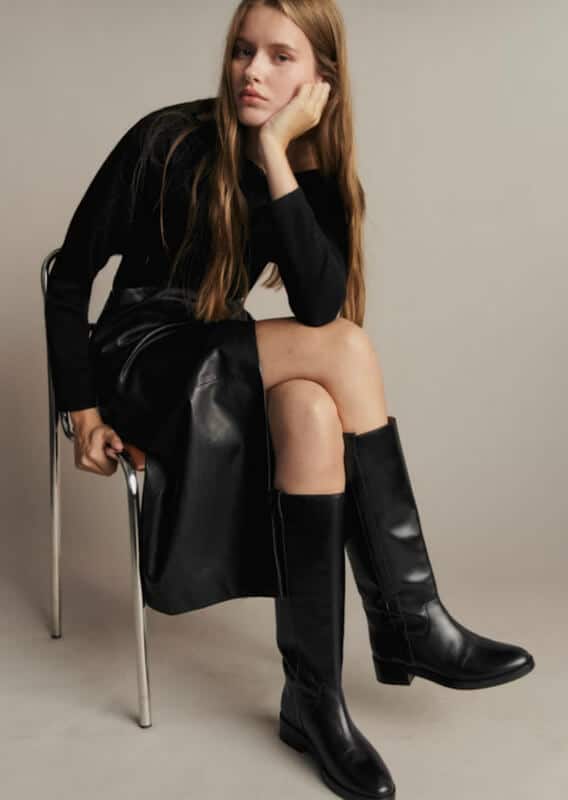
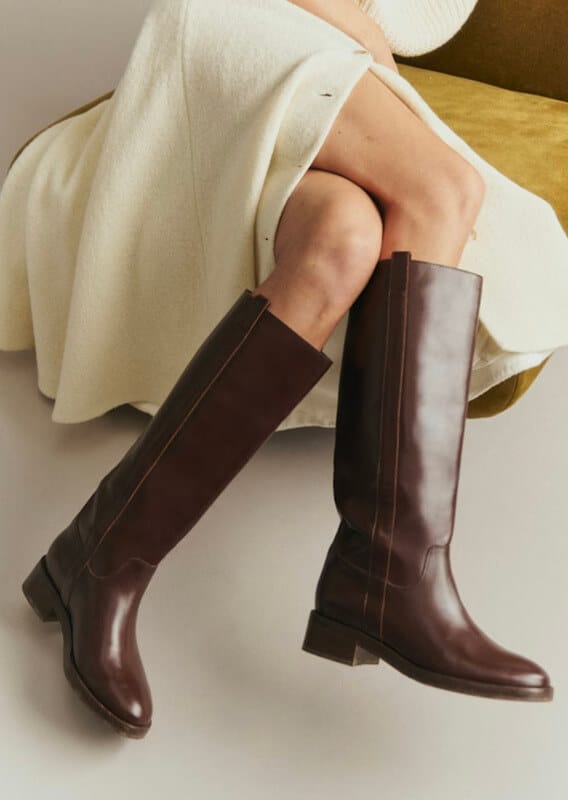
Riding Boots

High calf riding boots, not only charming and timeless, protect from the elements on the streets of a city, along countryside trails, and in the stable. 

Functional and chic, they elongate the leg and bring an air of cool to long flowing skirts. 

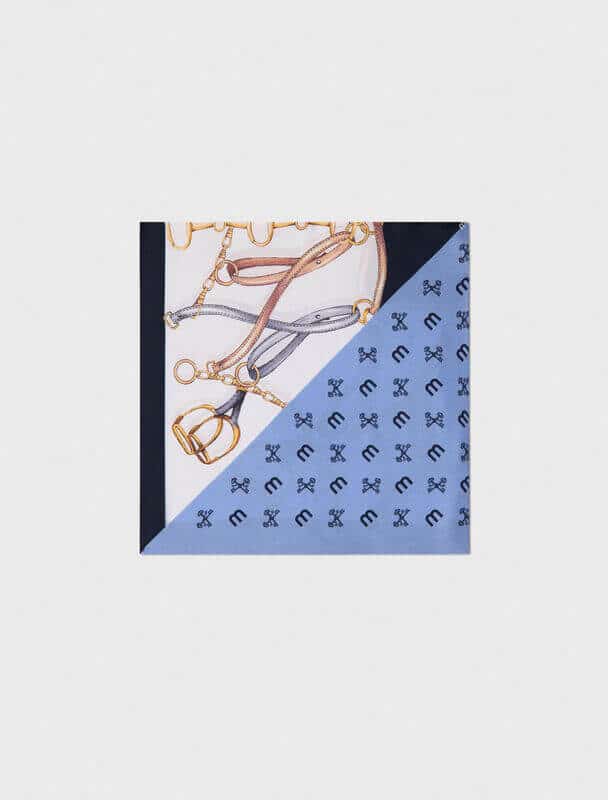
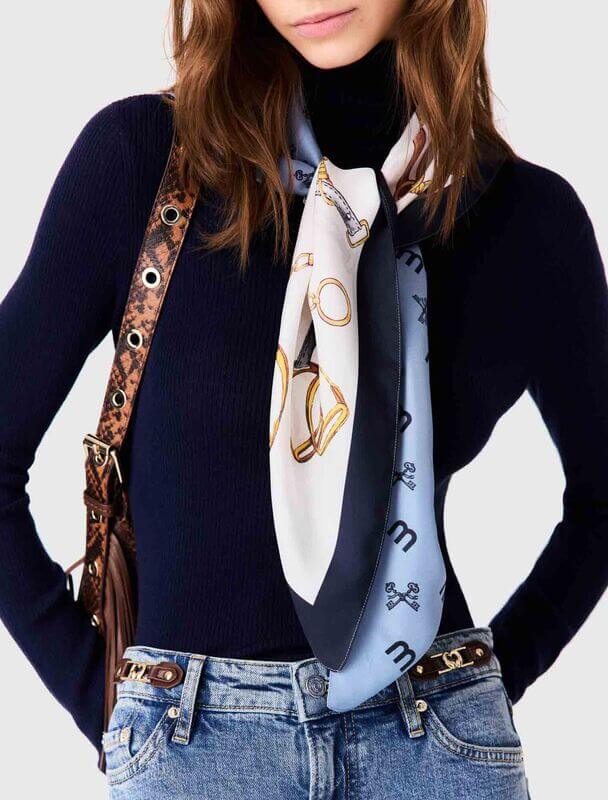
Silk Scarves

A silk scarf is merely an acknowledgement of the culture, which started with Hermès and has continued to flourish in other houses. The equestrian theme graces Celine and Longchamp silk scarves, as a nod to their own relationship to the sport.

Today, contemporary ready-to-wear French brands such as Maje, incorporate equestrian-inspired prints on silk scarves in recognition of the long standing tradition of equestrianism in French style.

Tweed, Wool & Corduroy

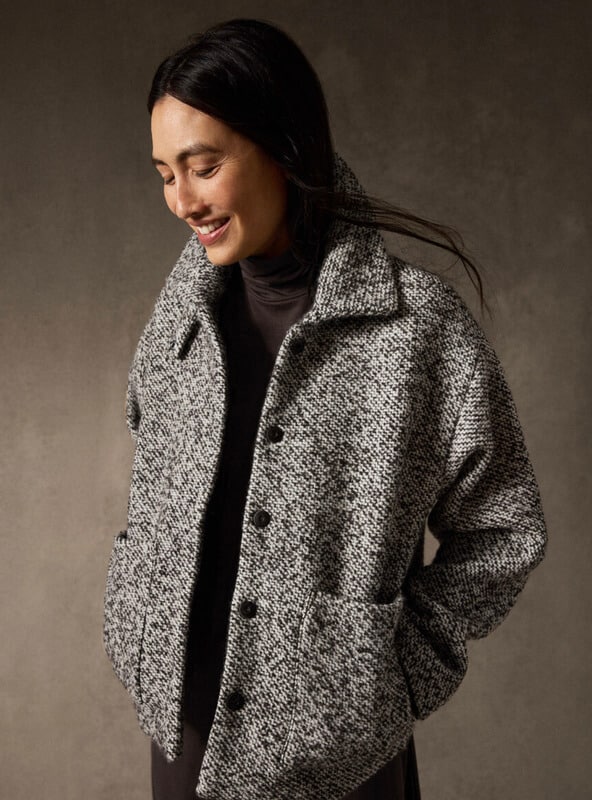
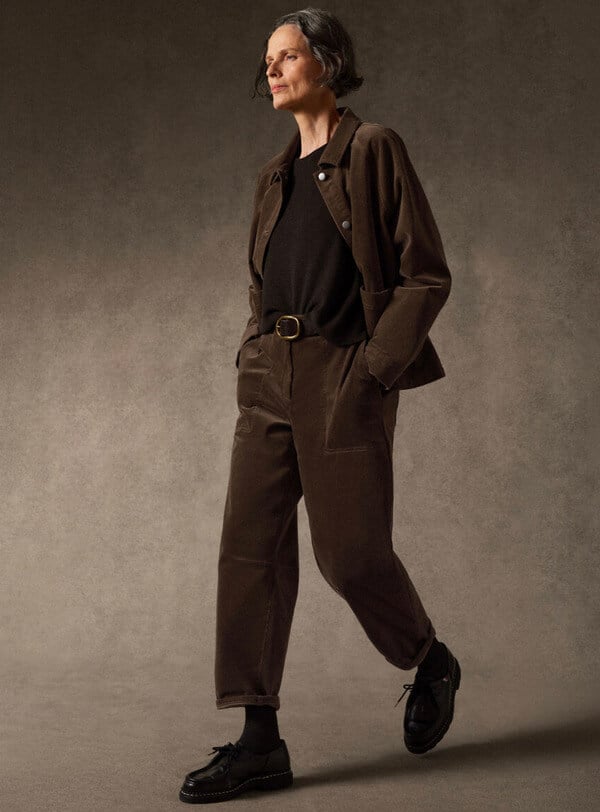
Tweed, wool and corduroy remain classic staples in riding sports and are versatile across environments.

Each used in the early 20th century riding costumes for ease of movement and warmth, these materials are still employed during hunting season, trail riding, and when strolling leisurely through Paris in the fall.

Fringe Accents

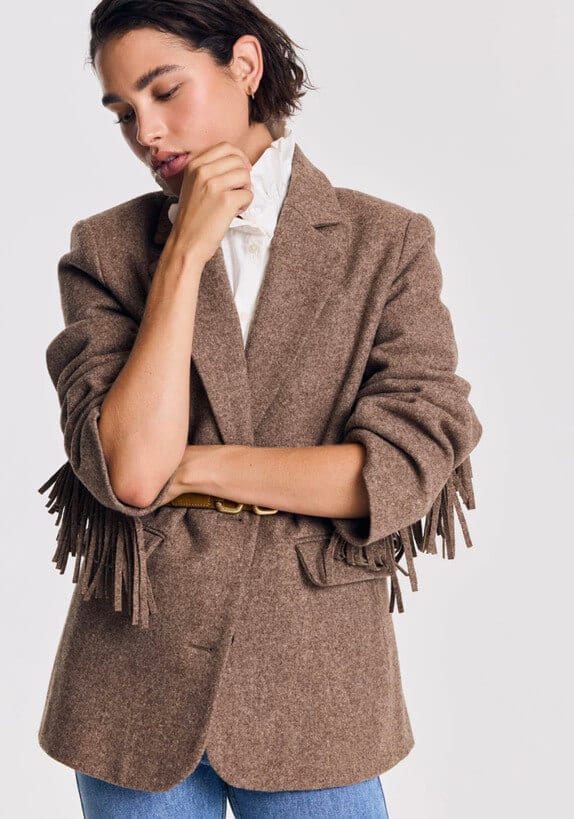
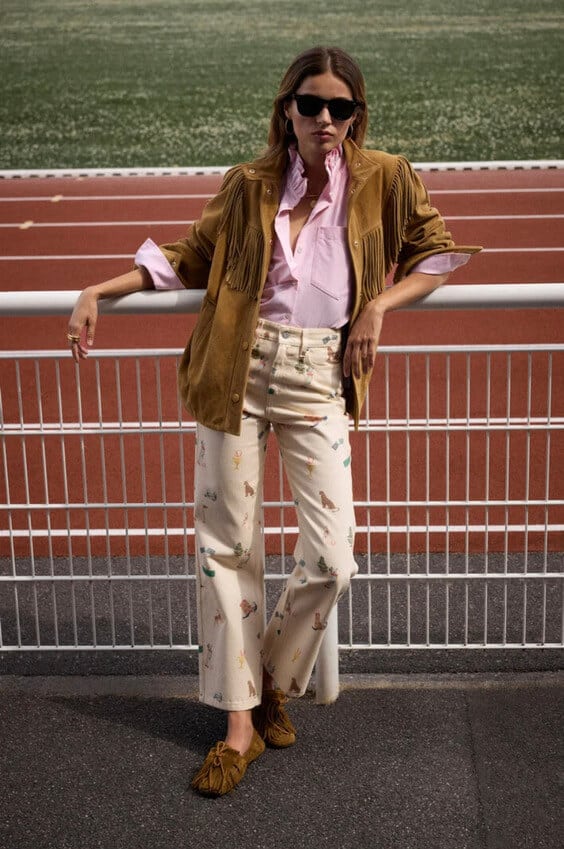
Stepping away from classic clean cut riding style, references to the American west and fringe take over in French ready to wear too — bringing a playful element to an otherwise serious and sacred tradition.

Ride into Autumn in French Equestrian Style

When a pastime occupies so much historic means of utility and pleasure, it’s bound to impact perception of style — on and off the runway. 

In autumn, in Paris and beyond, it would be hard to miss nods to the world of equestrian sports and the impact it has had on the way we get dressed in the morning.

Written by Jessy Brewer

This post contains affiliate links. If you click through and make a purchase, we may receive a commission (at no additional cost to you). Thank you for supporting My French Country Home in this way as we provide recommendations to our favorite brands and products.

Continue Reading

Wander Through Our Stories

Related Articles

This Site Uses Cookies

Don’t be alarmed, we do not use or store your information. We are a French site and this is simply a regulation for the European Union to let you know that this website uses cookies to improve your user experience. By using our website you consent to all cookies in accordance with our Cookie Policy. Read More