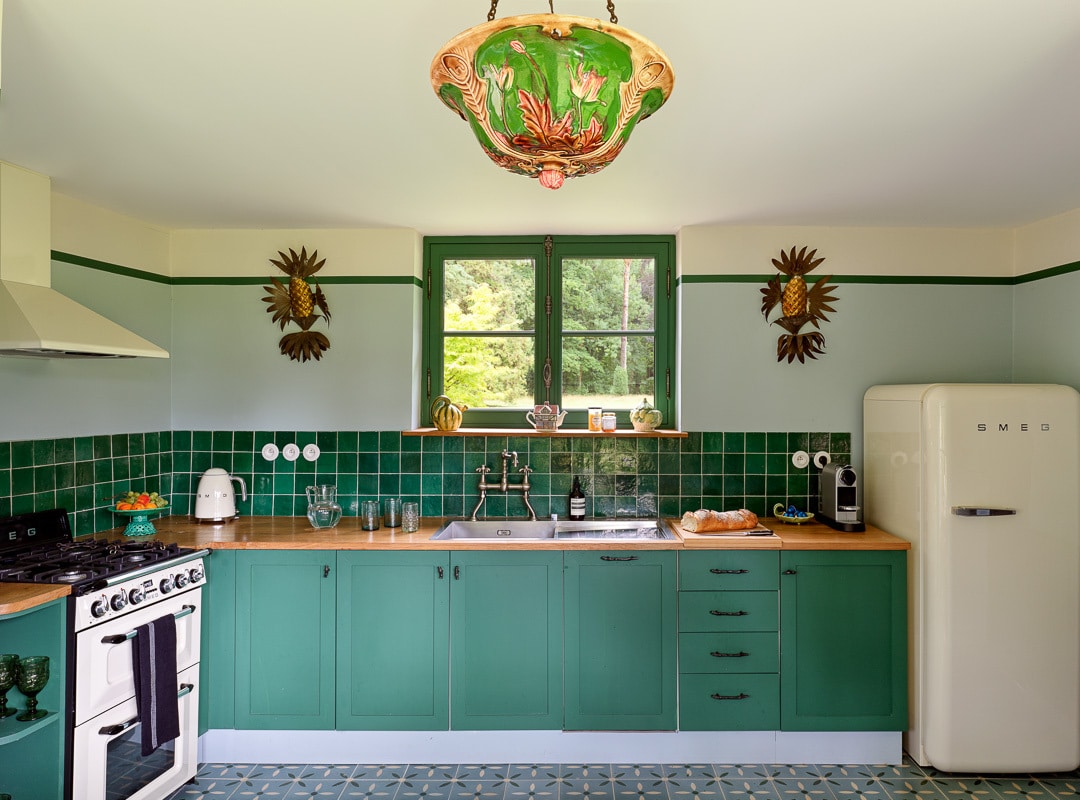
Photo by Stephan Julliard
The French secret to cooking, dining, and hosting, is rooted in simplicity.
Reliability is favored before flash and glamour in the kitchen, but simple aesthetic flair pops in at every corner. In that vein, the French ensure each item is chosen and appreciated for the duration of its abilities.
SUBSCRIBE TO THE MAGAZINE
Akin to a wardrobe, the French kitchen is constructed over time. Vintage cake stands, silver, and china won at auction or spotted at a brocante in Paris, make the delicate array of objects which color the French countertops and tables.
Upon entering, guests will notice drawers laden with well-loved objects. Knives fitted with aged and wooden handles, and homestyle cutlery with iconic acetate finishing are stored throughout. Salad bowls and a patchwork collection from Le Creuset double as serving dishes.
When curating la cuisine (the kitchen), the French are guided by the following sensibilities:
Is the Item Made in France? — French Glassware
When an item carries a Made in France label, whether etched at the bottom of a glass or along the blade of a knife, it brings a sense of pride to the buyer. The nation’s culinary manufactures have been lauded for their gastronomic tools and expertise for generations, as they lean into quality and the tradition of savoir-faire.
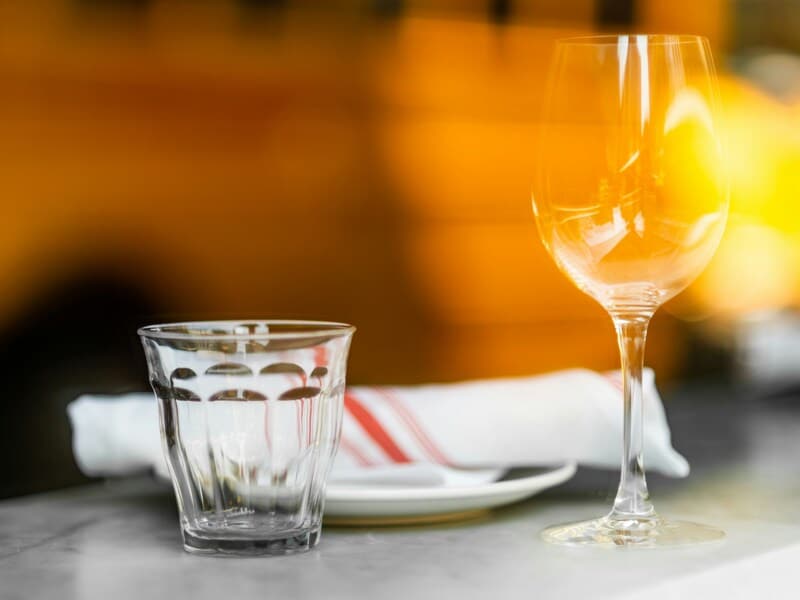
Since many French regions specialize in certain areas of production, cooks of all backgrounds and expertise have a soft spot for supporting small local industries. The French opt for knives mades in Thiers, Duralex bistro glasses from Lorient, and china dishes crafted in Limoges.
Does it Serve a Dual Purpose? — Smart Storage
In many French homes, especially in urban apartments, space is coveted and optimized for ease. Kitchenware is designed with this in mind.
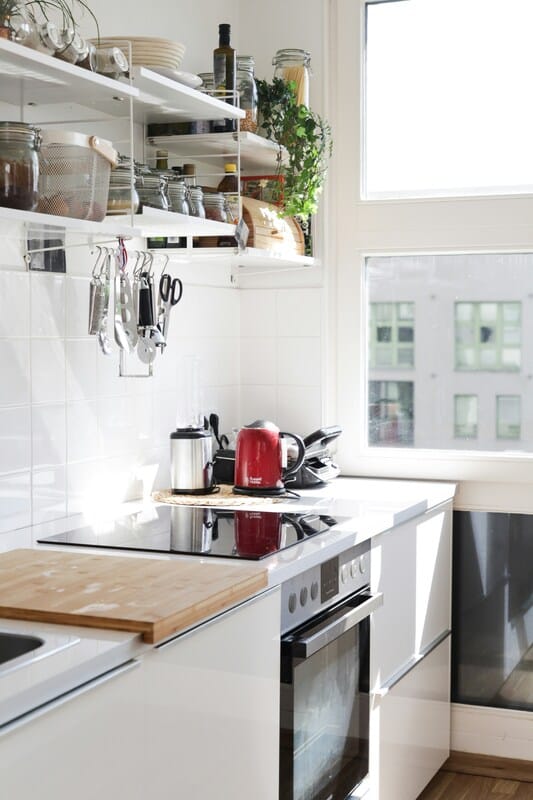
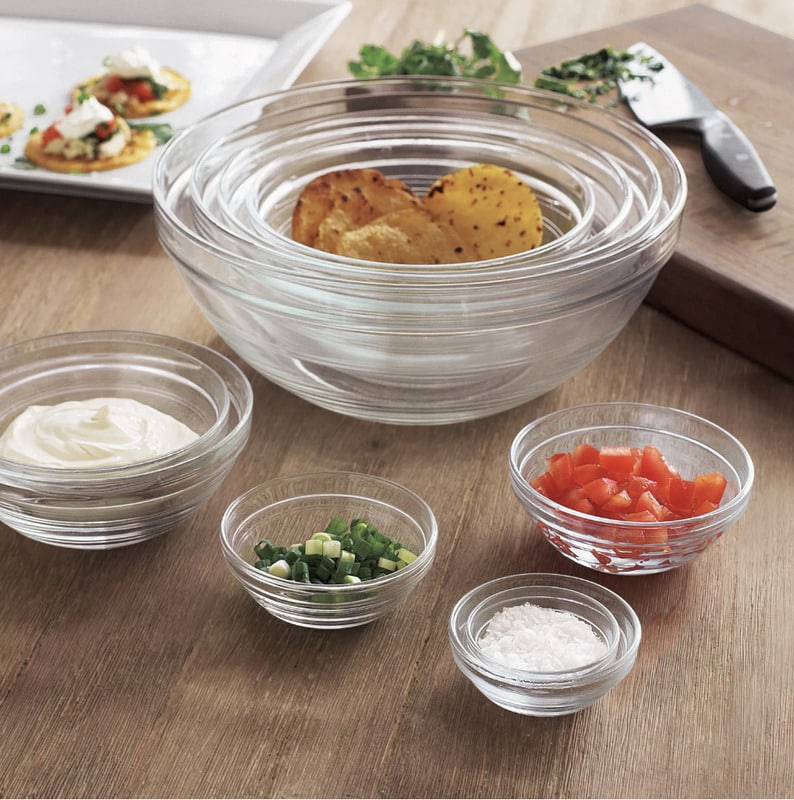
Pots and pans are reimagined with removable handles, knives may be stored on strong wall magnets rather than in drawers or counters, and saladiers (salad bowls) may double as serving dishes for guests.
Will it Endure Wear & Tear? — Classic Dutch Ovens
Cooking or baking demands trial and error, and recipes may go wrong before they can be fully appreciated. A pan will burn and scratches materialize, but these imperfections are signs of life which add color to the memories made in the kitchen.
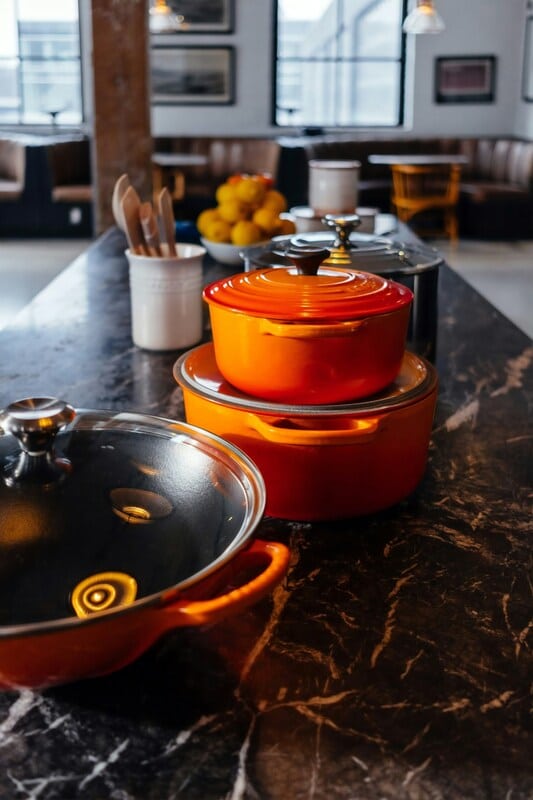
While French home cooks oscillate between delicate kitchenware and more reliable pieces, a cuisine armed with qualitative materials gives permission to make mistakes – which is vital when building a repertoire of French recipes.
The French reach for Le Creuset time and time again. The enameled iron pots bring a soft elegance to the atmosphere which can be passed through the hands of many generations.
Can it be Recycled? — Elegant Jam Jars
The French aren’t afraid to reuse jars or keep plastic storage.
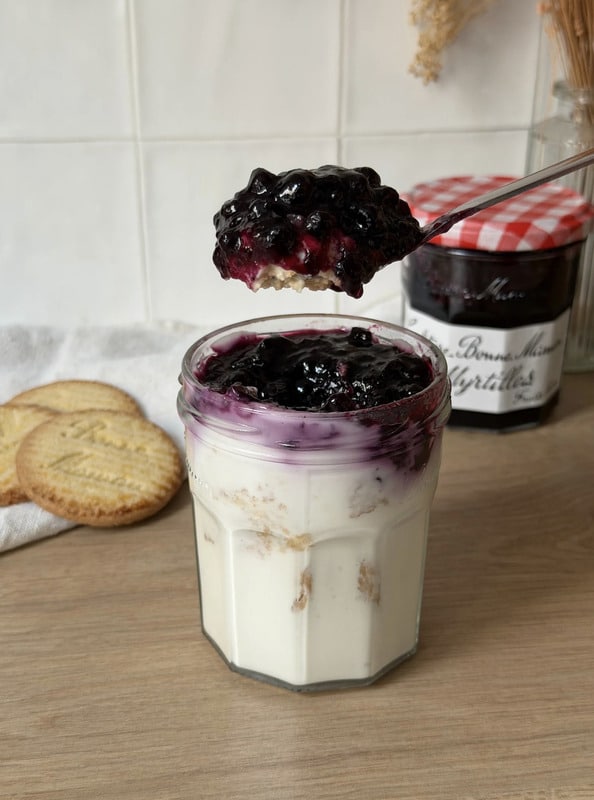
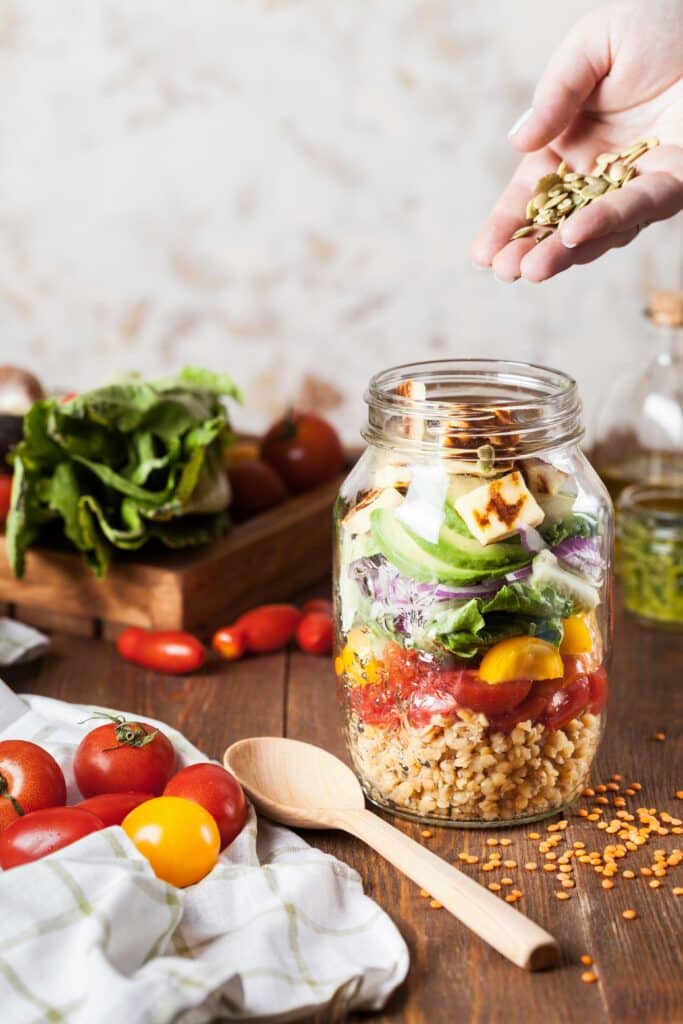
Bonne Maman in particular, is a popular choice for storing an assortment of items. With a pretty vichy patterned twist top and removable labels, these jars are quickly repurposed to mix the salad dressing or store the rests (left overs).
Countertop Essentials — Quality Copper & Ceramics
Since storage is often limited, counter tops cover the essentials. It’s not uncommon for collection of wooden spoons, spatulas, and array of copper utensils to be easily arranged and accessible in ceramic vase.
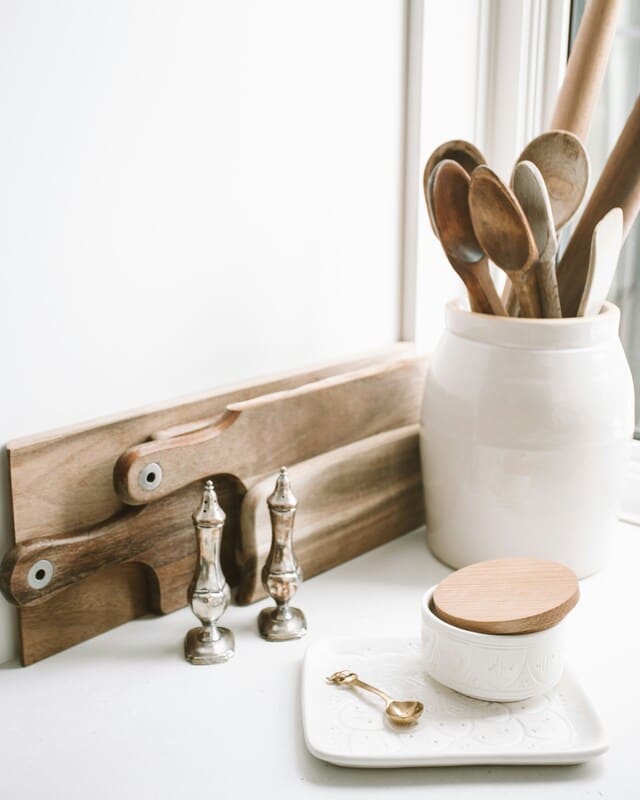
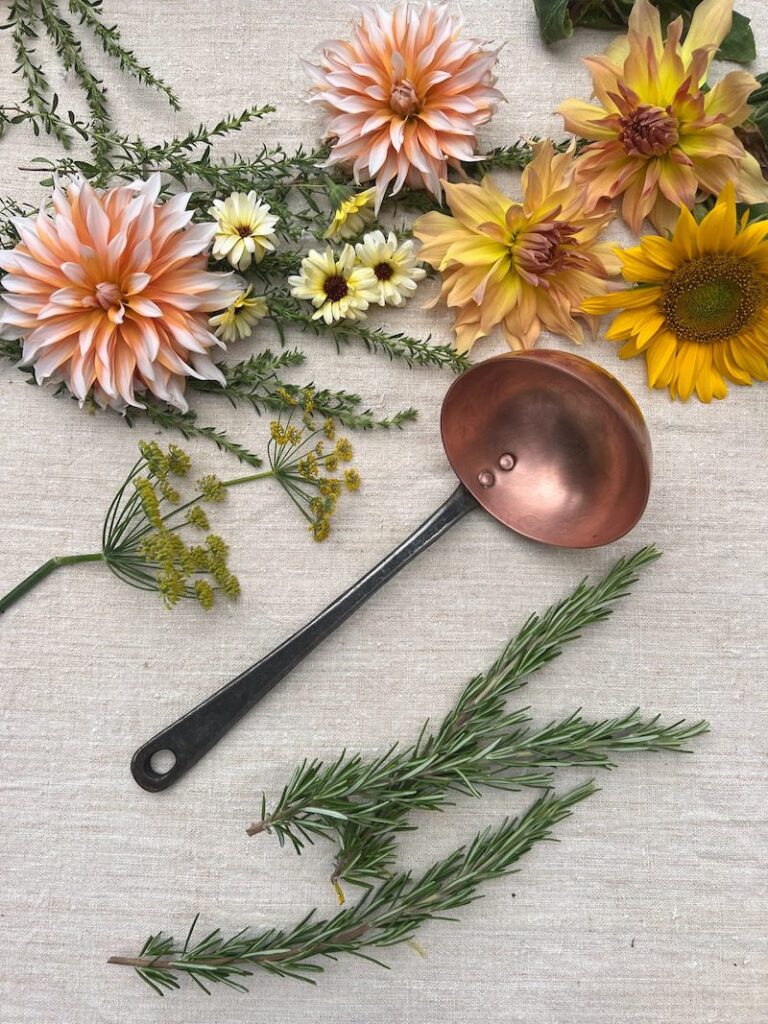
Any vase will do, but the French enjoy objects with a story. Those made by hand in the studio or gifted by a friend bring a special touch to the French kitchen.
Everyday French Cooking — Pots & Pans
The French gravitate to several types of cookware. If one has a limited storage, some opt for pots and pans with one detachable handle.
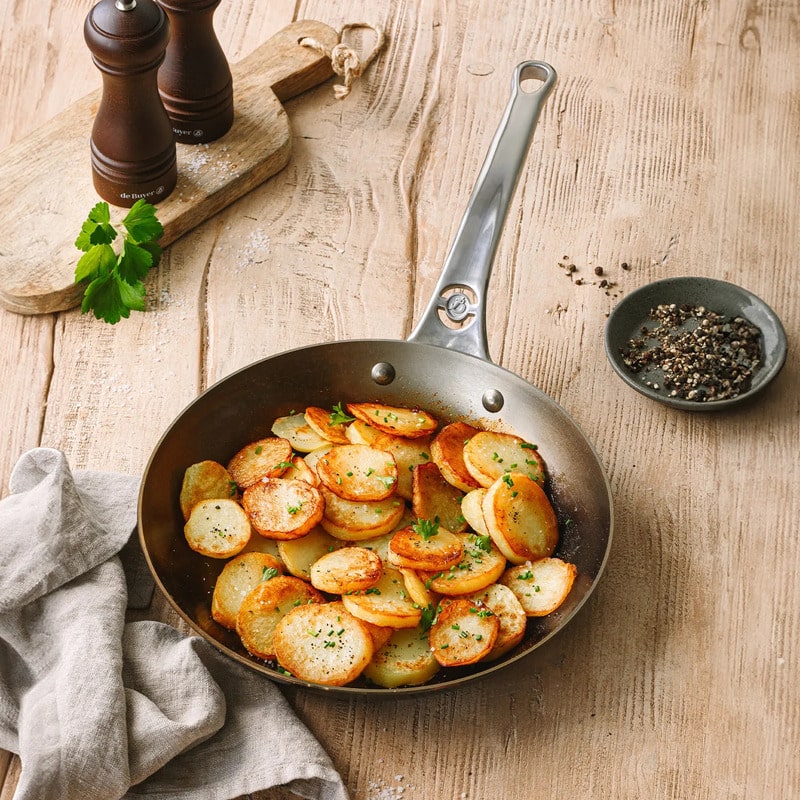
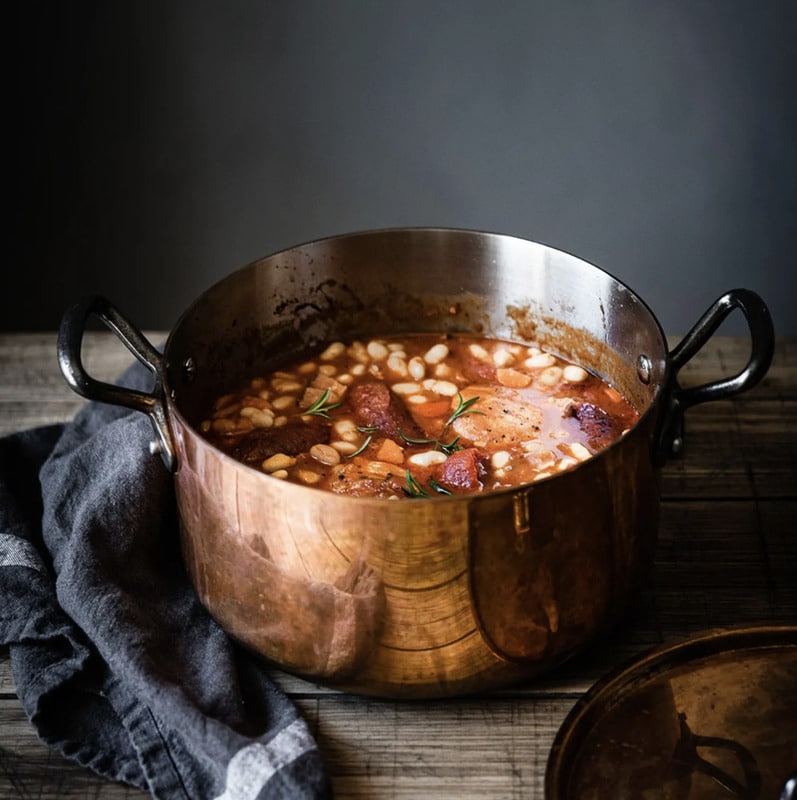
De Buyer cookware is, otherwise, an indisputable favorite among home cooks. The iron pans are heavy and perfect for fool-proof cooking. At the same time, the pots feel luxurious and industrial, tapping into the medium of beauty and utility.
Quality Couteaux- Keeping Kitchen Knives
Rather than purchasing a set of knives, the French outfit their kitchens with a plethora of styles. Among the kitchen staples are objects with sentimental value.
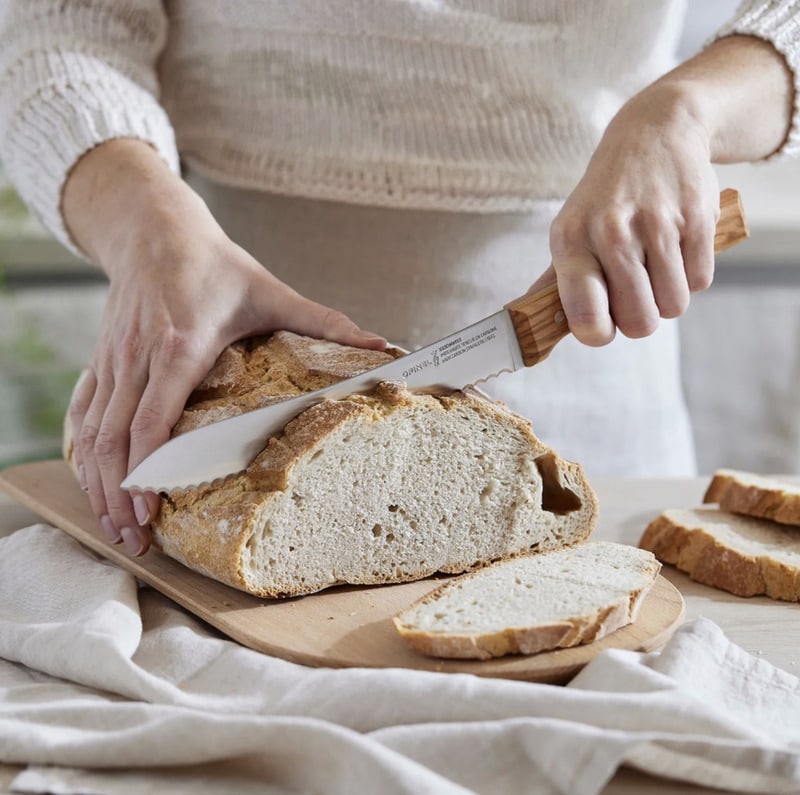
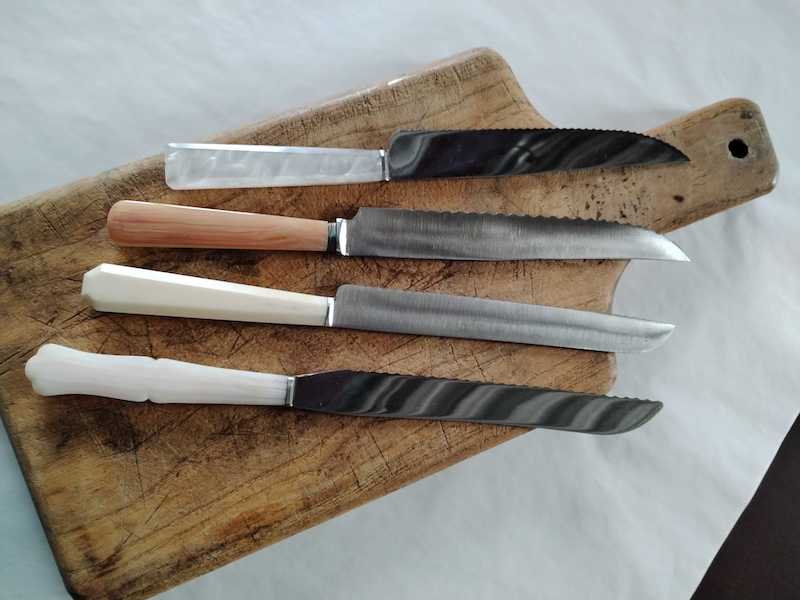
An iron couteau (knife) which is purchased on holiday in Japan or at a market in the South of France, is as equally cherished by home cooks as classic Laguiole and Opinel cutlery. With an array of styles, knives are often stored side by side on wall magnets or in drawers.
Setting the Table – Flatware & Dinner China
As an extension of the kitchen, the dining table frames the efforts made in a kitchen. A French kitchen table is set for each type of occasion. When a home meal served with family and close friends, place settings are lined with forks and knives, well loved china, and cloth napkins.
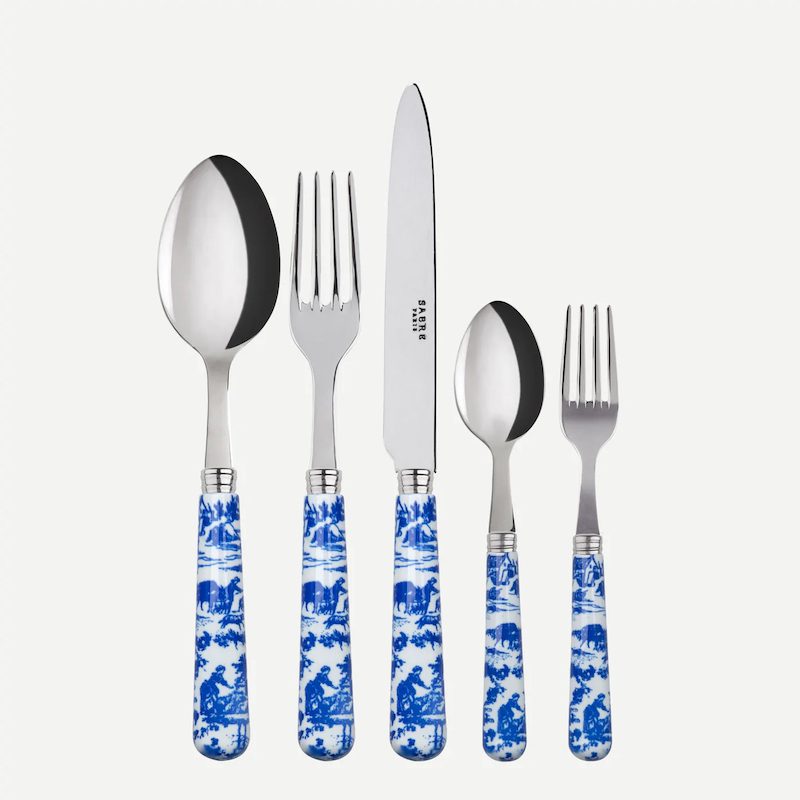
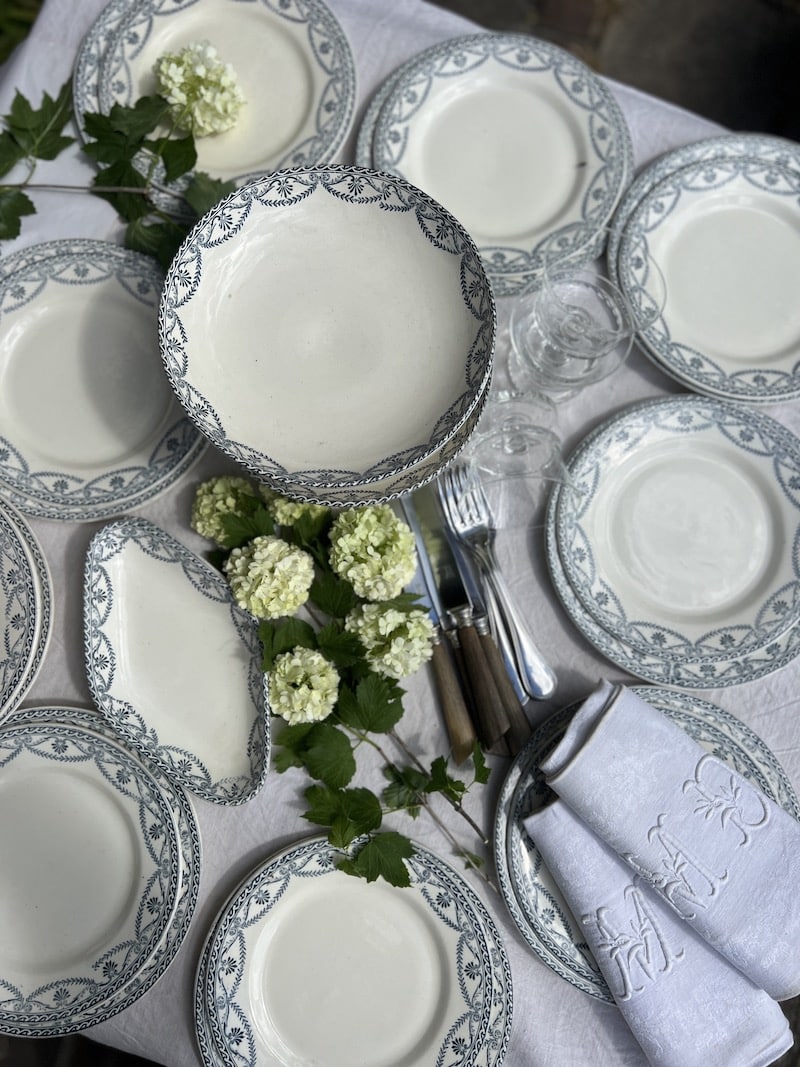
French kitchens are rich with reminders of travels, tradition, and confidence in utility. The French return to their favorite tools and methods repeatedly. This gives makes them confident in the space and willing to perfect their home recipes and flavors.
The goal is never really perfection, but an air of ease followed by a sense of simple beauty.
Written by Jessy Brewer
This post contains affiliate links. If you click through and make a purchase, we may receive a commission (at no additional cost to you). Thank you for supporting My French Country Home in this way as we provide recommendations to our favorite brands and products.