Photo by Greg Alric
**This article is a direct feature from the January/February 2026 Issue of My French Country Home magazine written by Nicola Clark. To see more articles like this, be sure to subscribe to the magazine**
Founded a century ago, Maison Fabre is one of France’s most storied glove brands. Its finely crafted designs have graced the hands of royals, film stars and fashionistas, securing its reputation for enduring style and elegance.
As a child, Olivier Fabre spent hours on the floor of his family’s glove factory in Millau, turning scraps of goat leather and furs — rabbit, antelope, fox — into fantastical creations with his two brothers. In this quiet village in the Aveyron, long famed for its skilled leather artisans, the factory was part playground, part classroom — a place where creativity, ingenuity, and respect for centuries-old traditions came to life. Growing up surrounded by the rhythms of the atelier and textures of fine skins, Olivier absorbed the artistry that would shape his family’s legacy of French luxury.
“We learned early not to waste anything, to preserve and to transform our materials, and to place the artisan at the heart of everything,” Olivier says. “We were lucky to have that.”
Now the chief executive of the company, Olivier is a man on a mission — determined both to expand this century-old enterprise and to preserve and promote a disappearing craft across France and beyond.
The History of Maison Fabre
Founded in 1924 by Olivier’s great-grandfather, Etienne, Maison Fabre initially specialized in crafting white kid gloves for women, which were highly fashionable at the time. All the work took place across the three floors of the family home, where Etienne and his brother recruited and trained a small team of cutters and stitchers. Business grew steadily until the Fabre brothers were forced to close during WWII. It wasn’t until 1946, when Etienne’s son Denis and daughter-in-law Rose joined the company, that Maison Fabre’s fortunes turned.
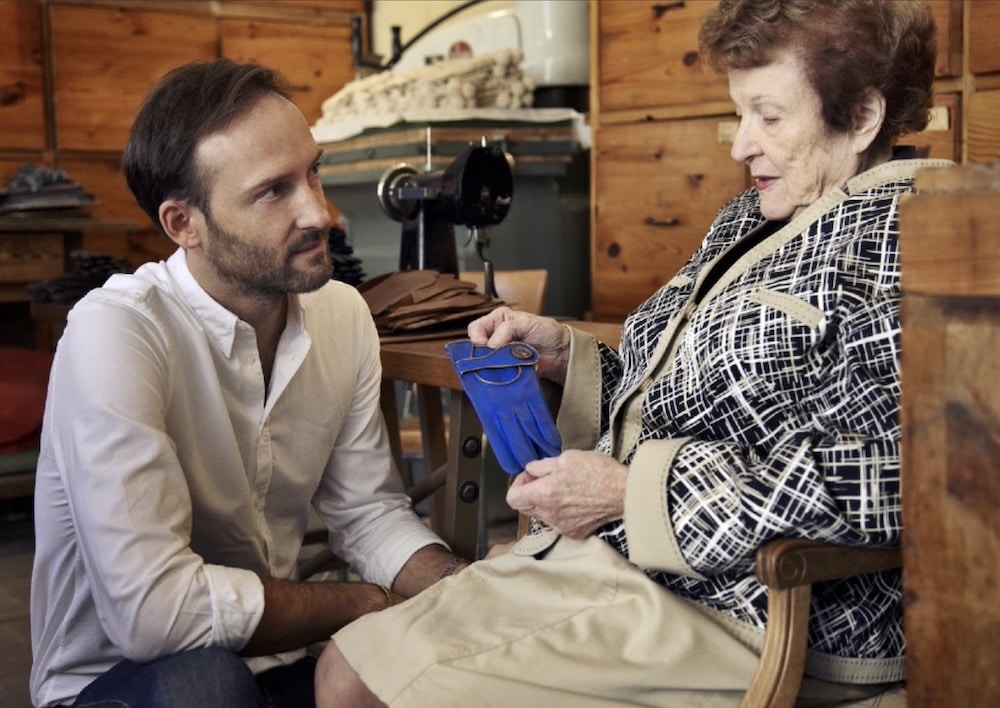
Rose — a flamboyant redhead with a flair for marketing — traveled extensively to promote the family’s gloves to boutiques across France. She cultivated relationships with Parisian haute couture designers and showed remarkable imagination in transforming an everyday accessory into a refined fashion statement. Rose expanded the color palette from white to an array of fashionable hues and moved production into a dedicated factory in the heart of Millau, which eventually employed as many as 350 people.
“She met Yves Saint Laurent when he was working at Dior and collaborated with him for the rest of his career,” Olivier says with pride. Through Saint Laurent, Rose met several filmmakers in France and Hollywood. One of those introductions would prove pivotal: Alfred Hitchcock. “From there, everything snowballed,” Olivier says.
Maison Fabre on the Hands of Celebrities
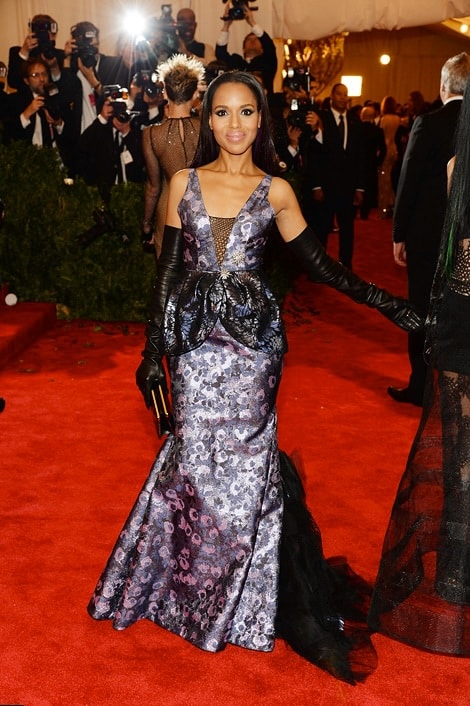
Maison Fabre was commissioned to design a pair of crochet and white lambskin gloves worn by Grace Kelly in Hitchcock’s 1955 film To Catch a Thief. When the actress married Prince Rainier of Monaco in 1956, the brand made her wedding gloves.

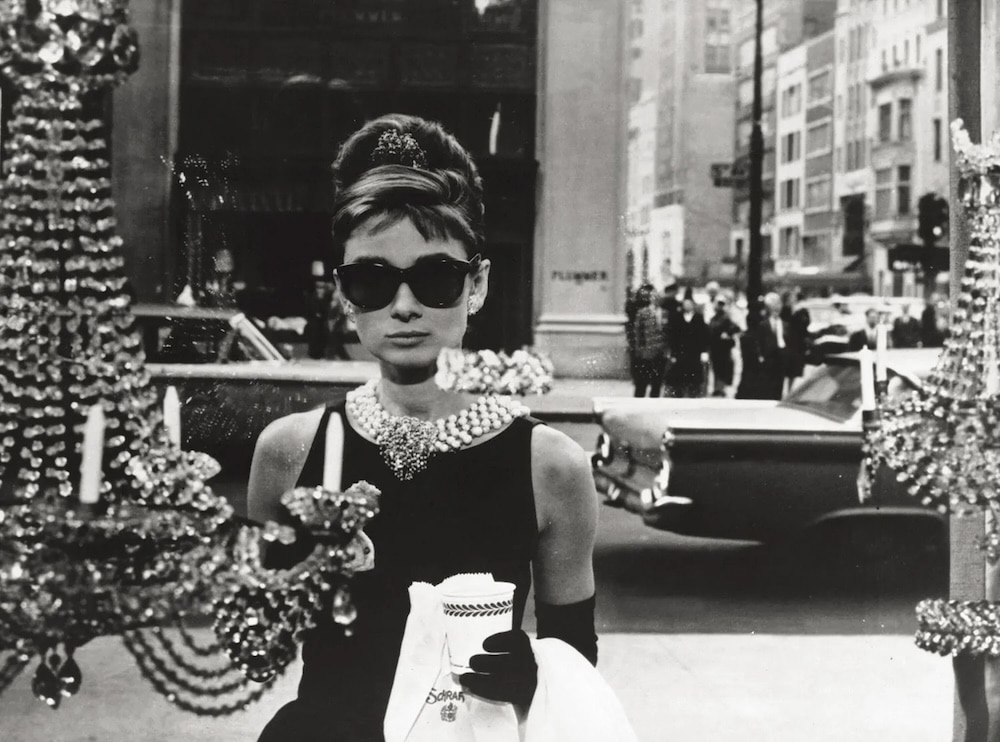
The iconic long black gloves worn by Audrey Hepburn in Breakfast at Tiffany’s in 1961? Again, Maison Fabre. The house would also appear in Claude Lelouch’s 1966 film Un Homme et une Femme (A Man and a Woman) and on the hands of Steve McQueen in The Thomas Crown Affair (1968).
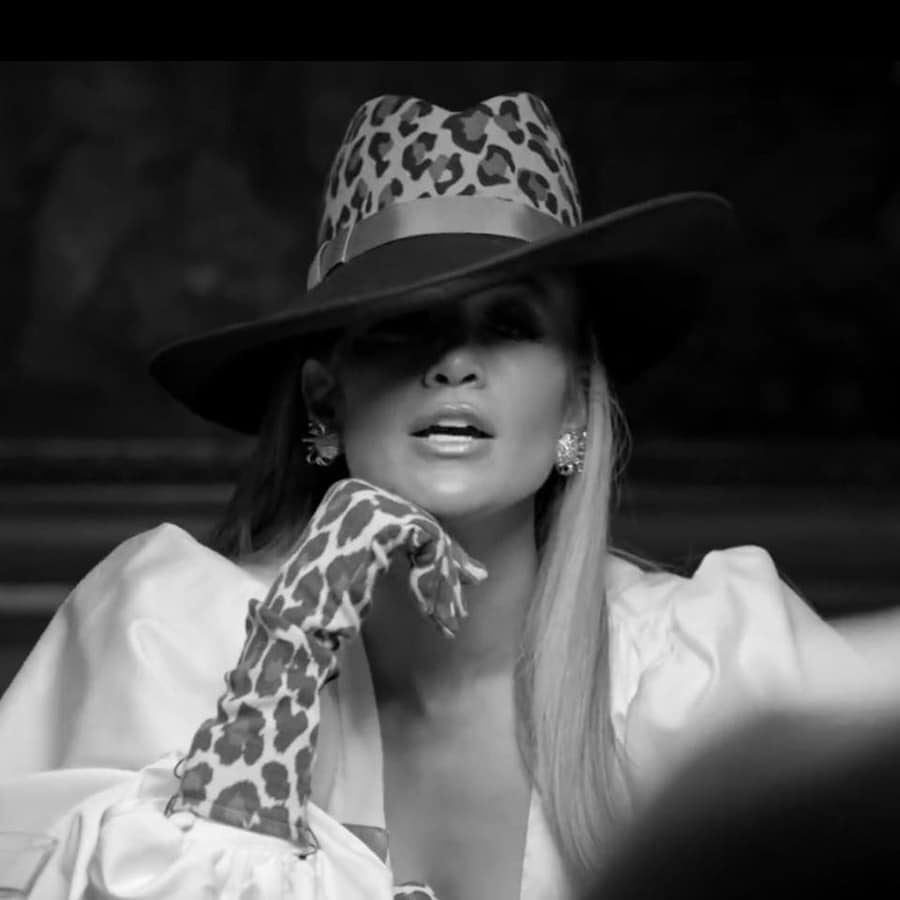
Today, you will still find Maison Fabre gloves on the hands of many stars across the globe in films, television shows, music videos, on the red carpet, and out in public.

Maison Fabre Collaborations and Store Openings
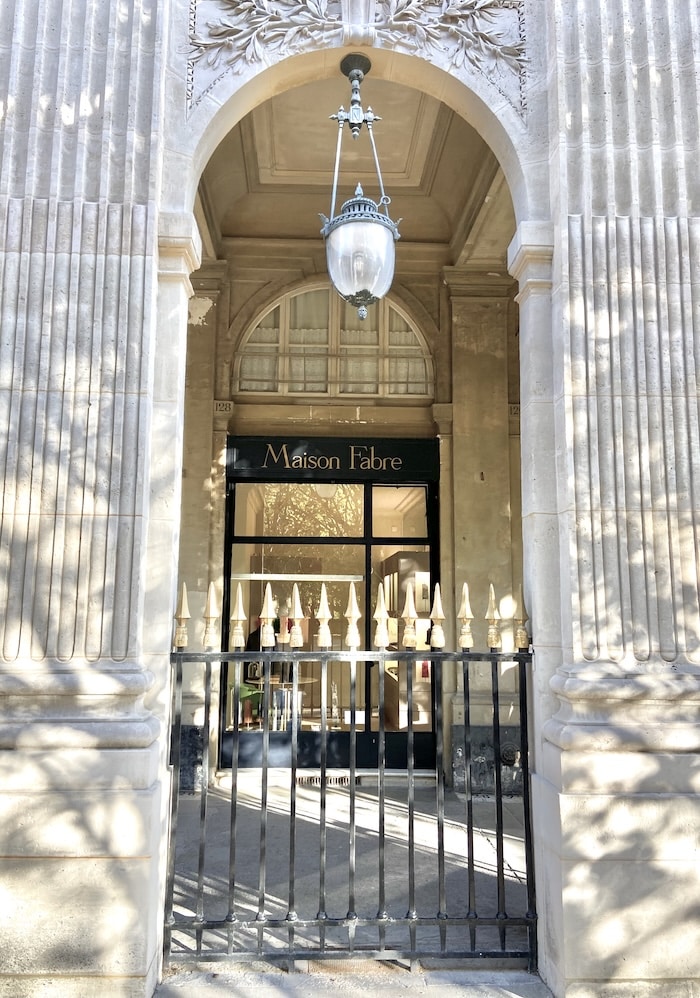
In 1998, it was time for the fourth generation. Olivier, who had started a career in journalism, returned to Millau to join his brothers. This marked a new turning point: the brothers immersed themselves in the Fabre archives and breathed new life into the brand, launching fresh collaborations and capsule collections with leading Paris designers. In 2008, Maison Fabre opened its first boutique in Paris, under the arcades of the Palais Royal, followed by a second store in Versailles in 2013.
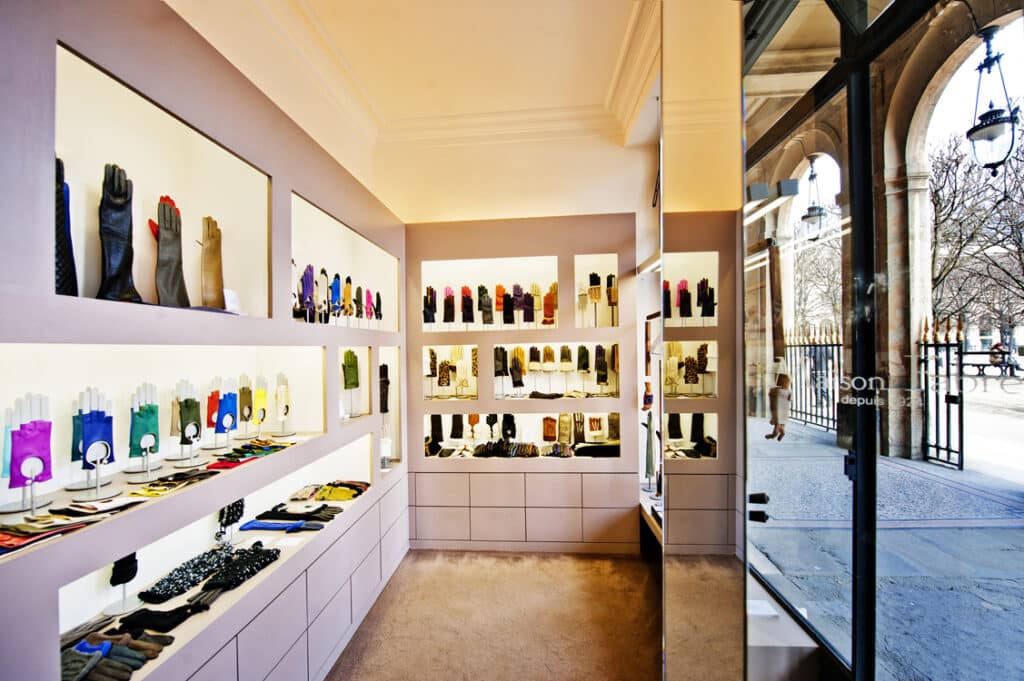
“For the past five years, we’ve been developing not only gloves but also accessories to make the brand more global,” Olivier says. In addition to fashion and sport gloves, Maison Fabre also holds an exclusive contract to produce the white dress gloves worn by the French military and police.
How a Pair of Gloves are Made
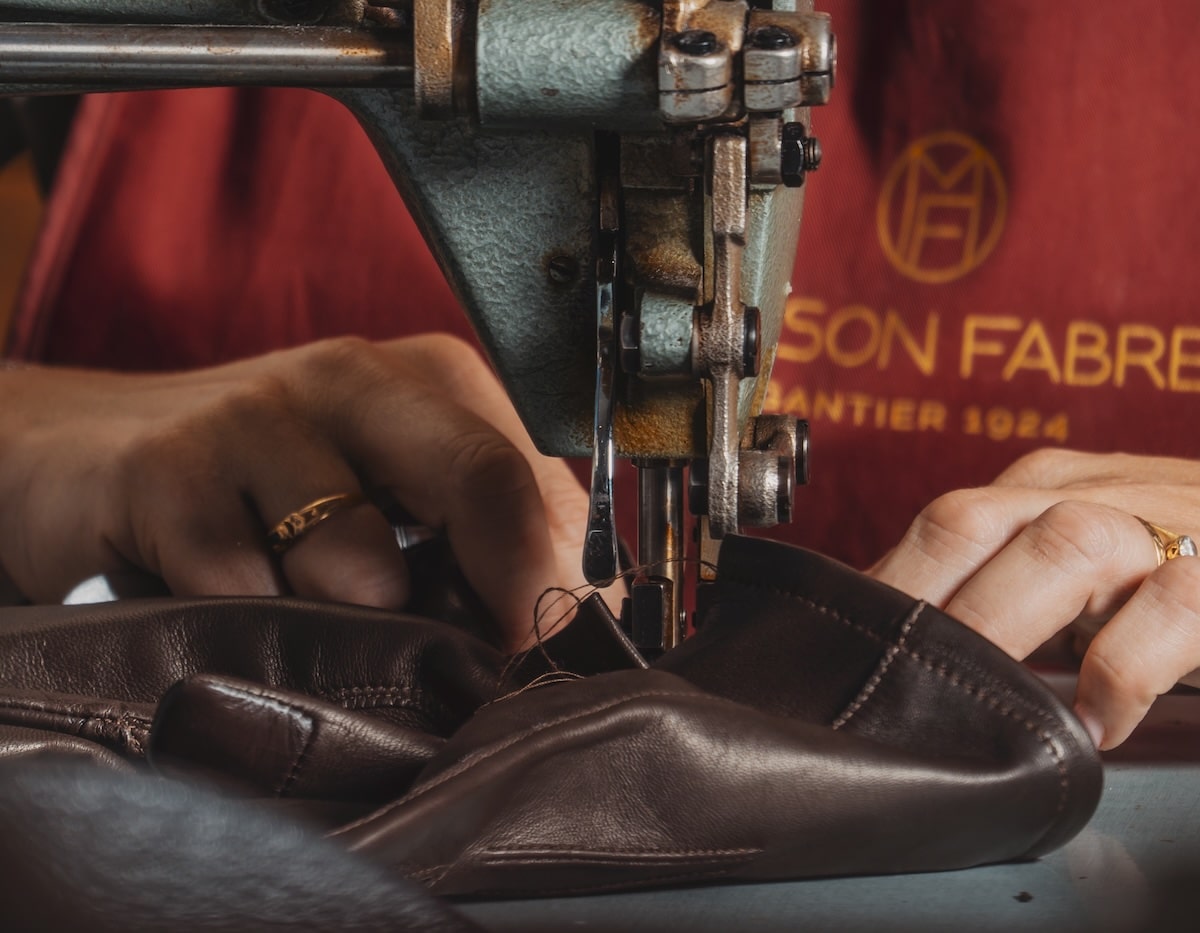
Among the artisans of Millau, hand-sewing techniques form part of an ancestral legacy. Today, just fifteen people work in the Fabre atelier. “We use the piqûre anglaise stitch, which is both strong and very comfortable,” Olivier explains. Only three workshops in the world still use this technique, which has not changed since the 1930s. These days, Maison Fabre trains one new artisan each year, and Olivier sees the preservation of this disappearing art form as vital.
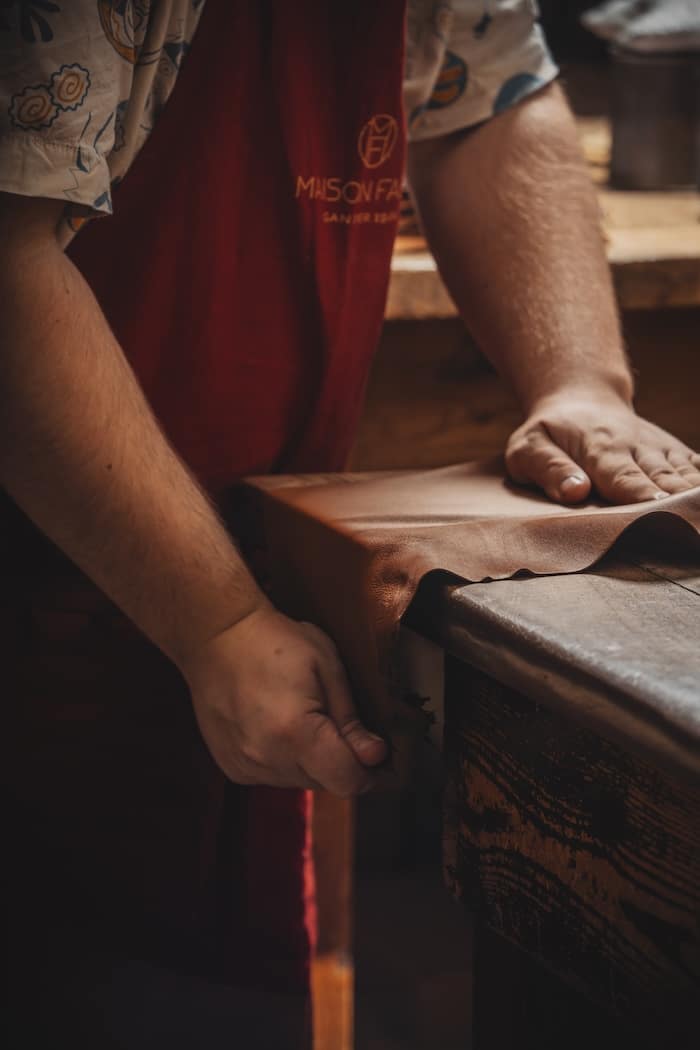
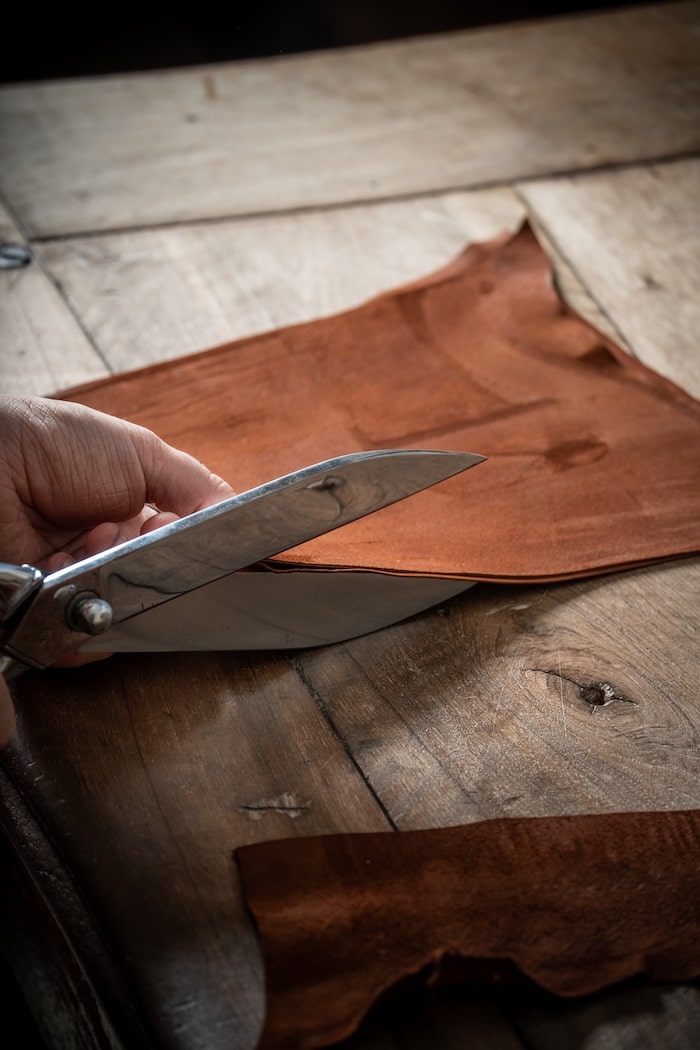
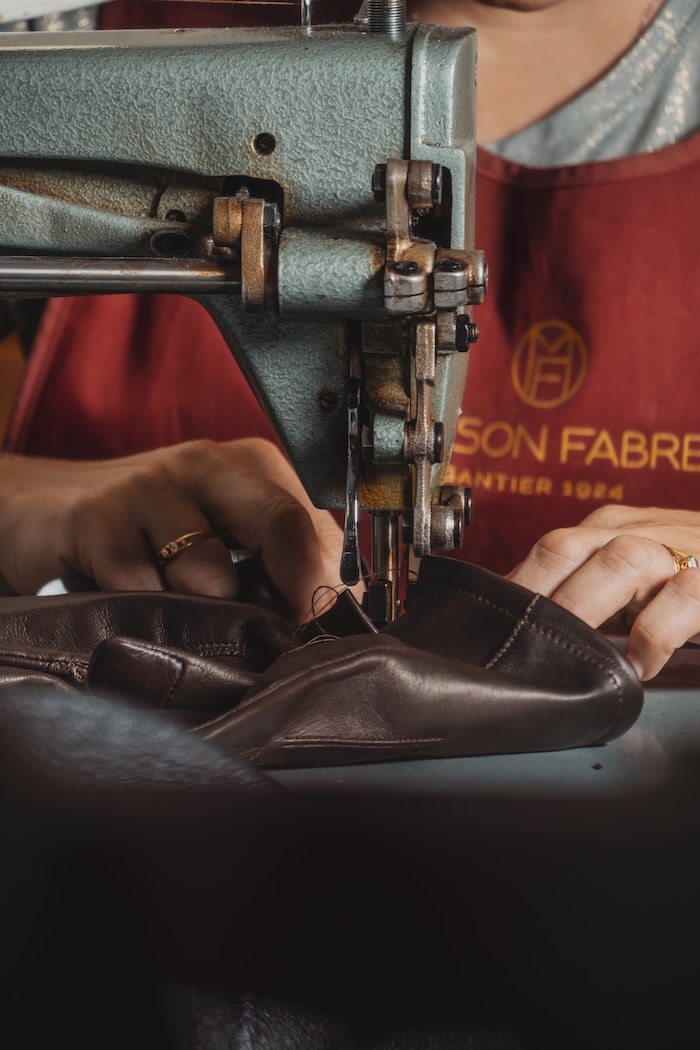
“Making a pair of gloves is like solving a puzzle — there are many pieces that must fit together perfectly,” he explains. Cutting, sewing, finishing and lining a single pair takes a skilled glover about two hours. “There’s no formal school for it,” Olivier says. “The skills are transmitted from person to person. Each factory, each workshop, has its own personality.”
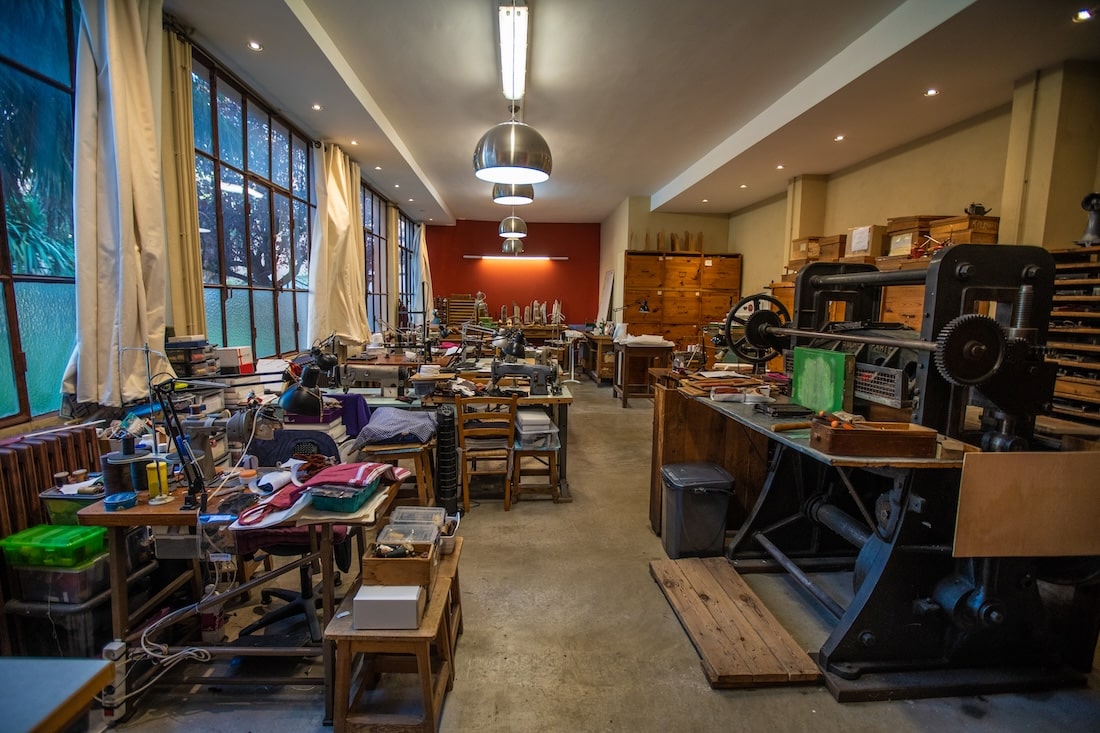
Quality craftsmanship, Olivier insists, is the heart of the Fabre identity. While gloves handmade in France are necessarily more expensive than those produced on an assembly line in China, Maison Fabre’s gloves are guaranteed for life. Olivier has made the transmission of glove-making savoir-faire into a defining personal and professional mission. In 2018, he launched a campaign to have French glove-making recognized by the United Nations as part of the global inventory of intangible human heritage.
When he is not in Millau, Olivier travels the globe, meeting with prospective clients and advocating for schools dedicated to teaching this endangered art.
How to Pick and Store a Pair of Gloves
Olivier is himself a glove aficionado, with firm ideas about how to choose and care for the perfect pair. “I’ve adapted them to my own style,” he says of his glove collection. “They must be comfortable to wear and of course warm if you’re in a cold place.” He insists that fine gloves should always be gently folded before being placed in a pocket. “Never ball them up!” When they’re out of season, gloves should be stored in a drawer or another place protected from light. “Treat them like a beautiful pair of shoes.”
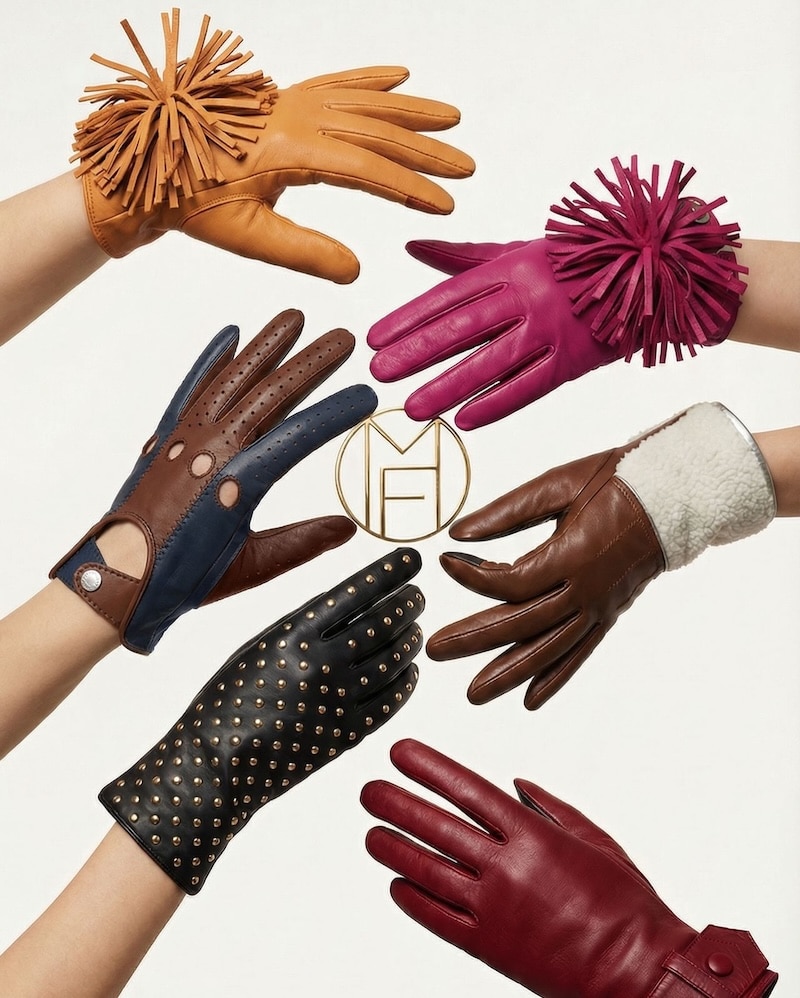
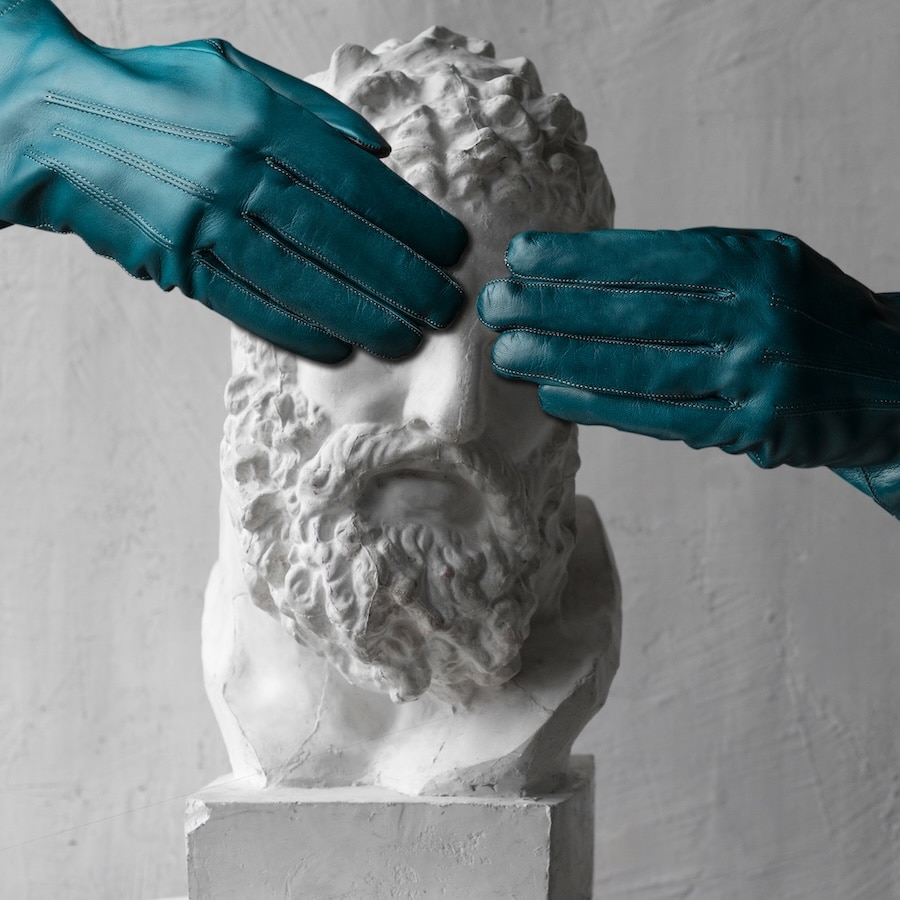
There is a pair of gloves for everyone and every outfit, he says. They touch the hand, add elegance, protect the skin, and hide treasured rings from prying eyes. His favorite gloves are made of buttery peccary leather, sourced from a wild boar native to South America. “It’s what our grandparents wore, and I love the feel of it,” he says.
The beauty of finely crafted gloves, he adds, is that they can be passed from one generation to the next. “Many of my clients inherit them from their grandparents,” he says. Like Proust’s madeleine cakes, “they evoke both memory and pleasure.”