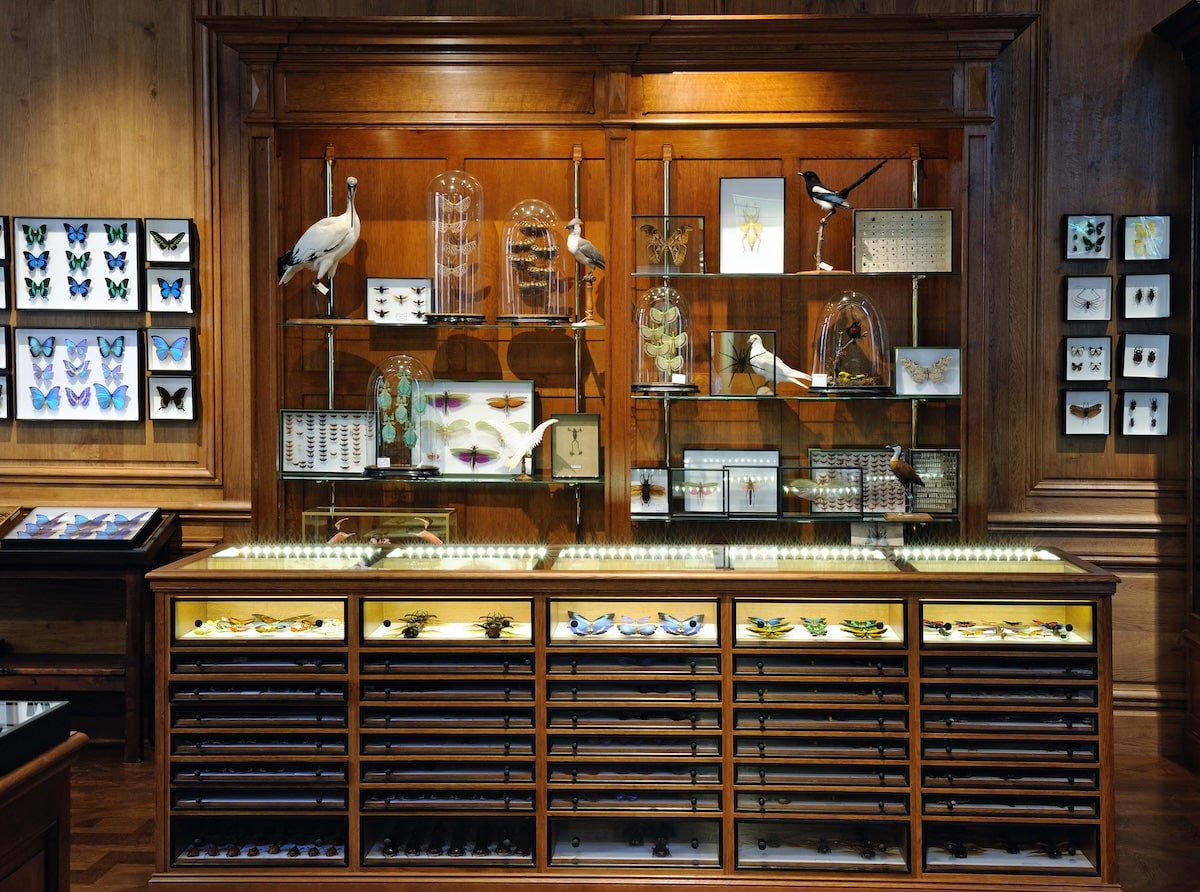
Deyrolle by Marc Dantan featured in the Jan/Feb 24 Issue
Paris has always been a city of gorgeous storefronts and beautifully made things. But beyond the glittering façades lies another layer of retail history — shops that have stood for centuries, their doors opening day after day to generations of Parisians and visitors from around the world.
SUBSCRIBE TO THE MAGAZINE
Some began under royal patronage. Others were family enterprises that grew into institutions. A few helped invent entirely new ways of shopping. Step inside and the past is still present: painted ceilings above pastry counters, drawers filled with chocolates wrapped in ribbon, shelves of books and silk ties arranged with the same care they received decades ago.
Come along on a tour of these ten historic stores which are among the oldest surviving shops in the French capital — places where craftsmanship, tradition, and atmosphere continue to shape the unique experience of shopping in Paris.
La Maison Stohrer
Founded in 1730
Along the lively Rue Montorgueil, where market stalls spill onto the cobblestone pavement and cafés buzz with conversation, the gilded interior of Stohrer gleams through the windows. Painted ceilings, ornate mirrors, and glass pastry cases recall the royal décor of the French monarchy.
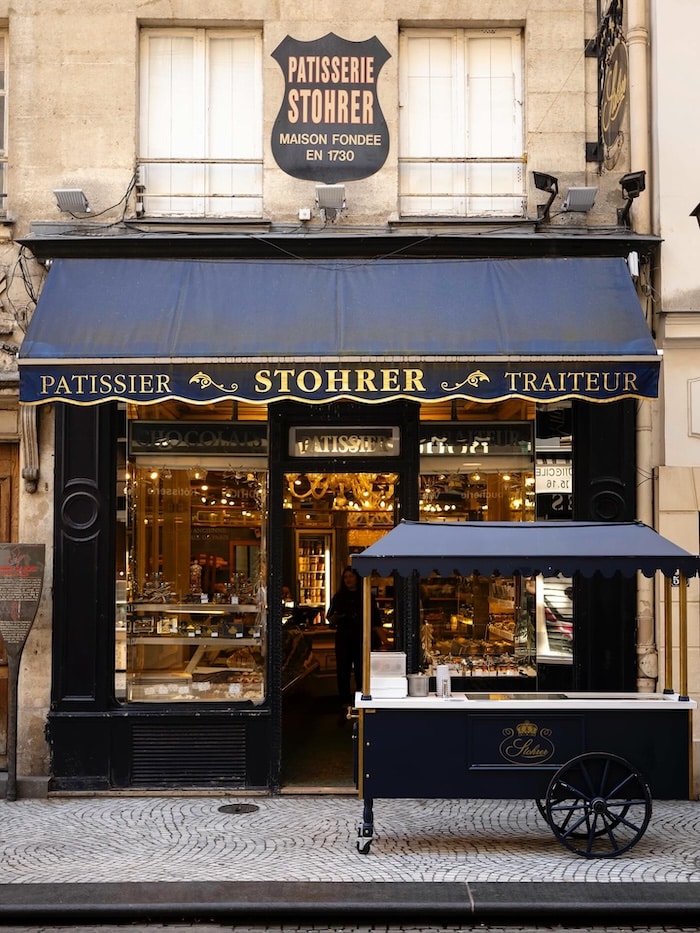
The shop was opened in 1730 by Nicolas Stohrer, pastry chef to the Polish king Stanisław Leszczyński. When the king’s daughter married Louis XV, Stohrer followed the royal court to France and soon established his own pâtisserie in the capital.
The celebrated baba au rhum, soaked in amber syrup and crowned with whipped cream, remains the house specialty — a recipe tied to the shop’s earliest days. The air carries the scent of butter, vanilla, and caramelized sugar, while customers linger over the display cases deciding which classic dessert to take home.
Librairie Delamain
Founded in 1700
Near the Palais-Royal, Librairie Delamain has welcomed readers since 1700, making it one of the oldest bookstores in Paris. Inside, tall bookcases reach toward the ceiling, filled with literature, essays, and beautifully bound editions. Ladders lean against the shelves, and wooden tables hold hundreds of novels.
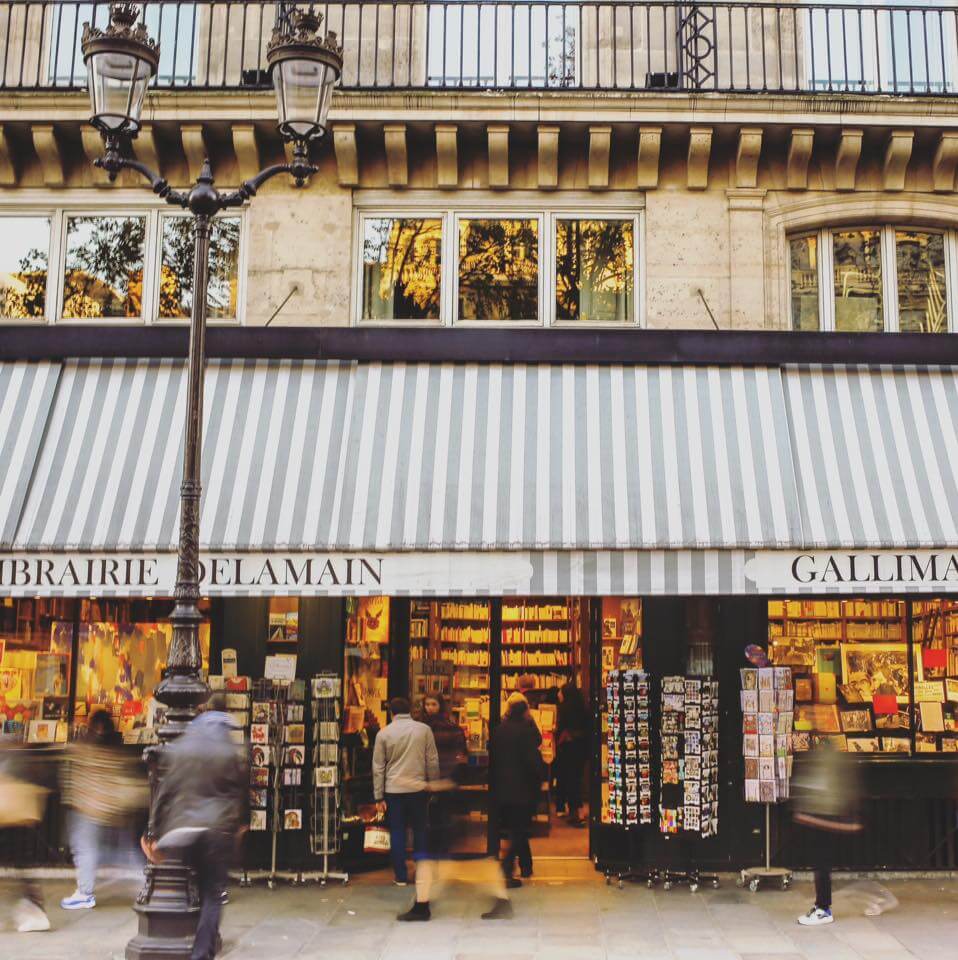
The shop has long attracted writers and intellectuals drawn to its storied shelves. Turning the pages of a new book here, surrounded by centuries of literary tradition, feels entirely in keeping with Paris’s reputation as a city of inspiration.
À la Mère de Famille
Founded in 1761
The historic storefront on Rue du Faubourg-Montmartre is instantly recognizable, with its hand-painted lettering and inviting window displays. Inside, wooden cabinets and glass jars overflow with sweets in every color and shape.
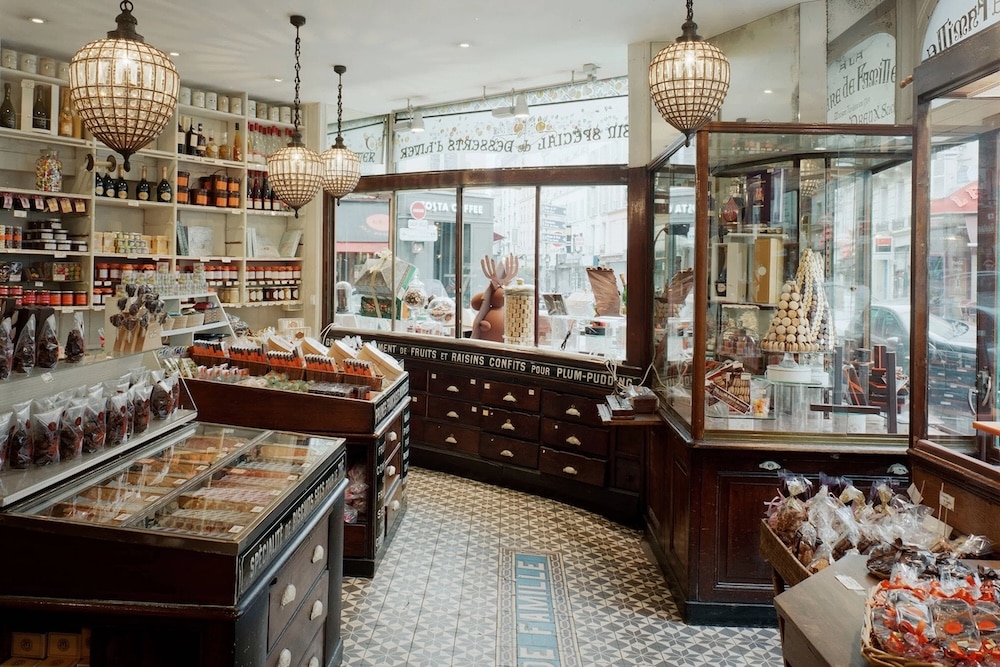
Founded in 1761, À la Mère de Famille is the oldest chocolate and confectionery shop in Paris. Candied fruits glisten beside trays of pralines, caramels, nougat, and chocolate truffles. Antique tiles, vintage tins, and striped boxes evoke the charm of an old-fashioned sweet shop.
In the heart of the heritage luxury fashion district, this chocolatier took on the reputation of its haute couture neighbors, becoming an internationally renowned destination for high quality chocolate.
Maison Antoine
Founded in 1745
Maison Antoine began in 1745 with a simple but clever idea: renting umbrellas to Parisians crossing the Pont Neuf during sudden rainstorms. Over time the business evolved into one of the city’s most distinctive specialty shops.
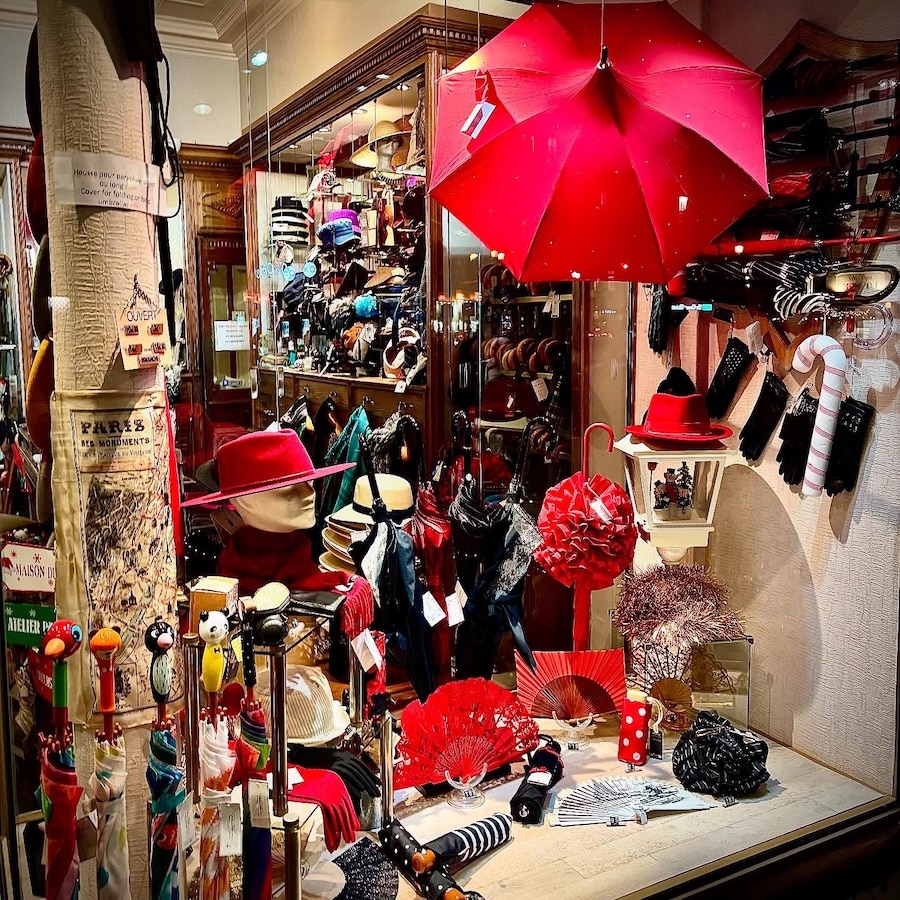
Inside the boutique, rows of finely crafted umbrellas line the walls with slender handles of polished wood and silk canopies folded neatly into place. Some designs are classic and understated while others feature bold colors and creative patterns.
Each umbrella is made with the care of a traditional accessory rather than a disposable object. Opening one reveals the craftsmanship hidden within its structure — a reminder that even everyday items once carried a sense of artistry.
Debauve & Gallais
Founded in 1800
On Rue des Saints-Pères, Debauve & Gallais preserves the decadent atmosphere of the original French chocolate houses. Marble counters stretch beneath tall windows, while dark wooden cabinets hold rows of carefully arranged chocolate boxes.
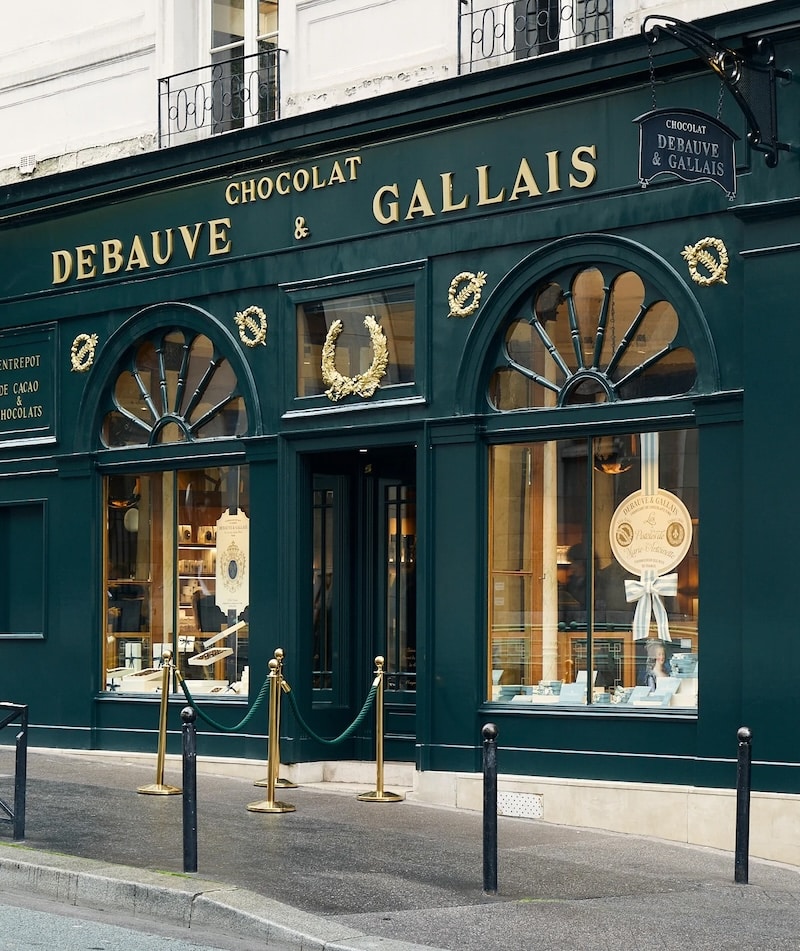
The house was founded in 1800 by Sulpice Debauve, pharmacist to Louis XVI. To help Marie-Antoinette (a chocolate fanatic) swallow her medicines, he blended them with cocoa and shaped them into coin-like chocolates called pistoles. What began as a medicinal confection soon became a luxury indulgence.
Today, polished brass scales and porcelain jars add to the feeling of being inside a refined apothecary rather than a standard chocolate shop. Staff members wrap purchases with beautiful ribbon, presenting each box as though it were a gift destined for a royal table.
Charvet
Founded in 1838
In the polished surroundings of Place Vendôme — with neighbors such as Cartier, Boucheron, and The Ritz — Charvet has dressed diplomats, statesmen, and celebrities for nearly two centuries. Founded in 1838, the house is widely considered the world’s first dedicated shirt shop.
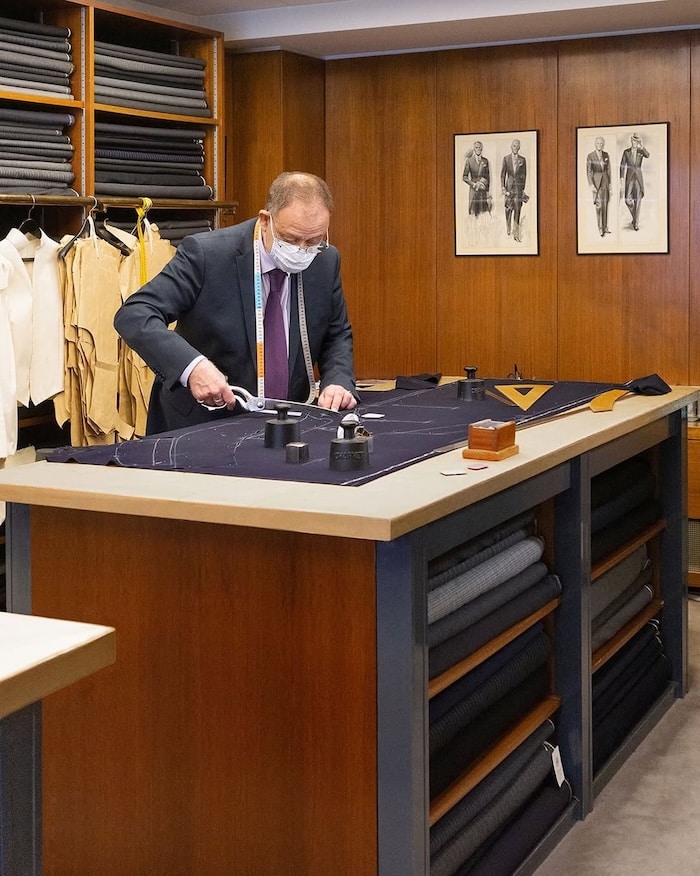
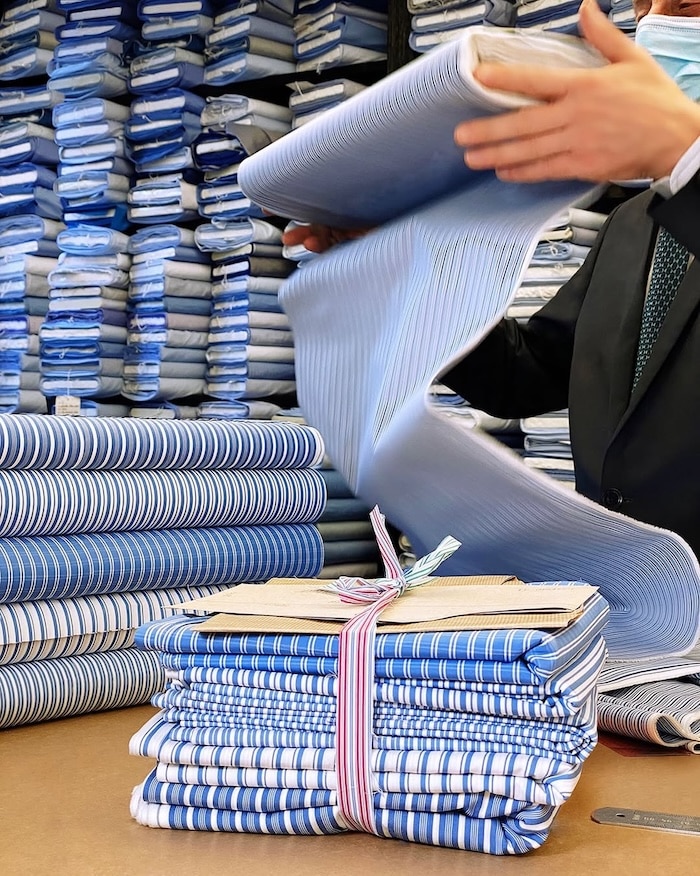
Inside, the boutique unfolds across several elegant salons. Shelves hold stacks of crisp cotton shirts in hundreds of colors and patterns. Drawers slide open to reveal silk ties, pocket squares, and fabrics awaiting bespoke tailoring.
Customers move slowly through the rooms, examining fabrics and consulting with staff about custom orders — a tradition that has changed little since the 19th century.
Lachaume
Founded in 1845
A short walk from the Madeleine church, Lachaume brings a burst of color and fragrance to Rue Royale. The florist was founded in 1845 by Jules Lachaume, a visionary and pioneer of floral art who gained worldwide recognition by winning the first prize at the 1889 World’s Fair.
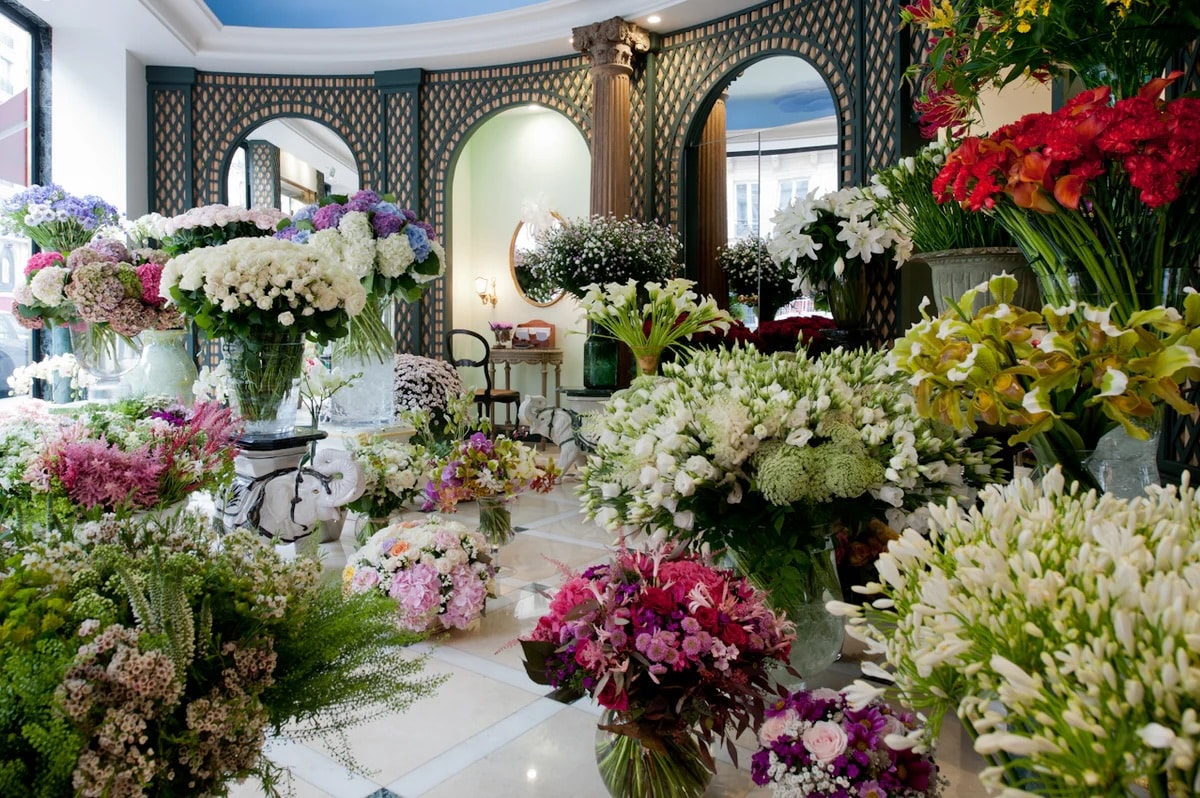
Buckets of fresh flowers greet visitors at the entrance — peonies, roses, and branches of seasonal greenery. Inside, delicate arrangements fill tables and shelves, each composed with a painter’s eye for color and balance.
Fashion houses, grand hotels, and private clients have relied on Lachaume’s floral artistry for generations. The shop’s abundance of blooms creates the impression of a royal French garden tucked within the city.
Hermès
Founded in 1837
On Rue du Faubourg Saint-Honoré, the original Hermès boutique carries the legacy of a house that began not with handbags, but with harnesses. Founded in 1837 by Thierry Hermès as a workshop for fine equestrian goods, the brand quickly became a favorite among European nobility for its meticulously crafted saddles and bridles.
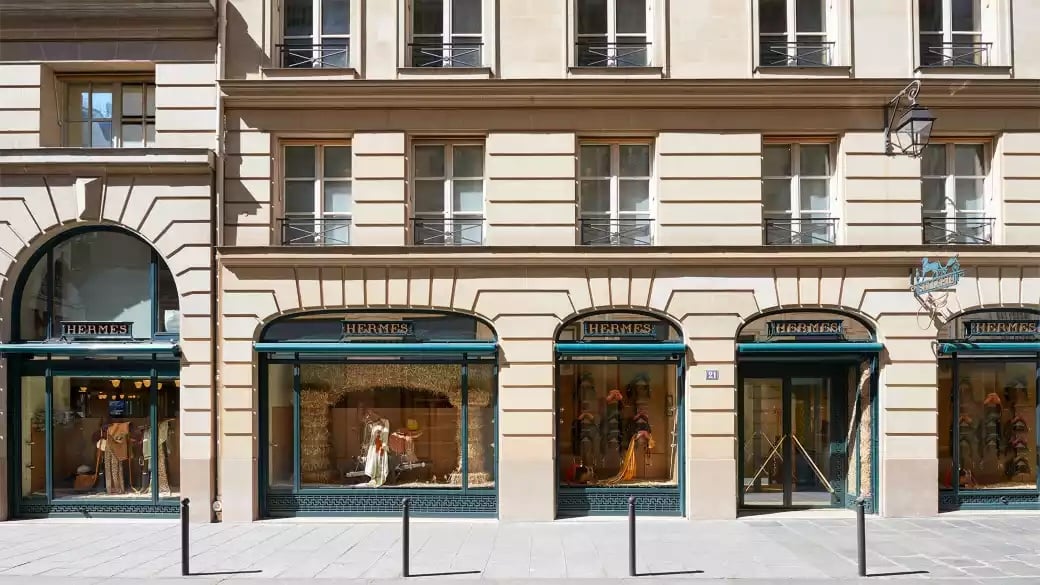
Inside the historic flagship, the connection to that heritage remains visible. Leather goods are displayed with sculptural precision, silk scarves add flashes of color, and equestrian motifs appear in subtle details throughout the space.
The store is grand yet intimate, with rooms unfolding one into another like a noble château, each dedicated to a different craft. Every object — from a handbag to a saddle — reflects the house’s enduring devotion to artisanal excellence.
Deyrolle
Founded in 1831
Behind the discreet façade on Rue du Bac lies one of Paris’s most unusual shops. Founded in 1831 as a natural history supplier, Deyrolle remains a cabinet of curiosities dedicated to science and education.
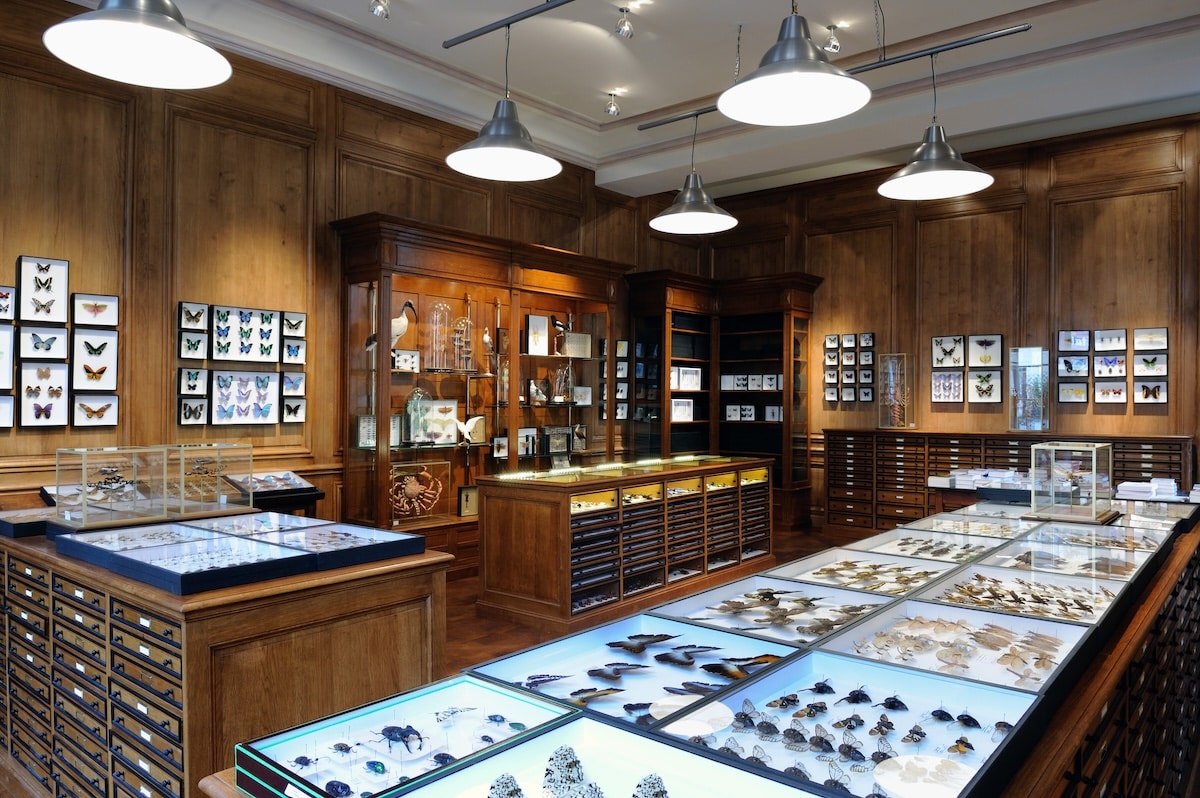
Ascending the winding staircase leads to an alternate universe. Glass cases display butterflies arranged like delicate mosaics. Taxidermy animals — from birds to antelope — stand beneath high ceilings, while botanical prints and anatomical charts line the walls.
Wooden floors creak beneath visitors’ footsteps as they wander from room to room. Scholars, artists, and curious travelers linger over the displays, drawn by the sense of discovery that fills the space.
Le Bon Marché
Founded in 1838
When Le Bon Marché opened in 1838, it transformed the way Parisians shopped. What began as a modest shop selling ribbons and fabrics grew into the world’s first modern department store.
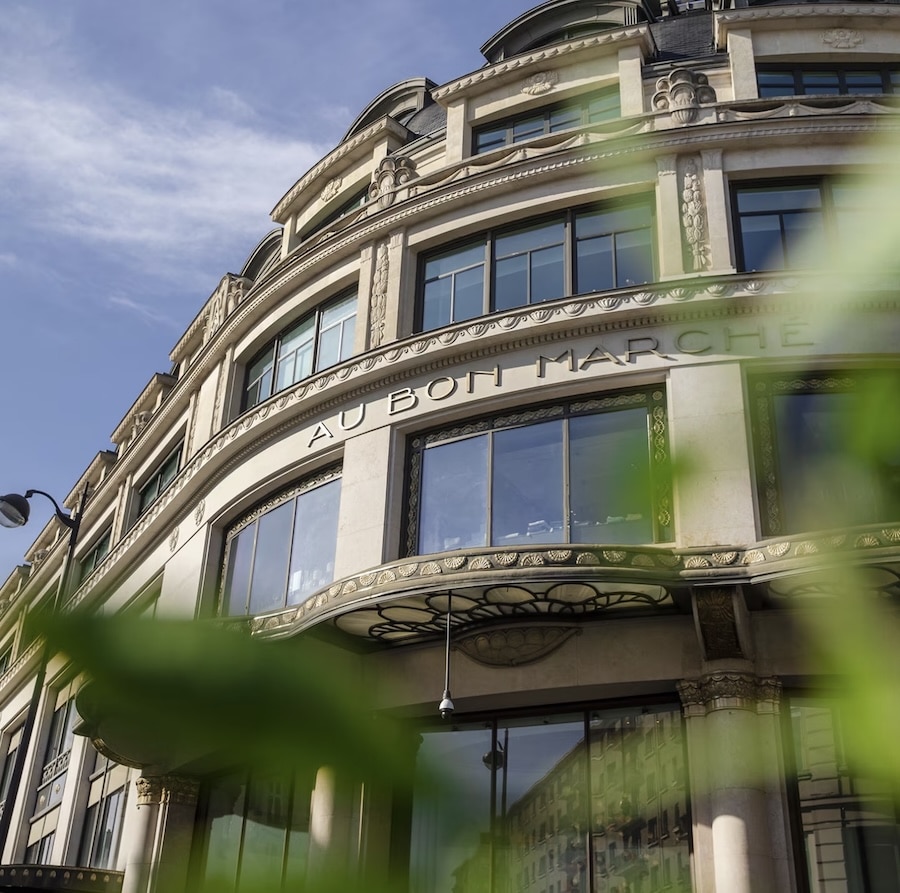
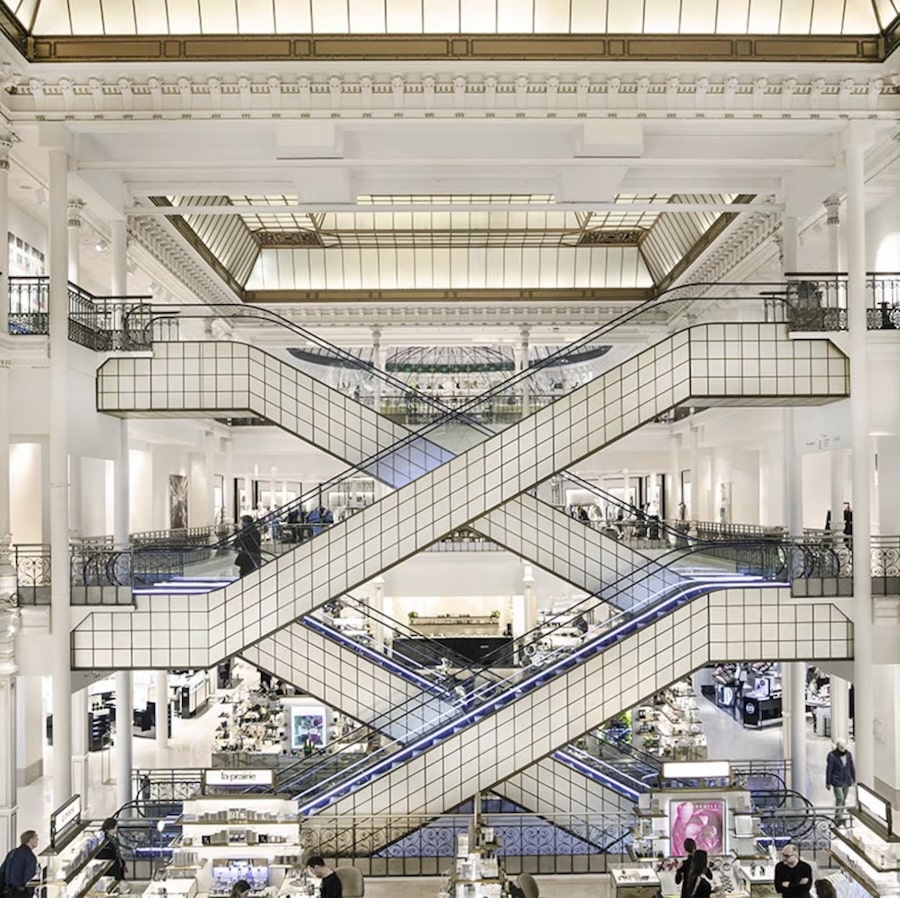
Today the vast interior rises beneath iron balconies and skylights designed in part by the engineers behind the Eiffel Tower. Escalators glide past fashion boutiques, homeware displays, and art installations that change throughout the year.
At the neighboring Grande Épicerie, counters overflow with cheeses, chocolates, spices, and pastries from across France. The sense of abundance and discovery reflects the revolutionary idea that made Le Bon Marché famous: shopping as an experience to be savored.
Places Where Time Stands Still
Paris’s oldest shops reveal a city defined by patience, tradition, and the continuity of treating daily life with reverence. These historic boutiques are small pieces of Parisian heritage, where the past remains visible in every detail.
Step through their doors and time suddenly vanishes. Paris, for a moment, reveals itself exactly as it has always been.